





















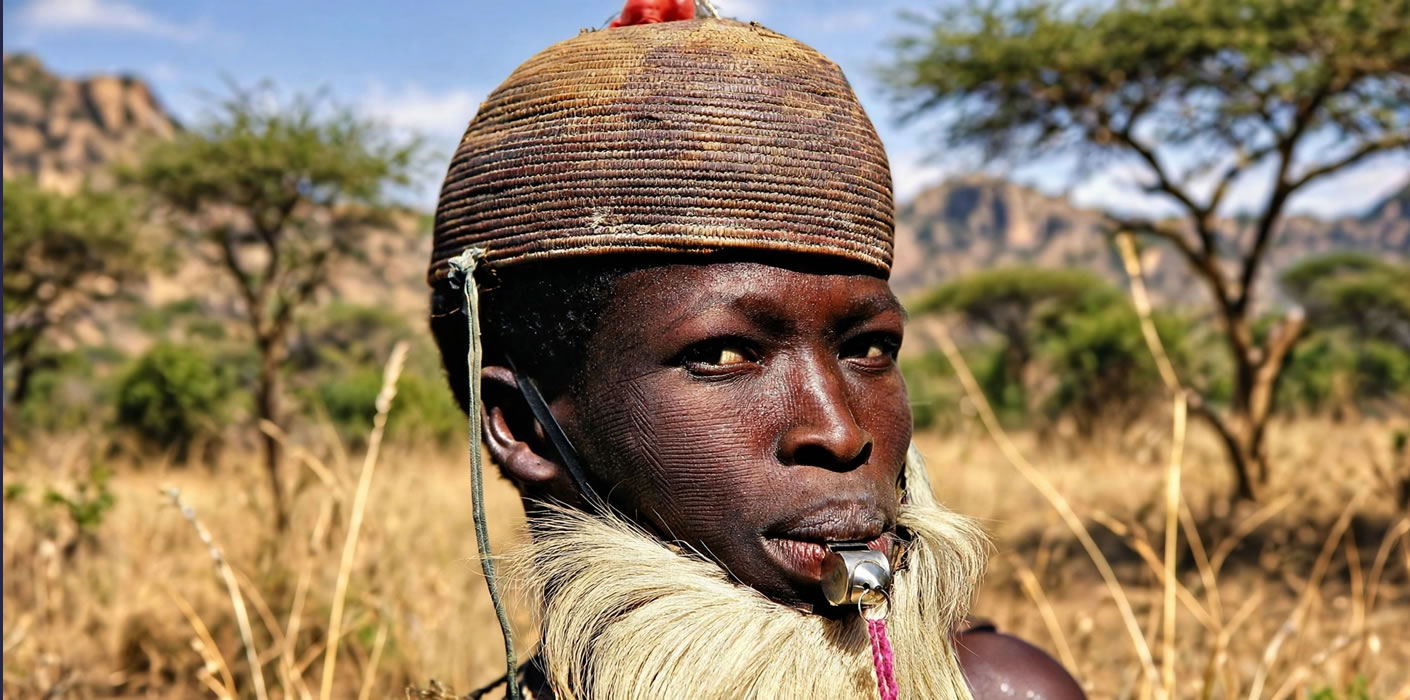

Across Africa, languages are being spoken, ceremonies are being renewed, traditional skills are being taught and ancestral knowledge is finding new expression among younger generations. Yet many cultural practices face the pressures of urbanisation, migration, economic change and declining opportunities for transmission. The question is no longer simply what Africa inherited from the past, but what it will choose to preserve, adapt and pass on.
The Heritage That Lives Among Us
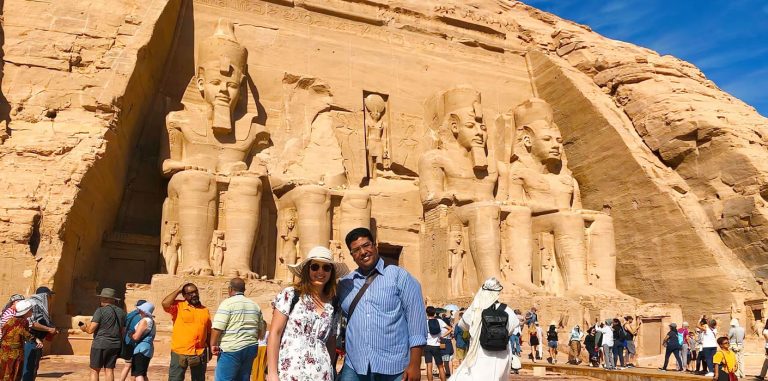
Heritage is often associated with ancient ruins, royal palaces, archaeological discoveries and objects displayed behind museum glass. These are important records of history, but Africa’s cultural inheritance extends far beyond physical monuments.
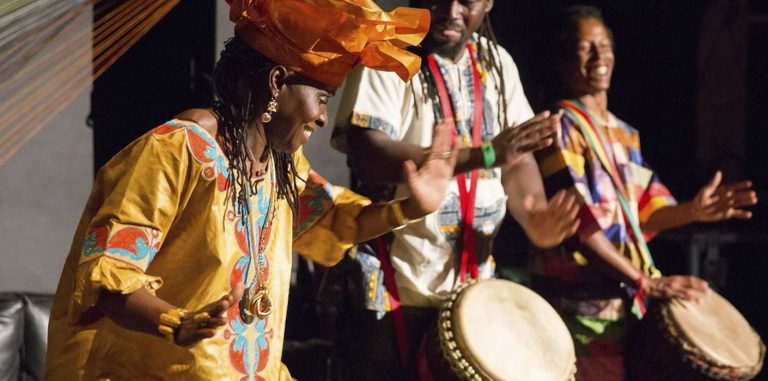
It lives in the language a grandmother uses to tell a family story. It lives in the drummer who teaches a young apprentice, the potter whose hands repeat techniques learned from previous generations, the community that gathers for an annual festival and the farmer who understands the rhythms of a local landscape.
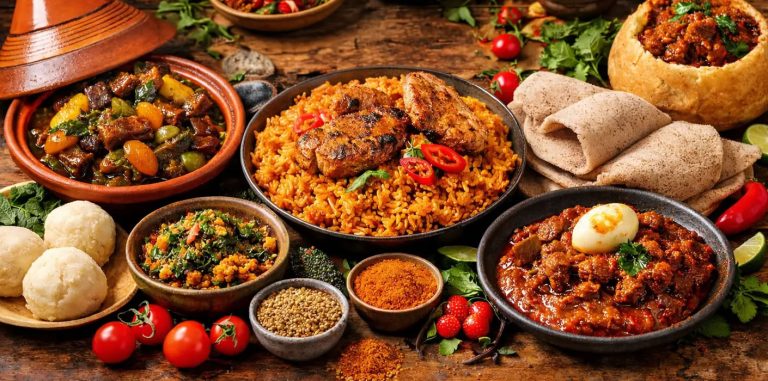
It also lives in proverbs, recipes, songs, dances, traditional medicine knowledge, weaving techniques, naming practices, oral histories and the social customs through which communities define relationships and responsibilities.
These expressions form part of what is often called intangible cultural heritage: the knowledge, skills, performances, traditions and practices that communities recognise as part of their cultural identity.
Such heritage is not necessarily static. It changes as people move, learn, innovate and respond to new circumstances. A traditional song may acquire a contemporary arrangement. A craft may find new applications in modern design. A language may develop new expressions for digital life.
Change does not automatically mean cultural loss. The greater danger arises when people lose the opportunity to learn, practise and transmit their traditions—or when cultural knowledge is taken out of its context and used without respect for the communities that sustain it.
Across Africa, the work of preservation is therefore not simply about looking backwards. It is about keeping cultural knowledge meaningful in the present and available for the future.
Africa’s Many Traditions, Many Identities
There is no single African culture.
The continent contains thousands of communities, languages and cultural traditions shaped by different environments, histories, migrations, kingdoms, belief systems and patterns of exchange. Practices that hold particular meaning in one community may have a different form—or no equivalent—in another.
In West Africa, oral historians, praise singers and musicians have helped preserve family histories and collective memory. Across the Sahel, manuscript traditions record generations of scholarship. In parts of East Africa, Swahili language and coastal cultural practices reflect centuries of interaction across the Indian Ocean. Southern Africa’s diverse communities maintain rich traditions of music, craft, storytelling and communal celebration. Across Central Africa, intricate artistic traditions and knowledge of forests and local ecosystems form part of many communities’ cultural inheritance.
These examples represent only a small part of the continent’s extraordinary diversity.
Some traditions are widely practised; others are maintained by smaller communities or specialist knowledge holders. Some are closely connected to religious observances, while others are embedded in work, family life, seasonal activities or community governance.
To preserve African heritage responsibly, these differences must be recognised. Cultural policies, educational programmes and media stories should avoid treating the continent as a single cultural unit or presenting one community’s practices as representative of all Africans.
The richness of Africa’s heritage lies partly in its diversity—and in the ability of different communities to sustain their identities while participating in a shared continental future.
Language: The First Home of Memory
Among the most urgent questions in cultural preservation is the future of African languages.
Language carries more than words. It carries humour, emotional expression, local knowledge, oral history, environmental understanding and ways of interpreting relationships. Certain ideas can be difficult to translate fully because their meanings depend on cultural context, shared experience or the associations built into a language over generations.
When a language becomes less widely spoken, communities may lose access to parts of this inherited knowledge. The loss can affect songs, proverbs, stories, place names, specialist vocabulary and the ability of older and younger generations to communicate cultural meanings directly.
Across Africa, language experiences differ considerably. Some African languages are spoken by millions of people and continue to thrive in homes, markets, entertainment and digital media. Others face declining transmission, particularly where children are educated primarily in other languages or where speaking a local language is wrongly associated with limited economic opportunity.
Preservation does not require communities to reject international languages. Multilingualism can be a strength. People can learn English, French, Portuguese, Arabic or other widely used languages while also developing literacy and confidence in their own languages.
The challenge is to create environments where African languages are useful and valued: in education, publishing, public communication, entertainment, technology and business.
Families can tell stories and read books in local languages. Schools can support mother-tongue learning where appropriate. Publishers can invest in children’s books, dictionaries and contemporary literature. Broadcasters and digital creators can produce content that speaks to audiences in the languages they use at home.
Technology offers new opportunities through digital keyboards, online dictionaries, audio archives, language-learning applications and speech tools. Yet these resources require reliable language data, investment and collaboration with speakers.
A language is most secure when people can live, learn, create and participate in modern society through it—not merely celebrate it on special occasions.
The Elders Who Carry Knowledge
In many communities, elders serve as important custodians of historical memory, practical skills and cultural values.
Their knowledge may include family histories, traditional music, agricultural practices, craftsmanship, conflict resolution, ceremonies, local ecology and the meanings associated with particular places. Some of this knowledge is documented; much of it survives through demonstration, conversation and repeated practice.
But the passage of knowledge from one generation to another cannot be taken for granted.
Urbanisation and migration may separate younger people from elders who would otherwise teach them. Work and school schedules can reduce opportunities for apprenticeships. Economic pressures may make it difficult for skilled practitioners to spend time training others without compensation.
The solution is not to romanticise the past or assume that every inherited practice must remain unchanged. Some traditions deserve critical examination, particularly where they conflict with safety, equality, human rights or individual choice.
Instead, preservation should identify valuable knowledge, document it where appropriate and create opportunities for communities to decide how it should be transmitted.
Intergenerational programmes can bring elders and young people together through storytelling sessions, craft workshops, community archives, local-language projects and practical apprenticeships.
Recording an elder’s voice can be valuable, but a recording cannot replace every dimension of learning. The movement of a hand, the timing of a performance, the feel of a material and the social meaning of a ceremony may require direct participation.
Knowledge survives most effectively when it is not only recorded but practised.
Traditional Crafts: Skills Worth Sustaining
Across Africa, craftspeople transform materials into objects that carry practical, artistic and cultural value.
Weavers, potters, woodcarvers, metalworkers, beadmakers, leatherworkers, basketmakers, dyers and textile artists draw on skills developed through training and experience. Their work can reflect local aesthetics, historical exchanges, spiritual meanings and the resources available in their environments.
Yet traditional craftsmanship often faces commercial challenges.
Mass-produced goods may be cheaper. Imported imitations can compete with authentic local products. Artisans may lack access to suitable equipment, reliable materials, training, finance or markets beyond their immediate communities.
Young people may admire traditional craft but see limited economic prospects in learning it. If skilled practitioners cannot earn a sustainable income, the chain of transmission becomes vulnerable.
Preservation must therefore include economic opportunity.
Craft training can be connected to design education, hospitality, tourism, architecture, fashion and contemporary manufacturing. Artisans can collaborate with designers to develop products that respect cultural origins while meeting new needs. Cooperative business models and digital marketplaces can help producers reach customers more directly.
Fair compensation and attribution matter. Buyers should be able to understand where a product comes from, who made it and what knowledge informs its production.
There must also be safeguards against cultural appropriation and misleading claims of authenticity. Not every design or symbol is free for unrestricted commercial use, and some practices have specific community protocols.
When craftspeople are treated as skilled professionals and cultural knowledge holders, heritage can become a source of dignity, income and innovation.
Festivals: More Than a Celebration
Festivals are among the most visible expressions of living heritage.
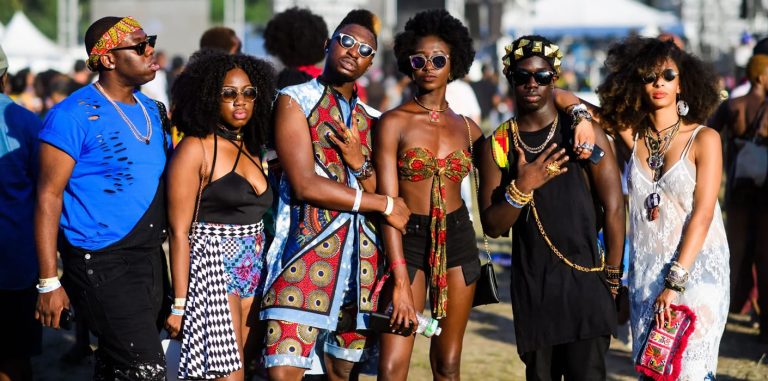
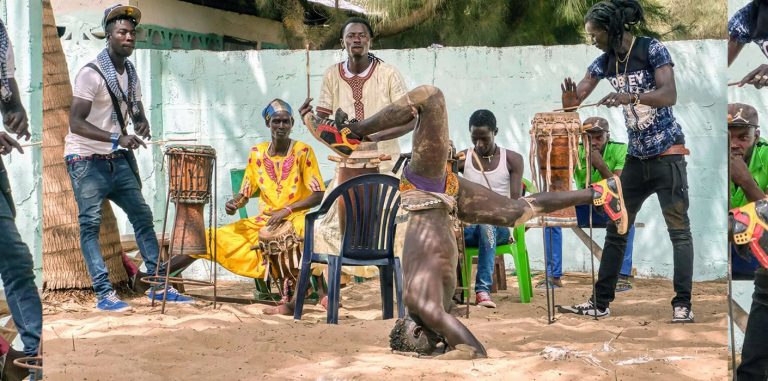
Across Africa, communities gather for harvest celebrations, religious festivals, masquerades, music events, historical commemorations, traditional wrestling, dance performances and other cultural occasions. Their forms and meanings vary widely, but many create opportunities for communities to renew relationships, honour shared histories and transmit cultural practices.
Festivals can also support local economies by generating activity for musicians, performers, food vendors, transport operators, accommodation providers, artisans and other businesses.
However, the growing connection between festivals and tourism creates important questions.
Who determines how a tradition is presented? Who receives the economic benefits? Are community members actively involved in planning? Do visitors understand the significance of what they are witnessing? Are sacred or private elements being exposed in ways that the community would not otherwise permit?
A festival can attract attention while still failing the people whose heritage gives it meaning.
Responsible cultural events should involve local organisers and knowledge holders, respect community protocols, provide fair payment for performers and artisans, and ensure that commercial interests do not override cultural responsibilities.
Where traditions are adapted for public presentation, the changes should be handled transparently and with appropriate community participation.
The strongest festivals are not simply events staged for an audience. They are occasions through which communities express and renew their identities.
The City, the Village and the Changing Meaning of Tradition
Cultural preservation is sometimes imagined as the responsibility of rural communities, while modernity is associated with cities. This distinction is too simple.
African cities are also centres of cultural creation and transmission. Migrants bring languages, food, music, dress, religious practices and artistic skills into urban neighbourhoods. New cultural forms emerge when communities interact, while family associations and hometown organisations help maintain connections to places of origin.
A traditional dance may be taught in a city studio. A local-language radio programme may reach listeners across several countries. A designer may reinterpret inherited textile patterns for contemporary clothing. A young filmmaker may document a community history using a smartphone.
These are not necessarily signs that culture is disappearing. They may be ways it adapts to changing lives.
At the same time, urbanisation can weaken some forms of transmission when people no longer have access to the settings, materials or relationships through which a practice was learned.
The task is to create opportunities for cultural knowledge to travel with people. Schools, libraries, community centres, cultural associations and digital platforms can help connect generations and preserve links between urban and rural communities.
Heritage should not be treated as something people must leave the modern world to experience. It can be part of contemporary life, provided there are spaces and resources to sustain it.
Cultural Heritage and the Environment
Africa’s natural environments are closely connected to the cultural knowledge of many communities.
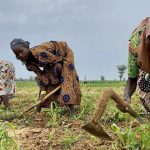
Knowledge of seasonal changes, plants, water sources, farming methods, fishing practices, grazing routes and local ecosystems has developed through long experience and observation. In some communities, this knowledge is expressed through stories, customary rules, ceremonies and practical skills.
Such knowledge can contribute to discussions about sustainable resource management, biodiversity and climate adaptation. However, it should not be treated as automatically correct in every context or as a substitute for scientific research. The most useful approaches respect community experience while bringing it into informed dialogue with environmental science and contemporary evidence.
Environmental change can threaten both landscapes and cultural practices. Drought, flooding, coastal erosion, deforestation, pollution and changes in land use may affect the places where traditions developed and the resources on which they depend.
When a fishing community loses access to traditional waters, or a craft tradition loses access to a particular material, the consequences may extend beyond income. Skills, vocabulary, social relationships and cultural meanings can also be affected.
Conservation programmes should therefore consider the people whose lives and heritage are connected to particular landscapes. Local communities should be consulted in decisions that affect their livelihoods, cultural sites and access to natural resources.
Protecting heritage sometimes means protecting the environment in which that heritage remains possible.
When Heritage Is Threatened
Cultural traditions can be placed under pressure by several forces at once.
Conflict and displacement may separate communities from their cultural sites and knowledge holders. Poverty can make it difficult for practitioners to continue working in traditional occupations. Discrimination may discourage people from speaking their languages or expressing their identities publicly. Weak cultural institutions can leave archives, monuments and collections vulnerable to neglect.
There are also less visible threats. A language may remain spoken by adults while fewer children learn it. A craft may continue to be sold even as the number of skilled producers declines. A festival may attract large crowds while losing the participation of those who once carried its deeper meanings.
These changes do not always receive the attention given to the destruction of a monument. Yet the loss of a living tradition can be equally significant.
Effective preservation begins with listening to the communities concerned. What do they consider important? Which practices are being transmitted successfully? What is at risk? What kind of support would help? Which elements should remain private or restricted?
The answers will differ from one place to another.
Governments can support cultural institutions, education and documentation. Universities can conduct research in partnership with communities. Media organisations can give practitioners a platform to explain their work. Businesses can support fair markets for traditional skills. Families and community organisations can create opportunities for young people to learn.
No single institution can preserve a culture on behalf of everyone. Long-term success depends on shared responsibility and community participation.
Digital Africa: A New Home for Old Knowledge
Digital tools are creating new possibilities for cultural preservation.
A community can record elders telling stories in their own language. A museum can digitise fragile photographs. A university can build a searchable archive of manuscripts. A musician can document a traditional instrument and make lessons available online. A local organisation can create a digital map of culturally significant places.
These resources can connect diaspora communities with their heritage and help young people discover traditions they might otherwise encounter only rarely.
But digital preservation must be approached carefully.
Recordings should be made with informed consent. Communities and knowledge holders should understand how materials may be used, who can access them and whether they might be reproduced commercially. Sensitive knowledge may need restricted access rather than unrestricted publication.
Digital archives also require long-term maintenance. Files can be lost when storage systems fail, formats become obsolete or funding ends. Metadata and contextual information are essential: a photograph without reliable information about its people, place and purpose may eventually lose much of its historical value.
Artificial intelligence and other emerging technologies may support translation, transcription and search, but they can also produce errors, misidentify cultural material or reproduce bias when language resources are inadequate.
Technology should strengthen the authority and participation of communities, not replace them.
The objective is not simply to place African culture online. It is to build reliable, ethical systems through which cultural knowledge can be preserved and used responsibly.
Schools and the Next Generation
Schools have an important role in determining what younger generations learn about their own societies.
When history curricula focus narrowly on external events or present African heritage as a collection of distant achievements, students may have limited opportunities to understand the cultural knowledge within their own communities.
Education can take a broader approach.
Students can interview elders, study local place names, document family histories, learn traditional songs, visit museums, explore regional literature and investigate the origins of local crafts and festivals. Such activities can connect academic learning with lived experience.
Language education is particularly important. Where feasible and educationally appropriate, children can benefit from opportunities to learn in languages they understand while also developing proficiency in wider languages of communication.
Schools should also teach students to examine traditions thoughtfully. Cultural pride does not require accepting every practice without question. Young people can value their heritage while asking how customs have changed, whose perspectives are represented and how cultural life can reflect contemporary commitments to dignity, safety and equality.
A living heritage is strengthened when the next generation understands both its significance and its complexity.
The Role of African Media
Media organisations influence which cultural stories receive attention and how they are presented.
A short festival report may show colourful clothing and energetic dancing while overlooking the history, beliefs and community responsibilities behind the event. A profile of a craftsperson may focus on a finished product without explaining the years of training required to make it. A story about a threatened language may report declining speaker numbers without exploring the educational or economic conditions contributing to the change.
African media can go further.
Journalists, filmmakers, photographers, publishers and digital creators can document the people who sustain cultural practices, explain the historical context, and explore the challenges facing the next generation of practitioners.
They can commission work in African languages, invest in local researchers and photographers, and collaborate with community historians and cultural experts. They can also challenge stereotypes that portray African cultures as either frozen in the past or valuable only when adapted for international consumption.
This requires more than occasional heritage features. It calls for consistent editorial attention, ethical reporting, proper attribution and fair compensation for contributors.
For Voice Of Africa Magazine, the responsibility is clear: cultural storytelling must go beyond description to explore meaning, change, opportunity and the people whose knowledge keeps heritage alive.
The purpose is not to claim that every tradition is perfect or that every cultural practice must remain unchanged. It is to ensure that African communities have the space to explain their own experiences and participate in shaping how those experiences are understood.
Heritage as a Shared Responsibility
Preserving African heritage is not the sole responsibility of governments, museums or cultural festivals.
Families transmit language and memory. Elders and practitioners teach knowledge. Schools shape what young people understand. Researchers document and interpret evidence. Artists renew cultural expression. Businesses can create markets for traditional skills. Media platforms make stories visible. Governments can provide policies, funding and protection.
Each has a different role, and none should assume it can speak for every community.
Successful preservation begins by identifying what communities value and what support they need. It respects the rights of people to determine how their cultural knowledge is used. It creates opportunities for traditions to be practised and transmitted, rather than merely displayed.
It also recognises that heritage can be both a source of identity and a resource for future development.
Cultural knowledge can inspire design, music, film, literature, tourism, education and entrepreneurship. But its economic value should not erase the cultural responsibilities attached to it. Communities and practitioners deserve recognition, participation and a fair share of the benefits created from their work.
Above all, preservation must be practical. A tradition that is praised but never taught, a language celebrated but never used in education or publishing, or a craft admired but economically unsustainable may struggle to survive.
Respect must be matched by action.
The Culture That Refuses to Disappear
Africa’s living heritage has endured because people have continued to practise, teach, adapt and defend it.
Traditions have survived migration, political change, economic hardship and the transformation of everyday life. Some have changed dramatically; others remain recognisable across generations. New forms have emerged from the meeting of inherited knowledge and contemporary creativity.
The future will bring further change. The important question is whether African communities will have the resources, rights and opportunities to shape that change themselves.
Preservation should not be an attempt to trap culture in a particular historical moment. Nor should modernisation require people to abandon their languages, skills or identities.
The strongest future is one in which cultural knowledge can remain alive while communities decide how it should evolve.
That future requires investment in local languages, community archives, cultural education, traditional practitioners, creative industries and the institutions that support them. It requires listening to elders while making room for young people. It requires technology that serves communities and markets that reward the people who sustain cultural knowledge.
Africa’s heritage is not disappearing everywhere, and its future is not predetermined. Many traditions remain vibrant; others need urgent attention. The work begins by recognising both realities.
Every language taught to a child, every craft passed to an apprentice, every carefully preserved manuscript, every story recorded with consent and every cultural practitioner paid fairly helps create a stronger foundation for the next generation.
The cultures that refuse to disappear are not surviving through memory alone.
They survive because people continue to give them a place in everyday life.
VOAM HERITAGE AFRICA | THE TAKEAWAY
Living heritage survives when people have the opportunity to practise it, teach it and benefit from sustaining it. African languages, oral histories, traditional crafts, festivals, ecological knowledge and artistic practices need more than celebration. They need education, community leadership, documentation, ethical digital tools and sustainable livelihoods.
The goal is not to preserve Africa in the past. It is to ensure that African communities can carry their heritage confidently into the future.
The VOAM question: What is one tradition in your community that the next generation must learn—and what practical step can you take to help preserve it?