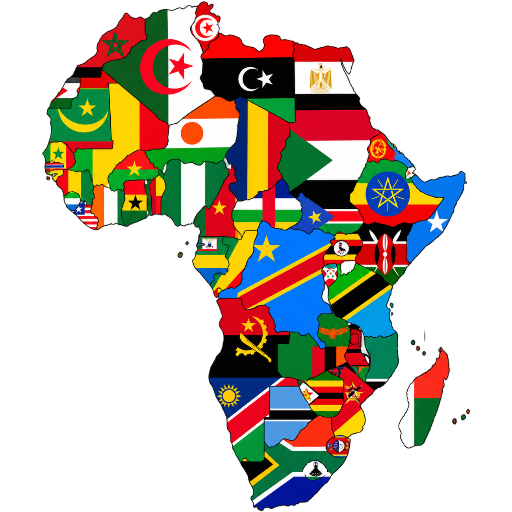




























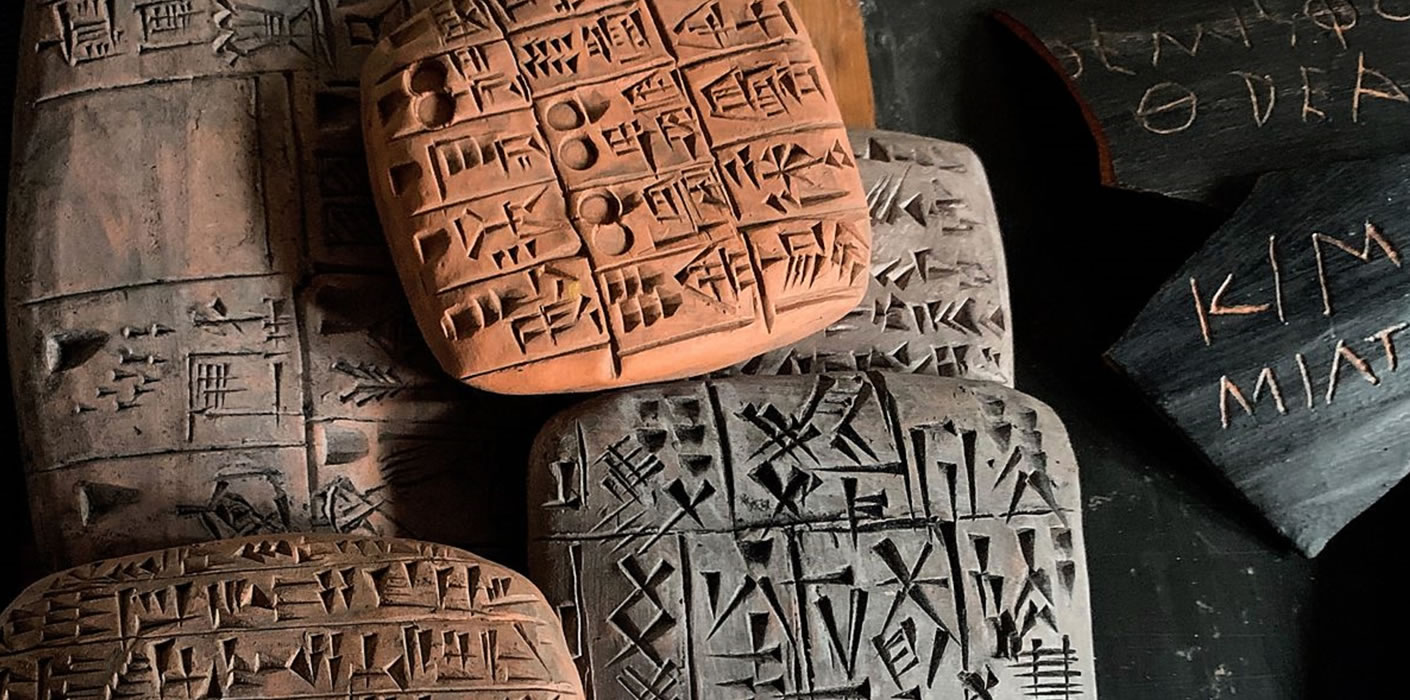

Long before the modern world began to recognise Africa’s intellectual traditions, African societies were developing systems of writing to record knowledge, communicate ideas, preserve sacred texts, administer kingdoms and express cultural identity. From the ancient inscriptions of the Nile Valley to the manuscripts of Timbuktu and the indigenous scripts of West Africa, the continent’s written heritage tells a story of innovation, memory and intellectual achievement.
Africa’s Story Was Never Only Oral
For generations, popular accounts of African history have often emphasised oral tradition while overlooking the continent’s long and varied history of writing.
Oral storytelling, praise poetry, proverbs, music and the knowledge carried by elders are indeed among Africa’s most important cultural resources. But they represent only part of the picture.
Across different periods, African societies developed, adapted and used writing systems for a wide range of purposes. Some recorded religious beliefs and royal achievements. Others supported administration, trade, education and literary expression. Some emerged through contact with neighbouring regions, while others were created by individuals seeking to represent their own languages in writing.
These traditions did not develop simultaneously, nor did every African society use writing in the same way. Africa is a vast continent with distinct histories, languages and intellectual traditions.
What connects these stories is a shared human ambition: to preserve knowledge beyond the limits of immediate memory and communicate it across time and distance.
To explore Africa’s writing systems is therefore to explore how African societies have thought, governed, worshipped, traded and documented their worlds.
Ancient Egypt: Writing Along the Nile
One of the most famous writing traditions associated with Africa is ancient Egyptian hieroglyphic writing.
Developed in the Nile Valley more than five thousand years ago, Egyptian hieroglyphs combined signs representing objects, sounds and concepts. They appeared on monuments, tombs, religious objects and other surfaces, recording royal achievements, religious ideas, names and aspects of daily life.
The Egyptian writing tradition was not limited to hieroglyphs. Hieratic, a more cursive form used extensively by scribes, and later Demotic served practical and literary purposes across different periods.
Scribes occupied important positions in Egyptian society because the ability to read and write supported administration, taxation, recordkeeping, religious institutions and the management of the state.
Writing made it possible to preserve information in ways that could survive the lifetime of an individual ruler or official. It also helped create a lasting historical record, although the surviving evidence reflects the priorities of those who produced and preserved it.
Egypt’s writing traditions belong within the wider history of African civilisation, while also being part of the connected history of the ancient Mediterranean and Near East.
Their significance is not simply that they were ancient. It is that they demonstrate how writing became a tool of organised society, cultural expression and institutional memory.
The Nile Valley’s Wider Literary Heritage
Egypt was not the only part of the Nile Valley with a significant writing tradition.
Further south, the ancient kingdom of Kush developed its own system known as Meroitic writing. Used in the region of present-day Sudan, Meroitic appeared in inscriptions and other surviving records associated with the Kingdom of Meroë.
The script had two principal forms: hieroglyphic and cursive. Scholars have established much about its sound system, but the Meroitic language remains only partly understood. This means that many surviving inscriptions cannot yet be interpreted with the same confidence as Egyptian texts.
That unfinished work is an important part of the story.
Ancient African writing is not merely a collection of achievements already fully explained. It is also a field of continuing research, where new discoveries and improved scholarship may deepen understanding of the past.
Meroitic reminds us that the historical record of Africa is larger than what modern readers can currently translate.
Ge’ez: A Script That Continues to Live
In the Horn of Africa, the Ge’ez script became one of the most influential writing systems in the region.
Ge’ez, an ancient Semitic language, was associated with the kingdom of Aksum and its surrounding cultural world. The script developed over centuries and became central to the recording of religious texts, historical works and literary traditions.
Ge’ez remains important in the liturgical life of the Ethiopian Orthodox Tewahedo Church and the Eritrean Orthodox Tewahedo Church.
Its script also forms the historical foundation of writing systems used for languages such as Amharic and Tigrinya, although these languages have their own distinct linguistic identities and conventions.
This is a particularly powerful example of continuity. A writing tradition that emerged in the ancient world continues to shape education, worship, literature and public life today.
Manuscripts preserved in Ethiopian and Eritrean religious institutions also demonstrate the importance of libraries, monasteries, scribes and religious communities in safeguarding written knowledge.
These manuscripts are not merely old objects. They are material evidence of generations of intellectual labour.
Their preservation requires specialised conservation, responsible digitisation, trained scholars and collaboration with the communities for whom these texts remain culturally and spiritually significant.
Timbuktu: A City of Books and Learning
When people think of Africa’s great intellectual centres, Timbuktu deserves a place in the conversation.
Located in present-day Mali, Timbuktu became an important centre of Islamic scholarship, commerce and manuscript culture, particularly during the medieval and early modern periods. Its position within trans-Saharan trade networks helped connect scholars, merchants and travellers across West and North Africa.
The city’s educational and religious institutions supported the study of subjects including theology, law, grammar, literature, mathematics and astronomy. Scholars exchanged ideas, copied texts and developed libraries that were often maintained by families over generations.
The manuscripts associated with Timbuktu were largely written in Arabic, with some texts incorporating African languages or local linguistic features. They demonstrate the depth of scholarly activity in the region and the importance of written learning within West African societies.
This history challenges the persistent misconception that intellectual life in precolonial Africa depended exclusively on oral transmission.
Books circulated. Scholars debated. Families preserved collections. Students travelled to study with respected teachers. Knowledge moved through networks that linked communities across considerable distances.
Timbuktu’s manuscript heritage is also a reminder that knowledge can be vulnerable. Political instability, conflict, environmental conditions and inadequate preservation resources can put historical collections at risk.
Protecting these manuscripts means supporting the libraries, custodians, conservators and researchers who keep them accessible. It also means recognising that African intellectual history is not an imported story. It is part of the continent’s own historical record.
Ajami: African Languages in Arabic Script
One of the most revealing chapters in Africa’s writing history is the development of Ajami traditions.
Ajami generally refers to the practice of writing African languages using modified forms of the Arabic script. Across different regions, communities adapted Arabic letters and added or modified signs to represent sounds not found in Arabic.
Ajami traditions have been used for religious instruction, poetry, correspondence, historical writing and practical communication. Their forms and uses vary widely across languages and communities.
In parts of West Africa, African languages such as Hausa, Fulfulde and Wolof have been written in Ajami forms. Such writing traditions helped communities use an established script to express local languages and ideas.
This matters because the history of writing is not simply a competition between scripts. It is also a story of adaptation.
People take available tools and make them serve their own purposes. They adjust writing systems to represent sounds, meanings and experiences that are specific to their languages.
Ajami challenges the assumption that writing in Arabic script necessarily means writing in Arabic. A script can travel across linguistic boundaries and become a vehicle for local knowledge.
It also highlights an important challenge for modern researchers: valuable texts may remain difficult to access because they have not been catalogued, translated or studied extensively.
Supporting Ajami research can expand understanding of African languages, religious history, literature and everyday life.
Vai: A Writing System Created in West Africa
Among the most remarkable examples of indigenous African script development is the Vai syllabary, associated with the Vai people of present-day Liberia and neighbouring areas.
Traditionally dated to the early nineteenth century, the Vai script was developed to represent the Vai language. Unlike an alphabet in which individual letters generally represent consonants or vowels, a syllabary uses signs that typically represent syllables.
The Vai writing tradition demonstrates that script creation is not confined to large states, imperial administrations or established religious institutions. It can emerge within a community seeking a way to record its own language.
The script developed and changed over time, and its use has varied across generations and settings. Its history is a powerful example of local intellectual creativity.
It also raises a contemporary question: what happens when a community possesses a writing system but lacks the institutional support needed to sustain widespread literacy in it?
Preserving a script involves more than keeping its characters in a reference book. It may require teaching materials, trained educators, fonts, keyboard support, publications and opportunities for people to use the writing system in everyday life.
For Vai and other African scripts, the future of preservation depends partly on whether younger generations can encounter them as living tools rather than distant historical curiosities.
N’Ko: Writing for a Living Language
Another significant West African script is N’Ko, developed in 1949 by Guinean intellectual Solomana Kante to represent Manding languages.
The name N’Ko is commonly understood as meaning “I say” in the Manding linguistic context. The script was designed to write Manding languages and support literacy, learning and cultural expression among their speakers.
N’Ko has been used for educational materials, literature, religious texts and other publications. Its development reflects a deliberate effort to strengthen written communication in African languages.
The script has also gained a place in the digital era, with standardised encoding enabling its representation in modern computing systems.
This is an important development. A writing system that cannot be reliably displayed on phones, computers or websites faces barriers to contemporary use. Digital accessibility can make it easier to publish books, share educational resources and communicate across borders.
N’Ko also demonstrates that Africa’s writing history did not stop in antiquity. New scripts have been created in modern times in response to cultural, educational and linguistic needs.
The story is still unfolding.
Bamum: A Kingdom’s Script Innovation
In the Grassfields region of present-day Cameroon, the Bamum script emerged during the reign of King Njoya of the Bamum Kingdom in the late nineteenth century.
Its development involved experimentation and revision. The script changed over time as its creator and collaborators refined the system to represent the Bamum language.
King Njoya supported its use in administration, recordkeeping and cultural life. The initiative formed part of a broader effort to develop institutions and preserve knowledge within the kingdom.
The Bamum writing tradition is a striking reminder that African rulers and intellectuals were not simply passive recipients of outside systems. They could commission, develop and promote technologies of communication suited to their own societies.
The script’s history also reflects the pressures that political change can place on cultural institutions. Colonial rule and subsequent changes in education and administration affected its use and transmission.
Today, the preservation of Bamum requires attention to manuscripts, historical collections, teaching and digital tools that can support renewed engagement.
Its significance extends beyond the script itself. It represents the capacity of a society to innovate in the service of its language and collective memory.
Adinkra Symbols and the Difference Between Writing and Symbolism
Africa’s visual heritage also includes systems of symbols that communicate ideas without necessarily functioning as writing systems in the strict linguistic sense.
Adinkra symbols, associated with Akan cultural traditions in Ghana and Côte d’Ivoire, are a well-known example. They can express concepts relating to wisdom, responsibility, unity, life and human relationships. They appear in textiles, visual art, architecture and contemporary design.
However, it is important to distinguish symbolic communication from a writing system that represents spoken language through an organised set of signs.
Symbols can carry complex meanings without spelling out sentences in the same way an alphabet or syllabary does. Their significance depends on cultural knowledge, context and the conventions through which they are used.
This distinction does not diminish their importance. Instead, it allows us to appreciate the variety of ways African societies have communicated and preserved meaning.
Writing systems, oral traditions, symbols, performance and material culture all contribute to the wider history of human communication. Each should be understood accurately, without forcing them into categories that do not fit.
Colonialism, Education and the Struggle for Language
The history of African scripts cannot be separated from the history of colonialism and changing education systems.
Colonial administrations frequently promoted European languages and selected writing systems for schools, government and official communication. Missionary education also influenced literacy and publishing in many regions, often through the use of Latin-based orthographies for African languages.
These developments expanded literacy in some contexts but also changed the status of local languages and indigenous writing traditions. In certain places, traditional scripts lost institutional support or became less common in formal education.
The consequences varied from region to region. African languages continued to be spoken, written and adapted, and many communities developed new forms of literature and education. Yet the dominance of a limited number of official languages has sometimes made it harder for local-language publishing and indigenous scripts to receive sustained resources.
The lesson is not that one script is inherently superior to another. Scripts are tools. Their usefulness depends on the people who use them, the languages they represent and the institutions that support them.
A multilingual future for Africa need not reject international languages. It can recognise their practical value while investing in African languages and the writing systems that help communities preserve and develop their knowledge.
Bringing Africa’s Scripts into the Digital Future
The digital age presents both opportunities and challenges for Africa’s written heritage.
Digitisation can help preserve fragile manuscripts, make rare texts available to researchers and connect dispersed collections. Digital fonts and keyboard layouts can help people write in scripts that were once difficult to use on standard devices.
Language technology can also support the development of dictionaries, searchable archives, educational software and digital publishing tools.
But technology alone is not enough.
Digitisation requires careful handling of original materials, reliable metadata, long-term storage, appropriate permissions and trained specialists. Communities should have a meaningful role in decisions about how their manuscripts and cultural knowledge are recorded, shared and interpreted.
There is also a need for sustained investment. Projects that depend entirely on temporary funding may struggle to maintain digital collections after the initial work is completed.
Universities, libraries, cultural institutions, technology companies, publishers and governments can help build systems that preserve African scripts and make them useful to contemporary readers.
The opportunity is significant: an ancient inscription, a centuries-old manuscript and a modern African-language publication can all become part of a connected digital heritage, provided the people and institutions responsible for them have the resources to do the work well.
The Future of African Knowledge Is in African Hands
The history of African writing systems is not a single straight line from ancient civilisation to the modern computer. It is a rich collection of stories shaped by invention, adaptation, exchange, disruption and renewal.
Egyptian hieroglyphs, Meroitic writing, Ge’ez, Ajami traditions, Vai, N’Ko and Bamum each emerged in distinct historical and linguistic settings. They should not be treated as interchangeable, nor should their differences obscure their shared significance as evidence of Africa’s varied intellectual traditions.
They show that African societies have long developed ways to preserve knowledge, represent language and communicate ideas.
They also remind us that historical recognition is only the beginning. Manuscripts must be protected. Scripts must be documented. Languages must be taught and used. Researchers need access to collections, and communities need opportunities to pass their knowledge to younger generations.
The alphabet used in a modern classroom is one chapter in the history of writing. It is not the whole story.
Across Africa, the past remains visible in inscriptions, manuscripts, symbols and scripts that continue to invite study. Some are widely understood; others await further research. Some are used in everyday life; others survive mainly through historical records and revival efforts.
Each deserves careful attention.
Because when a people can write in their own language, preserve their own records and interpret their own history, they gain another way to participate in shaping how the world understands them.
Africa was never without intellectual history. Much of that history simply needs to be read, preserved and told with the care it deserves.
VOAM HERITAGE AFRICA | THE TAKEAWAY
Africa’s writing history is far older and more diverse than many popular accounts suggest. From ancient Nile Valley inscriptions and the manuscripts of Timbuktu to Ajami traditions and scripts created in West Africa and Cameroon, African communities have developed and adapted systems to preserve knowledge and represent their languages.
The work ahead is to protect manuscripts, expand research, support African-language publishing and ensure that indigenous scripts remain accessible to future generations.
The VOAM question: How can African schools, libraries, publishers and technology companies work together to preserve the continent’s written heritage?