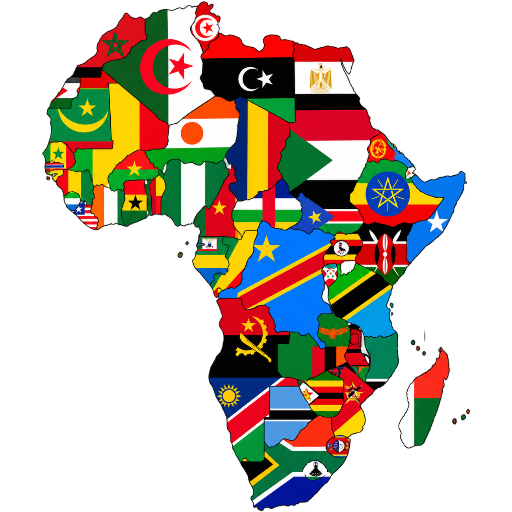




















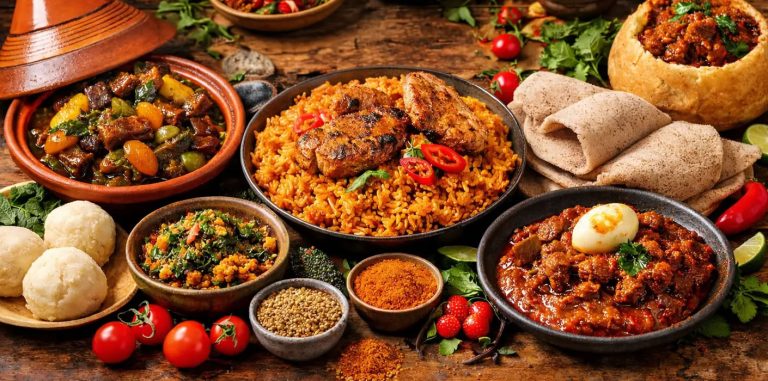








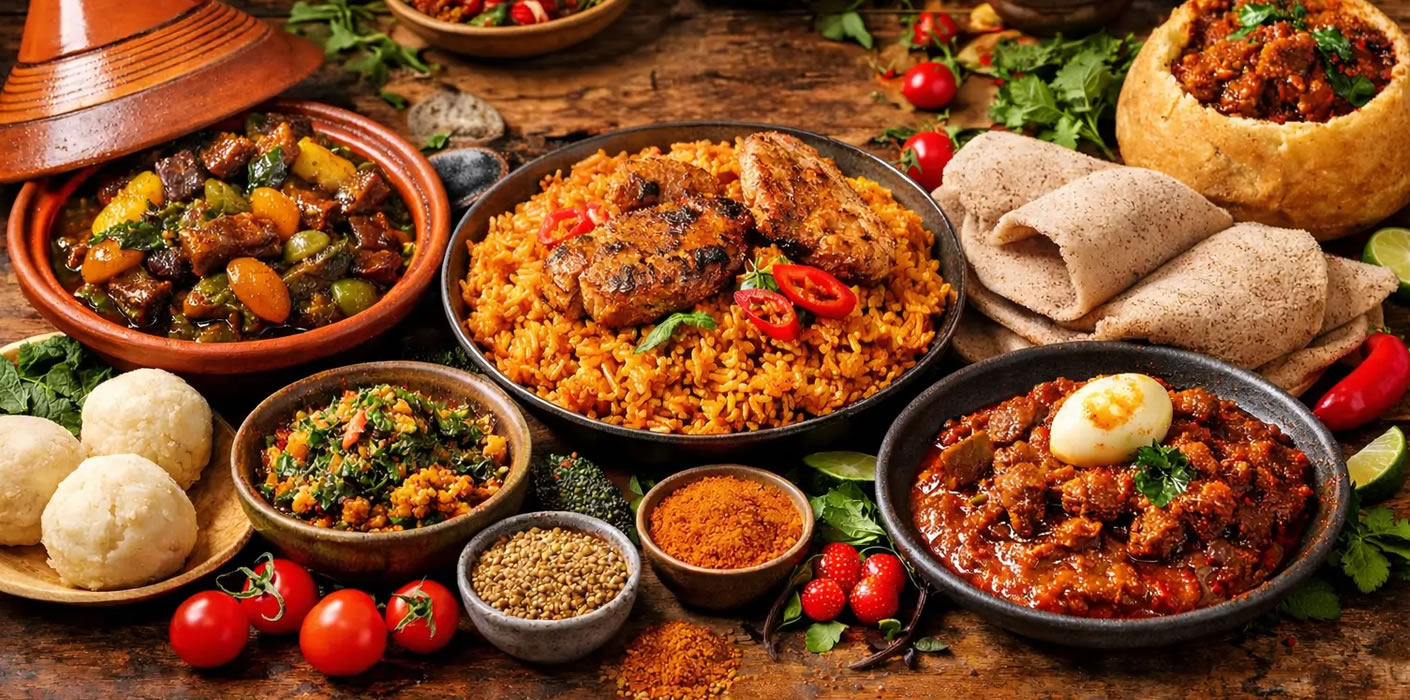

From the smoky kitchens of West Africa to the spice markets of North Africa, from East African coastal cuisine to the rich food traditions of the south, Africa’s culinary heritage tells the story of a continent through flavour.
Africa can be discovered through its landscapes, its music, its architecture and its people. But perhaps one of the most intimate ways to understand the continent is through its food.
A steaming bowl of jollof rice shared at a family celebration. Injera served with colourful Ethiopian stews. Moroccan tagines slowly prepared with aromatic spices. Senegalese thieboudienne bringing together rice, fish and vegetables. South African braai gatherings where food becomes a social experience. The fragrant coconut dishes of East Africa. The rich soups, sauces and grains that define countless African kitchens.
Every dish carries a story.
Some speak of ancient trade routes and the movement of spices. Others reflect the influence of migration, agriculture, climate, religion, geography and cultural exchange. Many are rooted in generations of knowledge passed from parents to children, from village kitchens to urban restaurants and from local markets to international food destinations.
Africa is not one cuisine. It is a vast culinary landscape made up of thousands of food traditions, ingredients, techniques and tastes.
And increasingly, the world is paying attention.
The opportunity is no longer simply to introduce African food to international audiences. It is to build a culinary industry that celebrates its diversity, creates economic value, supports local producers and positions African cuisine confidently on the global food stage.
THE GEOGRAPHY OF AFRICAN FLAVOUR
Africa’s culinary identity is inseparable from its geography.
The continent’s deserts, forests, savannahs, mountains, rivers, lakes and coastlines have shaped the ingredients available to communities and the ways in which food is prepared.
The Sahel has supported distinctive grain-based food traditions. Coastal communities have developed cuisines around fish, seafood and tropical produce. Forest regions have cultivated roots, tubers, leafy vegetables and spices. Highland communities have developed agricultural and food systems suited to their environments.
Trade and migration have also influenced African food.
Ingredients, cooking techniques and culinary ideas have moved across the Sahara, along the Indian Ocean coastline, through the Mediterranean and across the Atlantic. These exchanges have created complex food histories that cannot be reduced to simple national boundaries.
The result is a continent where a single ingredient may appear in different forms, while dishes with similar names may have very different preparations from one community to another.
To explore African food is to explore the history of Africa itself.
WEST AFRICA: A CELEBRATION OF BOLD FLAVOURS
<escape>**</escape>West Africa’s cuisine is known for its vibrant combinations of grains, vegetables, peppers, seafood, meats, legumes and richly flavoured sauces.
In Nigeria, food is deeply connected to family, celebration and hospitality.
Jollof rice remains one of the region’s most recognisable dishes, with variations in preparation and flavour across countries and households. Other Nigerian favourites include egusi soup, ogbono soup, efo riro, pepper soup, moi moi, pounded yam, amala and a wide variety of regional delicacies.
Ghana offers its own rich culinary identity through dishes such as waakye, banku with tilapia, fufu with soup, kenkey and groundnut soup.
In Senegal, thieboudienne—a celebrated preparation of fish, rice and vegetables—is widely recognised as an important expression of the country’s culinary heritage.
Côte d’Ivoire brings dishes such as attiéké, often served with fish or other accompaniments, while Benin and Togo offer distinctive combinations of maize, cassava, beans, vegetables and sauces.
Across the region, food is often an expression of community. Meals are shared, visitors are welcomed and recipes are adapted to local ingredients and personal traditions.
West African cuisine also has enormous commercial potential, particularly in restaurants, packaged foods, catering, hospitality, food tourism and agricultural processing.
EAST AFRICA: WHERE THE LAND MEETS THE INDIAN OCEAN
<escape>**</escape>East African cuisine reflects a remarkable combination of inland agricultural traditions and coastal influences.
In Ethiopia, injera—a fermented flatbread traditionally made using teff—is central to many meals. It is served with an assortment of stews and vegetable dishes, including preparations commonly known as wot.
Ethiopian cuisine is also strongly associated with distinctive spice blends, including berbere, and traditional coffee ceremonies that reflect the country’s deep relationship with coffee culture.
In Kenya, ugali, sukuma wiki, nyama choma and regional dishes such as githeri are important parts of everyday food culture. Coastal communities offer dishes influenced by Swahili traditions, including pilau, biryani and preparations featuring coconut, fish and spices.
Tanzania has a rich culinary landscape that includes ugali, nyama choma, pilau, ndizi-based dishes and a wide range of coastal foods.
Along the Swahili coast, centuries of trade and cultural interaction have shaped a cuisine in which African ingredients meet influences associated with the wider Indian Ocean world.
Food in East Africa is therefore both local and international in its history—a reflection of communities that have interacted through trade, migration and shared cultural experiences.
NORTH AFRICA: THE ART OF SPICES AND SLOW COOKING
<escape>**</escape>North African cuisine is among the continent’s most internationally recognised culinary traditions.
Moroccan food is celebrated for dishes such as couscous, tagines, pastilla and a wide variety of breads, salads and sweet treats. Its cooking traditions bring together ingredients such as preserved lemons, olives, saffron, cumin, cinnamon and other spices.
In Algeria, couscous, chorba and regional bread traditions form part of a diverse food culture shaped by geography and history.
Tunisia is known for its use of harissa, a chilli-based condiment, alongside couscous, seafood and distinctive stews.
Egypt offers a culinary identity that includes koshari, ful medames, ta’ameya, molokhia and many other dishes rooted in everyday food traditions.
Across the region, food markets are an essential part of the culinary experience. They bring together spices, grains, fresh produce, preserved foods, breads and traditional ingredients.
North African cuisine also demonstrates the importance of food as a form of cultural continuity, where recipes, cooking techniques and family traditions preserve memories across generations.
CENTRAL AFRICA: THE RICHNESS OF FOREST, RIVER AND LAND
<escape>**</escape>Central African cuisine reflects the region’s extraordinary natural diversity.
Cassava is a major staple in many communities, appearing as flour, paste, leaves and other preparations. Plantains, yams, maize, groundnuts, fish and leafy vegetables also feature prominently.
In the Democratic Republic of the Congo, dishes such as pondu—prepared using cassava leaves—illustrate the importance of local vegetables and traditional cooking techniques.
Saka-saka, commonly associated with cassava leaves in parts of Central Africa, is prepared in different ways across communities.
Cameroon’s culinary traditions are particularly diverse. Ndolé, often prepared with bitter leaves and groundnuts, is one of the country’s best-known dishes. Other regional foods include eru, achu and a variety of plantain, maize and cassava preparations.
In the Republic of the Congo, Gabon, the Central African Republic and neighbouring countries, food traditions reflect local ecosystems, riverine communities, forest resources and agricultural practices.
The region’s cuisine deserves greater international attention, particularly because many of its ingredients and preparations remain less familiar to global consumers.
SOUTHERN AFRICA: FOOD, FIRE AND COMMUNITY
<escape>**</escape>Southern African food culture is diverse, combining indigenous ingredients, pastoral traditions, agricultural practices and historical influences.
South Africa’s cuisine includes dishes such as bobotie, chakalaka, pap, biltong and a wide range of meat and vegetable preparations. The braai, a social outdoor cooking tradition, is an important feature of the country’s food culture.
Zimbabwe has traditional foods such as sadza, often served with vegetables, meat or relish. Zambia’s nshima is a central staple, commonly accompanied by vegetables, beans, fish or meat.
In Botswana, seswaa—a traditionally prepared shredded meat dish—is widely recognised as part of the country’s food identity.
Namibia’s cuisine reflects its diverse communities and landscapes, while Mozambique offers a distinctive coastal food tradition associated with seafood, coconut, peri-peri flavours and dishes such as matapa.
Across the region, food is closely connected to social gatherings, celebrations, family life and community identity.
THE ISLANDS: CULINARY CULTURES SHAPED BY THE OCEAN
Africa’s island nations offer culinary traditions that deserve a prominent place in the continent’s food story.
Seychelles is known for seafood-based dishes and Creole culinary traditions that combine influences from African, European and Asian histories.
Mauritius has a diverse food culture shaped by African, Indian, Chinese and European influences. Its cuisine includes dholl puri, rougaille, curries, seafood and a wide variety of street foods.
Madagascar’s cuisine features rice as a central staple, accompanied by meat, fish, vegetables and regional preparations. Dishes such as romazava illustrate the country’s distinctive food traditions.
Cape Verde’s cachupa, a slow-cooked dish commonly prepared with maize, beans and other ingredients, reflects the island nation’s agricultural and cultural history.
These cuisines demonstrate that Africa’s culinary identity extends far beyond the mainland.
THE INGREDIENTS THAT TELL AFRICA’S STORY
African food is built around ingredients that are both familiar and extraordinary.
Some are internationally recognised, while others remain underrepresented in global food markets.
Cassava: A major staple across several African regions, used in flour, fufu, gari, tapioca products and other preparations.
Yam: Particularly important in West Africa, where it appears in boiled, roasted, pounded and processed forms.
Millet and sorghum: Traditional grains with considerable importance in dryland agriculture and food security.
Teff: A grain strongly associated with Ethiopian food culture and the preparation of injera.
Fonio: An ancient West African grain increasingly attracting attention for its culinary and agricultural potential.
Baobab: A versatile indigenous fruit used in drinks, food preparations and other products.
Shea: Known for its use in cosmetics and food applications, with important economic links to rural communities.
Palm fruit: Used in various soups, sauces and traditional preparations, particularly across parts of West and Central Africa.
Groundnuts: A major ingredient in sauces, soups, snacks and other food products across the continent.
African leafy vegetables: Including amaranth, moringa leaves, bitter leaves and other indigenous varieties that contribute to local diets.
These ingredients are not merely agricultural commodities. They are part of Africa’s culinary heritage and represent opportunities for food innovation, processing, branding and international trade.
AFRICAN STREET FOOD: THE HEARTBEAT OF THE FOOD ECONOMY
Some of Africa’s most memorable culinary experiences are found not in luxury restaurants but in markets, roadside stalls, neighbourhood kitchens and open-air food spaces.
Street food is an important part of everyday African life.
In Nigeria, visitors encounter suya, akara, roasted plantain, popularly called boli, puff-puff, roasted corn and a variety of local snacks.
Ghana offers kelewele, waakye, grilled tilapia and other popular street foods.
In Senegal, grilled fish, sandwiches and local snacks form part of the urban food experience.
In Egypt, koshari and ful medames are familiar foods enjoyed across different social settings.
Across East and Southern Africa, roasted maize, grilled meat, fried snacks, flatbreads and locally prepared meals bring people together.
Street food provides affordable meals and supports countless small businesses.
It also creates employment for cooks, vendors, farmers, transport operators and food suppliers.
However, the sector faces challenges involving hygiene, food safety, waste management, access to clean water and appropriate vending spaces.
Supporting street-food entrepreneurs through training, infrastructure and fair regulation can improve public health while preserving an important part of Africa’s culinary identity.
THE AFRICAN RESTAURANT: TAKING LOCAL FLAVOUR TO THE WORLD
African restaurants are increasingly introducing international audiences to the continent’s diverse food traditions.
In cities across Europe, North America, the Middle East and Asia, African restaurants serve dishes that connect diaspora communities to home while introducing new customers to unfamiliar flavours.
The restaurant sector offers opportunities beyond food preparation.
It creates demand for chefs, food suppliers, interior designers, hospitality managers, event planners, food photographers, marketing professionals and delivery services.
African restaurants can also become cultural destinations where food is accompanied by music, art, storytelling, traditional décor and contemporary African design.
But international expansion requires consistency.
Restaurants need reliable ingredient sourcing, standardised recipes, trained staff, food safety systems, attractive presentation and clear brand positioning.
The opportunity is to develop African food brands that can compete in the global hospitality market without losing their cultural character.
FROM THE FARM TO THE GLOBAL TABLE
Africa’s culinary future is closely connected to its agricultural economy.
Farmers produce the ingredients that supply households, restaurants, food manufacturers, supermarkets and international markets.
Yet, the journey from farm to table is often affected by post-harvest losses, inadequate storage, limited processing facilities, transportation challenges and inconsistent market access.
Strengthening the agricultural supply chain can create enormous opportunities.
Farmers can benefit from better access to markets and improved storage systems. Food processors can secure more reliable supplies. Restaurants can source quality ingredients locally. Exporters can develop products that meet international standards.
There is also an opportunity to build stronger connections between traditional food producers and modern food businesses.
A restaurant specialising in indigenous African cuisine, for example, can create demand for local vegetables, grains, spices and other ingredients that may otherwise struggle to reach formal markets.
This relationship can support farmers, preserve indigenous crops and encourage more diverse food systems.
AFRICAN CUISINE AS A TOURISM PRODUCT
Food can be one of the strongest reasons people travel.
A visitor may arrive in Morocco to explore its markets and traditional cuisine, travel to Senegal to experience its food culture, visit Ethiopia for its coffee and traditional meals, or explore Nigeria’s regional culinary diversity.
Food festivals, cooking classes, farm visits, traditional markets, culinary tours and restaurant experiences can become important tourism products.
Destinations can develop food trails that connect restaurants, farms, markets, cultural centres and heritage sites.
Hotels can showcase regional dishes rather than rely exclusively on international menus.
Event organisers can create culinary festivals that attract visitors and generate opportunities for local food businesses.
This is particularly important because food tourism can distribute economic benefits across communities.
A successful culinary destination supports farmers, chefs, restaurants, transport operators, artisans, food vendors and hospitality businesses.
The key is to create authentic experiences that respect local food traditions while meeting appropriate standards of safety and service.
THE BUSINESS OF AFRICAN FOOD
Africa’s food sector is not limited to restaurants and traditional dishes.
It includes a wide commercial ecosystem involving:
- Agriculture and food production.
- Food processing and packaging.
- Restaurant and hospitality businesses.
- Catering and event services.
- Food retail and supermarkets.
- Food technology and delivery platforms.
- Culinary education and professional training.
- Food tourism and cultural experiences.
- Export and distribution.
- Food photography, publishing and media.
Entrepreneurs can build businesses around indigenous ingredients, packaged foods, beverages, spices, snacks, frozen products and ready-to-cook meals.
They can also develop modern African food brands that combine traditional flavours with contemporary packaging and distribution.
The opportunity is to move from celebrating African cuisine as a cultural attraction to recognising it as a commercially important industry.
THE CHALLENGES HOLDING AFRICA’S FOOD INDUSTRY BACK
Despite its enormous potential, the African food economy faces significant constraints.
1. Post-harvest losses
Poor storage, limited cold-chain facilities and inadequate transportation can cause substantial losses between farms and markets.
2. Food safety and quality standards
Businesses need stronger food-handling systems, reliable testing facilities, appropriate certification and consistent quality control.
3. Limited processing capacity
Many agricultural products are still sold with little processing, reducing the opportunities for local value addition.
4. Access to finance
Farmers, processors, restaurants and food entrepreneurs often struggle to obtain affordable capital for equipment, storage and expansion.
5. Infrastructure limitations
Unreliable electricity, inadequate water supply, poor roads and limited logistics facilities increase operating costs.
6. Market access
Small producers may struggle to reach supermarkets, institutional buyers, export markets and formal distribution networks.
7. Cultural underrepresentation
Many African ingredients, dishes and culinary traditions remain poorly documented or underrepresented in international food media.
8. Intellectual property and cultural ownership
Traditional food knowledge and indigenous products may be commercialised without adequate recognition or benefit-sharing for the communities that preserve them.
Addressing these issues requires cooperation among farmers, entrepreneurs, governments, investors, researchers and hospitality professionals.
PRESERVING THE TRADITION WHILE INNOVATING FOR THE FUTURE
African cuisine must evolve, but it must not lose its roots.
Modern chefs can reinterpret traditional dishes, experiment with indigenous ingredients and introduce new presentation techniques.
Food entrepreneurs can develop packaged products inspired by local recipes. Researchers can explore the nutritional and commercial potential of indigenous crops. Hospitality businesses can create contemporary dining experiences around traditional flavours.
However, innovation should be respectful.
Recipes, food knowledge and agricultural traditions often belong to communities with long histories of cultivation and preparation.
Commercial enterprises should acknowledge cultural origins, engage relevant communities and ensure that local producers benefit from the value created.
The future of African cuisine lies in the balance between preservation and innovation.
It should be possible to enjoy a traditional meal in a village kitchen, experience a contemporary African restaurant in a major city and purchase an internationally distributed African food product—all while recognising the cultural knowledge behind the food.
THE WORLD IS READY TO TASTE AFRICA
African cuisine has the ingredients, stories, flavours and traditions needed to compete more strongly in global food markets.
But international recognition must be supported by investment in production, processing, branding, food safety, distribution and culinary education.
African governments can support food businesses through agricultural infrastructure, research, export promotion and appropriate regulatory systems.
Investors can finance food-processing facilities, cold-chain logistics, restaurants, food technology and distribution networks.
Educational institutions can strengthen professional culinary training, hospitality management, nutrition research and food entrepreneurship.
Media organisations can document the continent’s food heritage and introduce international audiences to its culinary diversity.
And African consumers can support local food businesses by recognising the quality, innovation and cultural value of products made on the continent.
Africa’s culinary story is far from complete.
It is being written every day in family kitchens, village farms, street markets, restaurants, hotels, food laboratories and commercial production facilities.
Every ingredient carries a history. Every recipe tells a story. Every meal creates an opportunity.
From the farm to the kitchen, from the market to the restaurant, and from the local table to the global marketplace, Africa has a culinary identity worth celebrating and an industry worth building.
The world does not need another reason to discover Africa. Sometimes, all it needs is a taste.

VOAM TASTE AFRICA | THE TAKEAWAY
Africa’s culinary diversity is a cultural treasure and an economic opportunity.
Its food traditions can support agriculture, manufacturing, hospitality, tourism, entrepreneurship and international trade.
To unlock this potential, the continent must strengthen food processing, preserve indigenous ingredients, improve supply chains, invest in culinary skills and build African food brands capable of competing globally.
The future of African cuisine should be defined not only by the dishes the world discovers, but also by the farmers, chefs, entrepreneurs and communities who own and benefit from the industry.
VOAM QUESTION
If you could introduce one African dish to the entire world as the continent’s signature culinary experience, which dish would you choose, and what makes it special?