




























From a Nigerian industrialist’s ambition to the wider challenge of building vehicles on African soil, the story of Innoson Vehicle Manufacturing raises a fundamental question: can Africa move beyond importing the products it needs to manufacturing more of them itself?
THE DREAM OF MAKING THINGS AT HOME
Every industrial nation has had to confront a defining question: will it depend primarily on products manufactured elsewhere, or will it develop the capacity to design, produce and maintain goods of its own?
For Africa, this question is particularly important in the automobile industry.
Vehicles are central to modern economic life. They transport people to work, move agricultural produce to markets, deliver goods between cities, support emergency services and connect businesses to their customers. Behind every vehicle lies an extensive industrial network involving engineering, metal fabrication, plastics, glass, electronics, tyres, logistics, software, maintenance and skilled labour.
A country that develops meaningful automotive manufacturing capacity can create opportunities across this wider ecosystem.
Yet building a competitive automobile industry is extraordinarily difficult. It requires capital, technical expertise, reliable energy, specialised equipment, quality-control systems, dependable suppliers, access to finance and a market large enough to support production at an economically viable scale.
This is the industrial challenge at the heart of Nigeria’s automobile ambitions.
Among the companies associated with that ambition is Innoson Vehicle Manufacturing (IVM), the Nigerian vehicle manufacturer linked to industrial entrepreneur Innocent Chukwuma and the wider Innoson Group.
Its story is not simply about producing vehicles locally. It is about the determination to establish manufacturing capability in an economy where imported vehicles have long played a dominant role.
The larger question is whether that ambition can help Nigeria develop a deeper, more competitive automotive ecosystem—and what other African countries can learn from the attempt.
MEET THE INDUSTRIALIST: INNOCENT CHUKWUMA
Innocent Chukwuma’s business journey is frequently associated with a progression from trading and motorcycle-related enterprise into larger industrial ambitions.
Through the Innoson Group, he became connected with manufacturing activities that extended beyond the sale of imported goods. The development of Innoson Vehicle Manufacturing represented a more demanding ambition: to participate directly in the production of vehicles for the Nigerian market.
That transition matters because trading and manufacturing require different capabilities.
A trading business primarily depends on identifying products, sourcing them, managing distribution and selling them profitably. Manufacturing adds a more complex set of responsibilities: production planning, equipment maintenance, engineering, quality assurance, workforce development, supplier coordination and consistent output.
The move into vehicle manufacturing therefore represents a significant industrial undertaking, regardless of the scale at which individual models or components are produced.
It also illustrates an important principle of economic development: industrial capability rarely appears fully formed. It develops through investment, learning, experimentation, workforce training and the gradual accumulation of technical knowledge.
For Nigeria, the significance of the Innoson story lies partly in the willingness to attempt a form of enterprise that requires long-term commitment rather than quick commercial returns.
However, industrial ambition must ultimately be measured by verifiable results: production volumes, product quality, customer satisfaction, local supplier participation, employment, financial sustainability and the ability to compete.
WHY LOCAL VEHICLE MANUFACTURING MATTERS
Nigeria has a substantial demand for mobility, supported by its population, commercial activity and transport requirements.
Historically, imported new and used vehicles have supplied a large part of the market. Local vehicle assembly and manufacturing initiatives have sought to increase domestic participation in this sector.
The distinction between manufacturing, assembly and importing is important.
A company that imports completely built vehicles participates in distribution and after-sales services. A company that assembles imported kits performs additional industrial work locally. A manufacturer that also produces significant components within the country may create deeper domestic value through engineering, fabrication and supplier development.
These activities can all contribute to the economy, but their industrial impacts are different.
For Nigeria to build a sustainable automotive industry, it must understand where value is created at each stage and develop a credible pathway towards greater local participation where commercially viable.
Innoson’s importance within this discussion is that it represents an identifiable Nigerian attempt to develop vehicle-production capabilities within the country.
The goal should not be to insist that every component must immediately be manufactured locally. Such an approach could raise costs, reduce quality or make production commercially unsustainable.
Instead, the objective should be to increase domestic capability progressively, beginning with components and processes that local firms can produce competitively and expanding as skills, technology, capital and demand develop.
Industrial progress is not measured by a label alone. It is measured by what a country can reliably make, how much value it retains and whether its products can compete.
THE FACTORY AS A CLASSROOM
One of the less visible benefits of industrial investment is the opportunity to develop technical knowledge.
A manufacturing facility brings together workers and specialists who must coordinate machinery, materials, production schedules, testing, maintenance and quality assurance.
In the automotive sector, these activities can support skills in mechanical engineering, electrical systems, welding, machining, upholstery, painting, fabrication, logistics and industrial management.
They can also create opportunities for vocational institutions to align training with real production requirements.
For young Nigerians pursuing engineering and technical careers, the development of domestic manufacturing enterprises can provide a practical context in which classroom knowledge is applied to real industrial problems.
This relationship must be deliberately developed. Manufacturers need trained workers, while educational institutions need current knowledge of the technologies and standards used in industry.
Apprenticeships, industrial placements, technical certification and joint training programmes can help bridge the gap.
The wider opportunity is to develop not only employees who can operate machinery, but technicians who can maintain equipment, engineers who can improve processes, supervisors who can manage production and entrepreneurs who can establish businesses supplying the manufacturing sector.
A successful industrial ecosystem produces more than finished products. It develops people capable of producing the next generation of products.
BEYOND THE FACTORY GATES: THE SUPPLIER OPPORTUNITY
A vehicle factory does not operate in isolation.
Its production depends on a network of suppliers and service providers. Some supply metal components, seats, tyres, glass, plastics, batteries, wiring and other parts. Others provide packaging, transport, security, maintenance, software, cleaning, catering and professional services.
This network creates the possibility of wider economic participation.
If local suppliers can meet required standards at competitive prices, manufacturers may be able to source more inputs domestically. Suppliers, in turn, can develop expertise and serve other customers, potentially including manufacturers outside the automotive industry.
But supplier development requires more than an instruction to buy locally.
Automotive components must meet demanding specifications for safety, reliability, durability and consistency. A supplier must deliver the correct product, in the correct quantity, at the required time and at a commercially sustainable price.
Manufacturers may therefore need to support suppliers through technical specifications, quality-assurance processes, testing, forecasting and long-term purchasing relationships.
Financial institutions also have a role. Small manufacturers often need equipment finance and working capital to meet the requirements of larger industrial customers.
The opportunity for Nigeria is to develop supplier businesses that can progress from serving one domestic manufacturer to participating in wider regional and international value chains.
The factory is important. The ecosystem around it may be even more consequential.
THE CUSTOMER MUST COME FIRST
Industrial pride can inspire support for locally produced goods, but pride alone cannot sustain a commercial industry.
Customers expect vehicles to be reliable, safe, comfortable, affordable to operate and supported by accessible maintenance services. They also consider fuel consumption, spare-parts availability, resale value, durability and financing options.
For locally manufactured vehicles to compete successfully, these expectations must be addressed.
A manufacturer needs to understand the conditions in which its customers operate. Commercial fleets, public transport operators, government agencies, private motorists and businesses may have very different requirements.
A vehicle designed for frequent urban travel may face different demands from one used on rural roads or for heavy commercial work. Maintenance arrangements and spare-parts availability can be as important to the customer as the original purchase price.
This is particularly relevant in markets where operating costs are influenced by fuel prices, exchange rates, road conditions and the availability of qualified technicians.
Customer confidence develops when a company delivers consistently and responds effectively when something goes wrong.
For Innoson and other African vehicle producers, the long-term test is not merely whether customers are willing to buy a locally made vehicle once. It is whether they trust the product enough to buy again, recommend it and depend on it for their daily operations.
THE FINANCING CHALLENGE
Automobile manufacturing is capital-intensive.
Factories require machinery, tooling, specialised equipment, skilled personnel, testing systems and continuous investment in product development. Manufacturers also need funds to purchase materials, hold inventory, manage production and support vehicles after sale.
When borrowing costs are high or long-term finance is difficult to obtain, the challenge becomes more severe.
The customer faces a related problem. Even if a locally manufactured vehicle is competitively priced, many households and businesses may struggle to finance its purchase.
This creates a cycle that industrial policy must address from both sides of the market.
Manufacturers need suitable long-term financing to develop production capacity. Buyers need responsible financing options that match their income or business cash flow. Fleet operators may require structured leasing or asset-finance arrangements.
Government procurement can sometimes provide an initial market for locally produced vehicles, where the products meet the relevant technical, safety and value-for-money requirements. But public-sector purchasing should not become a substitute for wider customer demand or an excuse for weak performance.
Sustainable manufacturing depends on a broad customer base and disciplined commercial management.
The industry must ultimately demonstrate that its products provide value without relying indefinitely on protection or preferential treatment.
POLICY, PROTECTION AND COMPETITION
Governments can influence the development of domestic manufacturing through tariffs, local-content policies, industrial incentives, infrastructure investment, technical standards and procurement decisions.
Such measures can help emerging industries overcome some of the disadvantages associated with entering markets dominated by established international manufacturers.
However, protection is most effective when linked to clear performance expectations.
If policy support is provided without incentives to improve quality, increase productivity, develop local suppliers or become more competitive, it can preserve inefficiency rather than build industrial strength.
On the other hand, exposing an emerging manufacturer to competition before it has a realistic opportunity to develop its capabilities may make it difficult to establish a viable domestic industry.
The policy challenge is to strike a careful balance.
Nigeria needs a predictable automotive policy framework that encourages long-term investment, supports legitimate industrial development and rewards measurable improvements in productivity and local value addition.
It also needs reliable infrastructure, transparent administration, consistent enforcement of standards and policies that can be understood by investors and manufacturers.
Frequent changes in the rules can undermine the long-term planning required for industrial projects.
A credible industrial strategy must therefore extend beyond announcements. It must establish practical targets, clear responsibilities and a framework for evaluating whether public support is producing the intended economic benefits.
THE AFRICAN MARKET: A BIGGER OPPORTUNITY
Nigeria’s domestic market offers opportunities, but the wider African market could be equally important to the long-term development of its automotive industry.
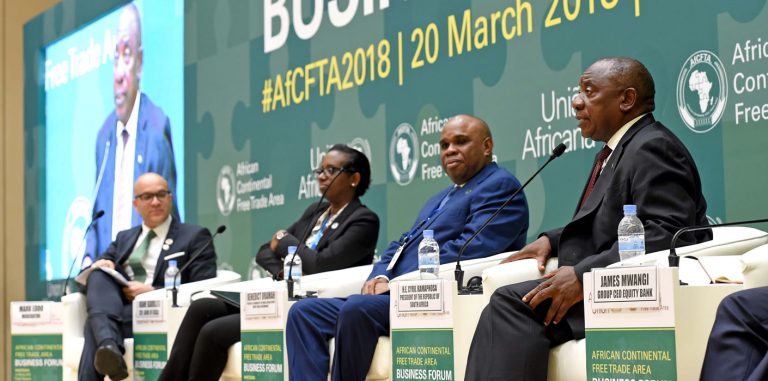
The African Continental Free Trade Area creates a framework for expanding intra-African trade. If implementation continues to reduce practical barriers, manufacturers may be able to serve customers in multiple countries rather than depending exclusively on domestic demand.
For a vehicle producer, a wider market could support larger production volumes, improve economies of scale and justify investments in additional tooling, research and supplier development.
However, regional expansion is not automatic.
Vehicles must satisfy applicable technical and safety requirements. Manufacturers must understand import regulations, rules of origin, customs procedures, distribution arrangements and the cost of transporting products across borders.
They must also compete with established international manufacturers and other regional producers.
The opportunity lies in developing vehicles and commercial solutions that respond to genuine African market needs while meeting credible quality standards.
This may include passenger vehicles, commercial transport, fleet solutions and specialised vehicles for particular operating environments. The most promising opportunities will depend on customer demand, technical capability and competitive economics rather than broad assumptions about what African consumers need.
Regional trade can expand the market, but competitiveness must make the expansion commercially worthwhile.
ELECTRIC VEHICLES: THE NEXT INDUSTRIAL TEST
The global automotive industry is undergoing significant change through electrification, software integration, advanced safety systems and new manufacturing technologies.
Africa’s participation in this transition will depend on its ability to build relevant capabilities while addressing the practical realities of its markets.
Electric mobility presents opportunities for vehicle manufacturing, battery-related industries, charging infrastructure, power management, software, maintenance and fleet services. But it also presents substantial challenges.
Reliable electricity, charging availability, purchase costs, battery performance, repair expertise and the sourcing and recycling of materials all influence adoption.
For Nigeria, the development of electric vehicles cannot be separated from wider questions about power infrastructure and the economics of mobility.
Domestic manufacturers will need to assess which technologies fit their customers, available infrastructure and production capabilities. They will also need access to research, engineering talent, testing facilities and partnerships with technology providers.
The transition does not mean every manufacturer must immediately abandon existing vehicle technologies. It means industrial planning must account for a changing market and avoid investments that become uncompetitive before they deliver an adequate return.
Innoson and other African automotive enterprises have an opportunity to participate in this evolving landscape if they can build the necessary technical and commercial capabilities.
The broader challenge is to ensure that Africa is not merely a destination for new automotive technologies, but a place where some of those technologies can be developed, adapted, manufactured and maintained.
WHAT MUST HAPPEN FOR THE DREAM TO GROW?
The development of a sustainable Nigerian automobile industry will require coordinated action across several areas.
First, manufacturing capability must deepen. Domestic production should progressively build engineering expertise, reliable processes and competitive local supply chains.
Second, quality must remain non-negotiable. Vehicles should meet applicable safety and technical standards, with transparent testing and effective after-sales support.
Third, technical education must connect with industry. Universities, vocational institutions and manufacturers should work together to develop skills relevant to current and emerging production technologies.
Fourth, finance must support both production and demand. Long-term industrial capital, supplier financing and suitable vehicle-purchase arrangements can help the industry develop, provided they are commercially responsible.
Fifth, policy must be predictable and performance-driven. Incentives should support measurable improvements in productivity, local value addition, employment and competitiveness.
Finally, African market integration must become practical. Better transport links, simpler trade processes, compatible standards and credible regional partnerships can help manufacturers expand beyond individual national markets.
None of these measures guarantees success. Industrial development is a long process involving experimentation, investment and the willingness to learn from setbacks.
But without them, even the most ambitious manufacturing project will struggle to grow into a competitive industrial ecosystem.
MORE THAN A VEHICLE
Innoson represents an important question in Nigeria’s development story: what happens when local entrepreneurs attempt to build complex products in an economy more accustomed to importing them?
The answer cannot be determined by symbolism alone. It must be found in production performance, product quality, commercial sustainability, workforce development and the depth of local participation.
Yet the ambition itself deserves serious examination because the issue extends beyond one company.
A country that develops manufacturing capability can create opportunities for engineers, technicians, suppliers, transport operators, researchers and entrepreneurs. It can also strengthen its ability to respond to changing market conditions and develop products around its own needs.
The objective should not be to reject international products simply because they are imported. Nor should it be to assume that local production is automatically superior.
The objective is to build the capacity to compete: to design, produce, maintain and improve goods that customers choose because they offer genuine value.
For Nigeria, that ambition extends from vehicles to agricultural machinery, industrial equipment, electronics, pharmaceuticals, construction materials and many other products.
Every sector presents its own challenges. But the underlying principle remains the same: economic development becomes more durable when countries build the skills, institutions and enterprises required to produce more of the value they consume.
The dream of an African automobile industry will not be realised by a single factory or one industrialist. It will require a connected ecosystem of manufacturers, suppliers, workers, financiers, researchers, customers and policymakers.
Innoson is part of that wider conversation.
The ultimate measure of success will be whether the effort helps create an industry capable of standing on its own commercial strength—and whether more African enterprises can follow the same path of moving from trading and distribution towards productive, technologically capable manufacturing.
The ambition is to build more than vehicles. It is to build the industrial confidence and competence to make Africa a producer, innovator and competitor in the global economy.

VOAM ENTERPRISE AFRICA | THE TAKEAWAY
Innoson’s automotive ambition represents the wider challenge of building African manufacturing capability. The long-term opportunity lies in developing local suppliers, skilled workers, competitive products, reliable after-sales services and access to larger regional markets.
Industrial pride can inspire the journey, but product quality, customer confidence, technical competence and commercial sustainability must determine its success.
VOAM QUESTION
What must Nigeria do to build a globally competitive automobile industry—and should the priority be local manufacturing, component production, vehicle assembly, electric mobility or a coordinated combination of all four?