




























Along the banks of the River Gambia, history is not confined to monuments or museum displays. It lives in the rhythms of music, the wisdom of elders, the stories of families, the colours of traditional dress and the customs through which communities remember who they are.
A Small Country with a Remarkable Cultural Story
The Gambia may be one of Africa’s smallest mainland countries, but its cultural landscape is anything but small.
Stretching along the River Gambia and surrounded on most sides by Senegal, the country carries a rich inheritance shaped by trade, migration, kingdoms, religion, family traditions and centuries of cultural exchange. Its history is reflected in the lives of its many communities, whose languages, artistic expressions and social practices contribute to a national identity that is both distinctly Gambian and unmistakably African.
To understand The Gambia is to look beyond its beaches and familiar tourist attractions. It is to listen to the voices of its elders, discover the meanings behind its music, appreciate the work of its artisans and recognise the ways tradition continues to influence modern life.
Here, heritage is not simply a record of what came before. It is a living conversation between generations.
The River That Connects a Nation
The River Gambia is more than a geographical feature. It has long served as a route for movement, commerce, settlement and cultural exchange.
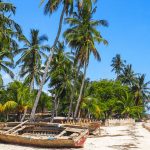
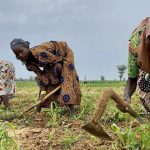
Communities developed along its banks and tributaries, drawing sustenance from fishing, farming and trade. Boats connected settlements, while the river’s surrounding landscapes supported livelihoods and shaped the rhythm of daily life.
Over time, the river also became part of a wider historical network linking the interior of West Africa to Atlantic trading routes. That history includes periods of commerce and cultural contact, as well as the devastating legacy of the transatlantic slave trade.
Today, the river remains central to The Gambia’s identity. It provides a setting for livelihoods and tourism, while its landscapes connect visitors to the country’s ecological and historical heritage.
To travel through The Gambia is to encounter a nation whose story has always been connected to movement: people travelling, goods changing hands, languages meeting and traditions evolving.
A Nation of Many Cultural Voices
The Gambia’s cultural identity cannot be reduced to a single ethnic group, language or tradition.
Mandinka, Wolof, Fula, Jola, Serer and other communities form part of the country’s diverse social fabric. Each carries its own histories, cultural expressions and inherited knowledge, while generations of interaction have created shared practices and experiences.
Family relationships, respect for elders, community participation and hospitality hold important places in many Gambian settings, although customs naturally differ between communities, families and individuals.
These values are often expressed through everyday life rather than formal ceremonies alone. They can be seen in how relatives gather, how neighbours support one another, how important occasions are marked and how knowledge is passed from older generations to younger ones.
Language is another powerful carrier of heritage. The languages spoken across The Gambia preserve local expressions, proverbs, humour, historical memories and distinctive ways of understanding the world. English serves as the official language, while Gambian languages remain essential to everyday communication and cultural continuity.
The country’s diversity is not an obstacle to national identity. It is one of its defining strengths.
When History Is Carried by the Human Voice
Long before digital archives, podcasts and social media, African societies developed sophisticated ways of preserving and transmitting knowledge.
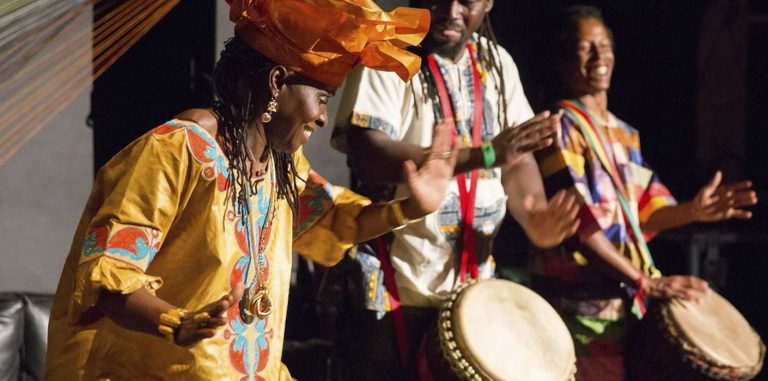
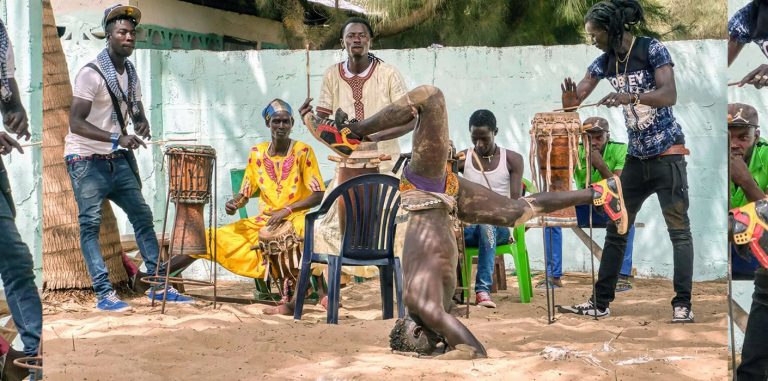
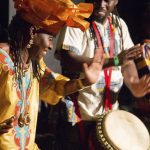
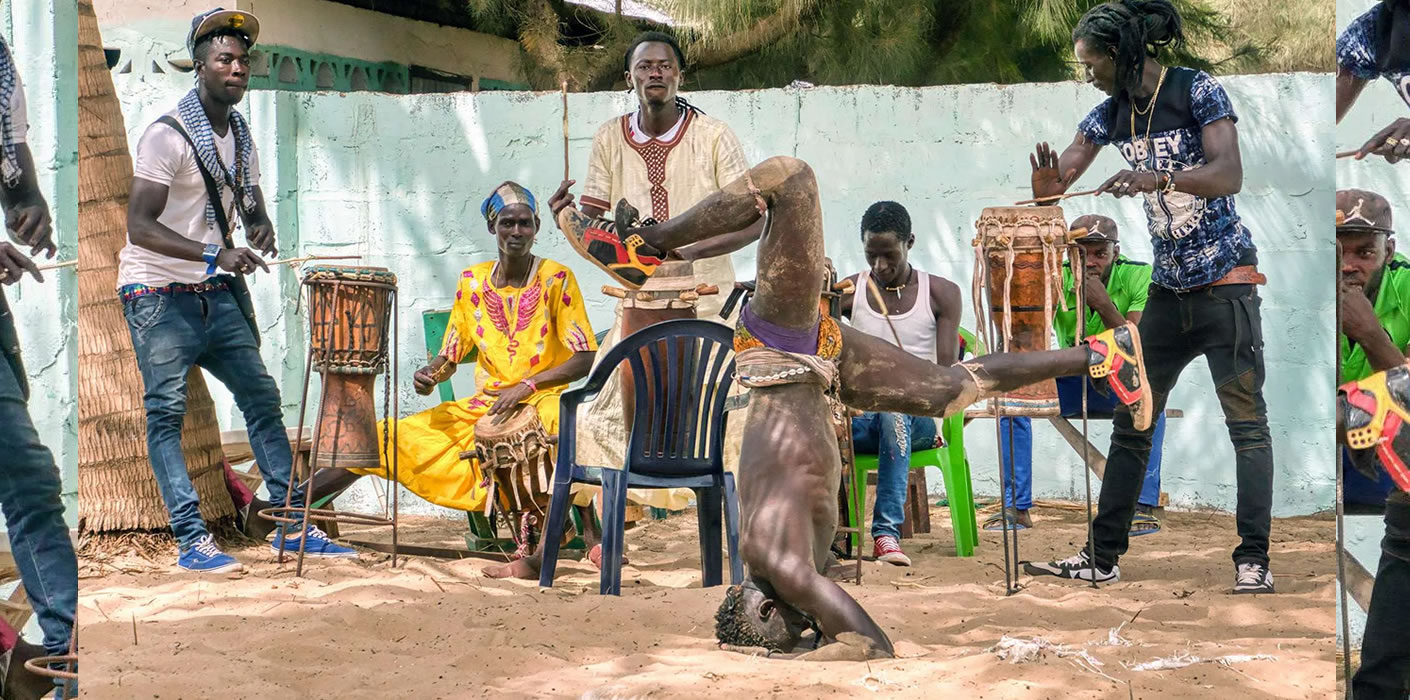
Oral tradition remains an important part of Gambian cultural life. Through stories, praise poetry, proverbs, family histories, songs and public performances, knowledge can travel across generations without being confined to written records.
In Mandinka and related Mande cultural traditions, jeliw—often called griots in English—have historically served as musicians, oral historians, praise singers and custodians of genealogical knowledge. Their work has helped preserve accounts of families, rulers, communities and historical events.
The role of the griot is not merely to entertain. In appropriate cultural contexts, it involves remembering, interpreting and communicating collective memory. Music and spoken word become ways of keeping history present.
Yet oral history is not a single, uniform practice throughout The Gambia. Different communities have their own systems of knowledge transmission, performance and cultural authority. Their traditions deserve to be understood on their own terms.
In an age when information is increasingly stored in digital formats, these traditions offer an important reminder: a culture’s archive may live in people—in their memories, voices, relationships and responsibilities to the next generation.
The challenge is to ensure that these voices are heard, respected and preserved without stripping them of context.
The Kora: Music That Carries Memory
Few instruments are as closely associated with the musical traditions of the Senegambia region as the kora.
A beautiful, harp-like instrument traditionally constructed with a calabash resonator, a wooden neck and strings, the kora produces a distinctive sound that can be delicate, rhythmic and deeply expressive.
In Mandinka musical traditions, kora players have been associated with the transmission of historical narratives, praise poetry and family histories. The instrument’s music can accompany storytelling, ceremonies and performances that connect the present to the past.
But the kora is not simply an artefact of an earlier age.
Contemporary Gambian and West African musicians continue to explore its possibilities, combining inherited techniques with new arrangements, recording technologies and international collaborations. Traditional instruments meet modern stages; ancestral melodies find new audiences.
This evolution demonstrates an important truth about heritage: preservation does not always mean keeping culture unchanged. Sometimes it means giving inherited knowledge the opportunity to grow while maintaining respect for its origins.
For The Gambia, music is both a cultural inheritance and a living creative resource.
Dress, Craft and the Language of Identity
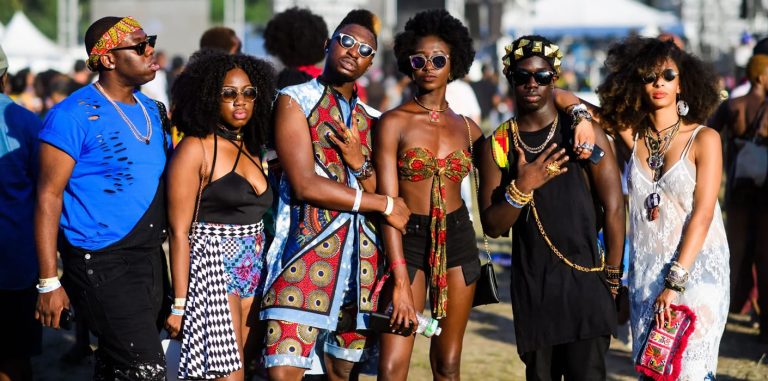
Traditional clothing remains a visible expression of identity and celebration in Gambian society.
Flowing garments, embroidered fabrics, headwraps and carefully chosen accessories feature in weddings, religious celebrations, family gatherings and other important occasions. Styles vary according to community, personal preference, occasion and contemporary fashion.
Clothing can communicate dignity, belonging, creativity and respect for an event. It also provides a space where inherited aesthetics meet modern design.
Across the country, craft traditions and artistic skills contribute to this cultural landscape. Textile work, embroidery, basketry, woodwork, jewellery and other forms of handmade production reflect the creativity of artisans and the knowledge developed through practice.
For craftspeople, heritage can also be a livelihood. Their work has potential to connect local skills with domestic markets, tourism, design industries and international audiences.
That opportunity, however, depends on more than displaying traditional objects to visitors. Artisans need fair compensation, access to markets, opportunities to train apprentices and recognition as skilled professionals whose knowledge has value.
When traditional craft is treated as serious work rather than a souvenir novelty, cultural preservation and economic opportunity can reinforce one another.
Food: A Heritage Served at the Table
Food offers another way to understand the cultural character of The Gambia.
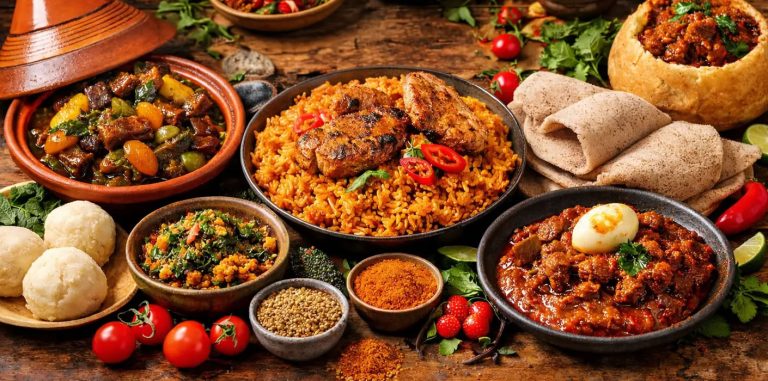
Rice, fish, groundnuts, vegetables and locally available ingredients feature prominently in many Gambian meals. Recipes and preparation methods vary between households and communities, shaped by local resources, family traditions and personal taste.
Among well-known dishes are domoda, a groundnut-based stew; benachin, a rice dish often prepared with fish or meat and vegetables; and yassa, commonly prepared with onions and a lemon-based marinade. These dishes also belong to a wider Senegambian culinary world, where food traditions cross present-day national boundaries.
Meals can be occasions for hospitality, family connection and shared celebration. Recipes preserve memories of relatives and places, while cooking skills are often transferred informally through observation and participation.
For younger generations, documenting family recipes and learning traditional preparation methods can help keep this knowledge alive. For food entrepreneurs, chefs and hospitality businesses, Gambian cuisine offers opportunities to introduce local flavours to new audiences without losing the stories behind them.
The future of culinary heritage depends on both continuity and creativity: keeping valued traditions accessible while allowing cooks to interpret them in contemporary ways.
Faith, Celebration and Community Life
Religion plays a significant role in Gambian society. Islam is the predominant religion, while Christian communities and other beliefs are also part of the national landscape.
Religious observances, family ceremonies and community gatherings shape the calendar of many households. Ramadan and Eid celebrations are important occasions for numerous Muslim families, while Christian communities mark their own religious festivals and observances.
Traditional practices may also accompany life events, including naming ceremonies, marriages, funerals and other milestones. The form and meaning of these practices differ across communities and families.
Such occasions can bring relatives together across distances, strengthen social relationships and provide opportunities for elders to share advice and family histories.
It is important, however, not to treat Gambian society as culturally frozen or socially uniform. Faith, urbanisation, education, migration and generational change all influence how people understand and practise tradition.
Some customs remain strong; others are being reconsidered or adapted. Young Gambians are not merely inheritors of culture. They are active participants in deciding what to preserve, what to change and how to express identity in a changing world.
Heritage Meets the Modern World
The Gambia’s cultural life continues to evolve in homes, schools, studios, businesses and online spaces.
Musicians use digital platforms to reach listeners beyond national borders. Designers reinterpret traditional aesthetics. Photographers and filmmakers document family histories, ceremonies and everyday life. Young storytellers use social media to present Gambian perspectives to audiences who may know little about the country.
Tourism also creates opportunities for cultural exchange, particularly when local communities and practitioners have meaningful control over how their heritage is presented.
But visibility brings responsibilities.
When traditions are presented primarily for visitors, there is a risk that complex practices may be simplified into performances designed to meet outside expectations. Cultural symbols can lose their meaning when separated from the people, histories and circumstances that give them significance.
Responsible cultural tourism should therefore involve local knowledge holders, pay cultural practitioners fairly, respect sacred or restricted practices and allow communities to determine what may be shared publicly.
The goal should not be to turn culture into a spectacle. It should be to create opportunities for people to encounter one another with curiosity and respect.
Digital preservation can help, too. Oral histories, traditional songs, local-language recordings, photographs and community archives can protect valuable knowledge from being lost. Such initiatives are strongest when communities help decide what is recorded, who can access it and how the material should be used.
Technology can support tradition, but it cannot replace the human relationships through which culture gains meaning.
The Business of Keeping Culture Alive
Cultural heritage is often discussed in terms of identity and history. It should also be recognised as part of the wider creative economy.
Music, fashion, food, craft, film, festivals, storytelling and cultural tourism can support livelihoods while strengthening a country’s international profile.
For The Gambia, the opportunity lies in building systems that allow cultural practitioners to earn sustainably from their skills. This includes professional training, business development, fair contracts, intellectual property awareness, access to finance and stronger routes to market.
Museums, schools, cultural organisations, tourism operators, publishers and media platforms can all contribute by documenting local traditions, supporting practitioners and creating opportunities for the next generation.
However, commercial success should not become the only measure of cultural value. Some traditions may be too private, sacred or community-specific to be commercialised. Others may require careful interpretation to prevent misrepresentation.
A sustainable heritage economy respects both opportunity and boundaries.
It recognises that culture belongs first to the people who create, practise and carry it forward.
What The Gambia Teaches Africa About Heritage
The Gambia’s cultural story offers a wider lesson for the continent.
Africa’s heritage is not confined to ancient kingdoms, archaeological discoveries or celebrated historical figures. It also exists in ordinary lives—in a song remembered by a grandmother, a recipe prepared for a family gathering, a language spoken at home, a craft taught to an apprentice or a story retold to a child.
These forms of heritage can be overlooked because they do not always occupy formal institutions or appear in official records. Yet they are essential to how communities understand themselves.
Preserving them requires more than occasional festivals or promotional campaigns. It requires sustained investment in education, cultural documentation, local-language publishing, artistic development and the people who hold this knowledge.
It also requires listening.
Too often, communities are described by outsiders without being given sufficient space to explain themselves. A stronger approach places local voices at the centre, acknowledges differences and recognises that cultural identity is continually shaped by those who live it.
For African media, this creates a clear responsibility: to tell cultural stories with depth, accuracy and respect—not merely to showcase what is visually appealing, but to explain why it matters.
The Future Belongs to Those Who Remember
The Gambia’s heritage is not a story that ended with previous generations. It continues wherever people choose to learn a language, practise a craft, record a family history, perform a traditional song or teach a younger person the meaning of a custom.
Some traditions will change. Others will be revived. New forms of music, fashion and storytelling will emerge from conversations between inherited knowledge and contemporary experience.
That is not necessarily a loss of authenticity. It is evidence that culture remains alive.
The responsibility of preservation is shared by families, educators, artists, cultural institutions, policymakers, entrepreneurs and the media. Each has a role in ensuring that the knowledge carried by one generation can remain available to the next.
Along the River Gambia, the past continues to speak—not as a distant echo, but as a presence in the choices, creativity and aspirations of the people who call this country home.
To hear that voice is to understand that heritage is not simply where a people have been.
It is part of how they decide where they are going.

VOAM HERITAGE AFRICA | THE TAKEAWAY
The Gambia reminds us that a nation’s heritage lives in its people. Its music, oral histories, languages, cuisine, crafts and community traditions offer a powerful example of how cultural memory can remain relevant while adapting to modern life.
Protecting that inheritance means giving communities the tools, recognition and resources to tell their own stories—and ensuring that the next generation has both the freedom and the knowledge to carry them forward.
The VOAM question: What traditions, languages and stories in your own community must never be allowed to disappear?