























From modern passenger trains to strategic freight corridors, Africa’s railway ambitions reveal a bigger question: can better connections unlock the continent’s economic potential?
By the VOAM Editorial Desk
A CONTINENT ON THE MOVE
Every continent depends on movement.
People must travel to work, children must reach schools, farmers must transport their produce, manufacturers must deliver their goods, and businesses must connect with customers beyond their immediate surroundings.
For Africa, where distances between major cities, production centres, ports and markets can be enormous, transportation infrastructure is central to economic development.
Yet the movement of people and goods across many parts of the continent remains expensive, slow or difficult. Congested roads, inadequate freight capacity, fragmented transport networks and limited connections between neighbouring countries can increase the cost of doing business.
The consequences are felt across the economy.
Farmers may struggle to get perishable produce to market in time. Manufacturers may pay more to transport raw materials and finished products. Traders may face delays moving goods between cities and borders. Travellers may have limited alternatives to road and air transportation.
Against this background, railways are attracting renewed attention.
Across different parts of Africa, governments and investors have pursued railway rehabilitation, new passenger services, freight corridors and cross-border transport connections. Some projects are operational, others are being expanded, and many remain at various stages of planning or development.
Together, they raise an important question:
What could Africa become if its people, industries and markets were better connected by rail?
THE OLD RAILWAYS AND THE NEW AMBITION
Railways are not new to Africa.
Many of the continent’s earliest railway networks were developed during the colonial period, often to transport minerals, agricultural commodities and other resources from inland areas to ports.
These lines helped shape settlement patterns, commercial centres and industrial development. In some regions, railways became essential links between mining areas, agricultural districts and export terminals.
After independence, many African countries inherited networks that required extensive investment, maintenance and modernisation.
Some systems continued to serve important commercial functions. Others experienced declining investment, ageing infrastructure, operational difficulties or competition from road transport.
Over time, the consequences of underinvestment became increasingly visible.
Tracks deteriorated. Rolling stock aged. Services became unreliable in some corridors. Connections between national networks remained limited or incompatible.
However, the railway story is now being reconsidered in the context of modern economic development.
The new ambition is not simply to restore the past. It is to build transportation systems suited to the needs of contemporary African economies.
That means moving people more efficiently, transporting goods at competitive costs, connecting ports with inland markets and creating stronger links between countries.
It also means treating railway infrastructure as part of a wider transport system that includes roads, ports, airports, warehouses and logistics centres.
A railway line is valuable not merely because it exists, but because it connects places where people and economic activity need to move.
WHY RAILWAYS MATTER
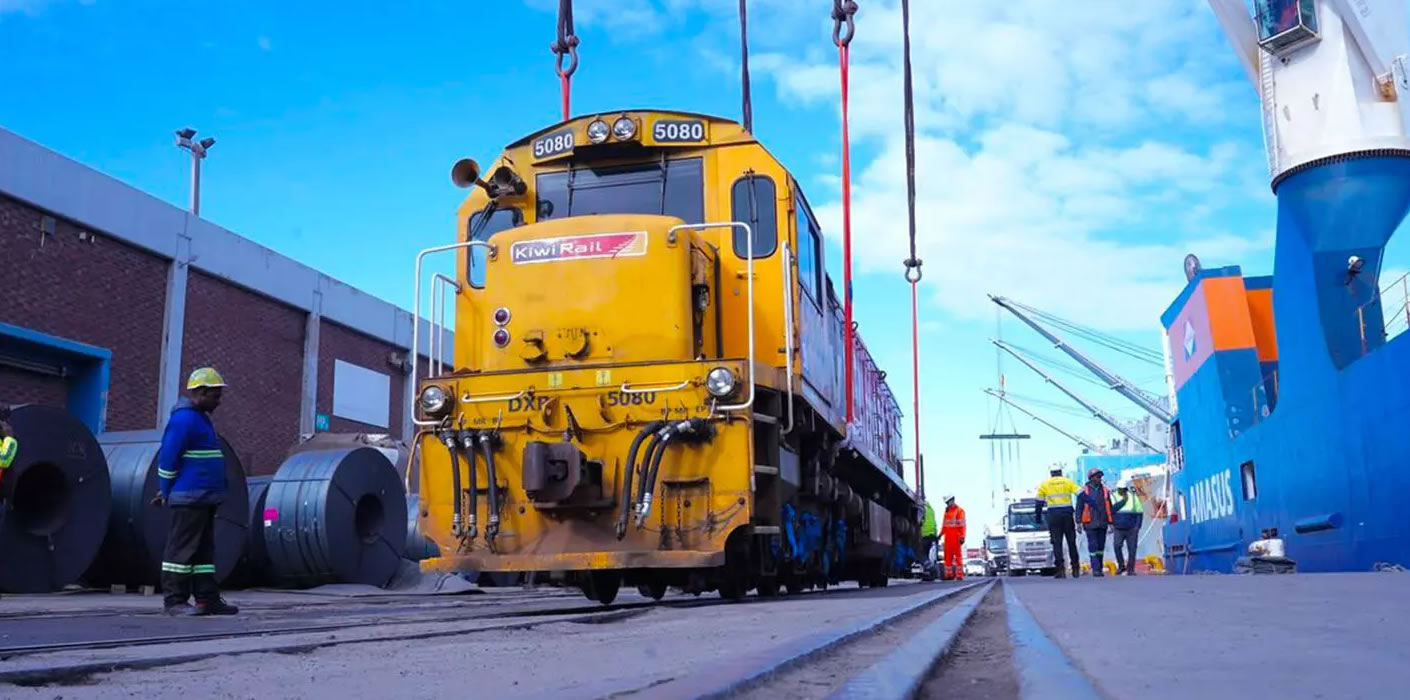
Railways can offer advantages that are difficult to achieve through road transport alone, particularly when moving large volumes of freight over long distances.
A well-managed freight railway can transport minerals, agricultural commodities, fuel, construction materials and manufactured goods in substantial quantities. Passenger rail can also provide reliable travel options on routes with sufficient demand and appropriate infrastructure.
The potential benefits extend beyond transportation.
1. LOWERING LOGISTICS COSTS
Transport costs affect the competitiveness of businesses.
When goods take too long to reach customers, businesses may require more working capital, maintain larger inventories or face greater risks of spoilage and delay.
Rail can help reduce these pressures where freight volumes, route conditions, handling arrangements and operating efficiency support competitive pricing.
For landlocked countries, reliable railway links to seaports can be particularly important.
2. CONNECTING FARMERS TO MARKETS
Agriculture remains a major source of livelihoods across Africa.
Yet farmers do not always have efficient access to storage, processing facilities and urban consumers.
Railways, when integrated with collection centres, cold storage and road networks, can help move agricultural products from producing regions to larger markets.
This is especially relevant for commodities that can be transported economically in bulk.
For perishable products, the benefits depend on reliable scheduling, appropriate handling and effective refrigerated logistics where needed.
3. SUPPORTING INDUSTRIAL DEVELOPMENT
Factories depend on predictable supplies of raw materials and reliable routes for distributing finished products.
Rail freight can support industries that require the movement of heavy or bulky goods, including mining, cement, steel, agriculture and manufacturing.
Where railway corridors are connected to industrial parks, ports and logistics hubs, they may help create the conditions for new commercial activity.
4. EXPANDING PASSENGER MOBILITY
Passenger rail can improve movement between major cities and surrounding communities.
Depending on the route and service design, it may provide an alternative to congested roads, reduce travel uncertainty and make commuting more convenient.
Urban and suburban rail can also support more organised city development when combined with effective public transport and land-use planning.
5. STRENGTHENING REGIONAL TRADE
Africa’s economic integration depends partly on the ability to move goods efficiently between countries.
Railway corridors that connect ports, industrial centres and neighbouring markets can support regional commerce.
But physical tracks alone are not enough. Customs procedures, border operations, technical standards, freight handling and commercial agreements must also work together.
The real value of a railway emerges when it becomes part of a functioning economic corridor.
AFRICA’S RAILWAY STORY: DIFFERENT COUNTRIES, DIFFERENT JOURNEYS
There is no single railway model for Africa.
The continent’s projects reflect different economic priorities, geographical conditions, population needs and levels of infrastructure development.
Several examples illustrate the range of possibilities.
EAST AFRICA: CONNECTING INLAND MARKETS
Kenya’s Standard Gauge Railway, including the Mombasa–Nairobi section and its extension towards Naivasha, has been developed as a major transport investment intended to strengthen connections between the coast and inland economic centres.
Its strategic importance is linked to the Port of Mombasa, a key gateway for Kenya and neighbouring economies.
The wider ambition of improved regional connectivity depends on how effectively rail services integrate with road transport, freight terminals, border procedures and other transport systems.
The project also illustrates the importance of assessing infrastructure against its financing, operating costs, actual traffic and long-term economic benefits.
ETHIOPIA AND DJIBOUTI: A RAILWAY TO THE SEA
The Addis Ababa–Djibouti Railway provides an important connection between landlocked Ethiopia and the Port of Djibouti.
For a country whose international trade depends heavily on access to maritime gateways, this route has strategic significance.
It demonstrates how railway infrastructure can serve a national economy while also depending on cooperation between neighbouring countries.
Its effectiveness relies on more than the railway itself: port handling, freight scheduling, border arrangements and connections to inland destinations all influence the value of the corridor.
MOROCCO: MODERN PASSENGER RAIL
Morocco has invested in modern railway infrastructure, including its Al Boraq high-speed service linking Tangier and Casablanca through Rabat and other locations.
The service illustrates how railways can support intercity passenger mobility and form part of a broader national transport strategy.
Morocco’s experience also highlights the need to match investment choices to demand, affordability, network integration and long-term operating requirements.
NIGERIA: REBUILDING RAIL CONNECTIVITY
Nigeria has pursued railway modernisation through projects including the Abuja–Kaduna Railway, the Lagos–Ibadan Railway and the Warri–Itakpe Railway.
These projects reflect different passenger and freight objectives.
The Lagos–Ibadan corridor, for example, connects important population and commercial centres in southwestern Nigeria. The Abuja–Kaduna route offers a rail alternative between the federal capital and a major northern city.
The Warri–Itakpe line has a distinct freight-related significance because of its connection between an industrial and port area and a region associated with iron ore resources.
Their long-term contribution depends on service reliability, maintenance, passenger demand, freight volumes, integration with other transport modes and the ability to sustain operations.
Nigeria’s wider railway challenge is to develop a network that supports its population, industrial activity and regional commerce rather than leaving individual lines operating as disconnected projects.
SOUTHERN AFRICA: FREIGHT AND INDUSTRIAL CORRIDORS
Railways have long played an important role in the economies of Southern Africa, particularly in transporting minerals, agricultural commodities and other bulk goods.
South Africa’s freight railway network has historically been central to mineral exports and domestic logistics.
However, capacity constraints, infrastructure challenges and operational performance have affected freight movement in recent years.
The experience reinforces an essential lesson: existing railway infrastructure can be economically valuable, but only when maintenance, investment, management and operational reliability are sustained.
Across the region, the relationship between mines, factories, ports and rail networks remains a critical part of the industrial economy.
These examples represent different railway models; they should not be interpreted as evidence that every project has achieved its intended economic results.
THE DREAM OF A CONNECTED CONTINENT
Imagine a manufacturer in Nigeria seeking to reach customers in other African markets.
Imagine an agricultural producer looking for a dependable route to a port.
Imagine a mining company seeking to transport minerals more efficiently.
Imagine a traveller who could move between major cities without relying entirely on road or air transport.
Each scenario points towards the value of better connectivity.
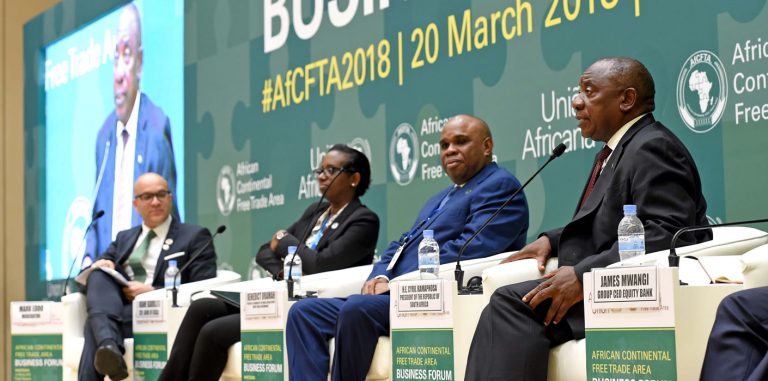
Africa’s long-term railway ambitions are increasingly discussed alongside regional integration and the African Continental Free Trade Area.
The trade agreement seeks to create a more integrated continental market by reducing barriers to trade in goods and services. Transport infrastructure can help support that ambition by making commercial movement more efficient.
However, a continental railway network is not simply a matter of laying tracks between national borders.
Railway systems may use different gauges, signalling systems, operating procedures and technical standards. Countries may also have different investment priorities, financing arrangements and regulatory frameworks.
Cross-border railways require coordination between governments, railway operators, customs authorities, port operators and private businesses.
There must also be sufficient demand to support the costs of construction and operation.
The practical objective is therefore to develop commercially and strategically viable corridors that connect important production centres, ports and markets.
Over time, these corridors may become components of a more integrated African transport network.
THE FINANCING QUESTION
Railway construction is expensive.
A project may require land acquisition, earthworks, bridges, tunnels, track installation, stations, signalling, telecommunications, locomotives, passenger coaches, freight wagons and maintenance facilities.
In many cases, the costs extend beyond the railway line itself.
Access roads, power supplies, terminals, drainage systems, security arrangements and urban transport connections may also be necessary.
Governments must therefore make difficult decisions about financing priorities.
Should public funds be used for new railway construction or for maintaining existing lines? Should a country prioritise passenger services, freight transport or urban mobility? How should railway investments compete with spending on roads, electricity, education, healthcare and other essential needs?
These are not questions with identical answers across every African country.
A densely populated urban corridor may justify a different railway model from a long-distance route serving a mining operation.
Some projects may be suitable for public investment. Others may support public-private partnerships or commercial freight arrangements. In every case, the financing model must account for realistic demand, construction risks, operating costs and maintenance requirements.
The challenge is to avoid treating the construction of a railway as the final achievement.
A railway must be financially and operationally sustainable after the ribbon-cutting ceremony.
THE MAINTENANCE PROBLEM
Infrastructure development often attracts public attention when new facilities are announced or inaugurated.
Maintenance receives less attention, yet it is essential to long-term performance.
Railways require regular inspection of tracks, bridges, signalling equipment, rolling stock and other critical systems. Maintenance teams need technical training, spare parts, reliable budgets and effective management systems.
Without these, even a modern railway can experience service interruptions, rising costs and declining performance.
Preventive maintenance is especially important because failures can disrupt passenger services, delay freight deliveries and create safety risks.
African railway strategies must therefore budget for the full life cycle of infrastructure.
That means considering not only construction costs, but also the money, personnel, technology and management required to keep the network functioning over many years.
It also means developing local engineering capabilities so that African railway systems can increasingly maintain and improve their own assets.
RAILWAYS AND THE AFRICAN TRAVELLER
The railway conversation is not only about cargo.
It is also about people.
For travellers, a reliable train service can turn a difficult journey into a more predictable experience. For commuters, it may offer a practical alternative to traffic congestion. For tourists, it can open opportunities to explore cities, landscapes and cultural destinations.
Passenger rail can also contribute to the development of commercial activity around stations.
Markets, hotels, restaurants, transport services and other businesses may benefit when stations are well located and connected to surrounding communities.
However, these benefits depend on thoughtful planning.
Stations must be accessible, safe and convenient. Timetables must meet passenger needs. Ticketing systems must be reliable. Connections to buses, taxis and other transport services must be practical.
For tourism, railway journeys can themselves become part of the attraction when routes offer distinctive scenery, cultural access or memorable travel experiences.
The opportunity is to treat rail not simply as a way to reach a destination, but as part of the wider travel experience.
TECHNOLOGY ON THE TRACKS
Modern railway development involves much more than steel and concrete.
Digital signalling, train monitoring, automated ticketing, predictive maintenance, passenger information systems and modern logistics platforms can improve operational efficiency when implemented appropriately.
Data can help railway operators monitor performance, schedule maintenance and identify emerging problems.
Digital freight systems can improve the tracking of goods and coordination between terminals, ports and customers.
For passengers, mobile ticketing and real-time travel information can make journeys easier to plan.
These systems also create opportunities for African technology companies, engineering firms and technical institutions to participate in railway modernisation.
However, technology must be matched to local operating conditions and supported by skilled personnel, reliable power, cybersecurity measures and maintenance arrangements.
Importing advanced equipment without building the capacity to operate and maintain it can create new dependencies rather than solve existing problems.
The goal should be to combine suitable technology with local skills and sustainable operations.
THE ENVIRONMENTAL DIMENSION
Railways can offer environmental advantages, particularly when they move large volumes of freight efficiently or attract passengers away from more energy-intensive travel options.
Their actual environmental performance depends on several factors, including the energy source, utilisation levels, route design, construction impacts and the transport mode being replaced.
Railway construction can also affect land, wildlife habitats, communities and water systems. These impacts require proper assessment and mitigation.
A responsible railway strategy must therefore consider environmental protection from the planning stage through construction and operation.
It should also examine opportunities to improve energy efficiency, use cleaner power where feasible and reduce emissions across the transport system.
For Africa, where climate resilience and sustainable development are increasingly important, infrastructure investment should be designed to serve both economic and environmental objectives.
WHAT AFRICA MUST GET RIGHT
A stronger African railway system will require more than ambitious announcements.
It will require practical decisions and sustained execution.
First, prioritise viable corridors. Investments should respond to genuine passenger demand, freight requirements and measurable economic needs.
Second, maintain existing assets. A functioning network can be more valuable than a collection of disconnected new projects.
Third, improve cross-border coordination. Technical standards, customs procedures, timetables and freight operations must work together where services cross national boundaries.
Fourth, connect railways to other transport systems. Ports, roads, airports, warehouses and urban transport should be planned as parts of a wider network.
Fifth, build local expertise. African workers and businesses should have opportunities to develop the engineering, operating and maintenance skills needed to support railway systems.
Sixth, strengthen transparency. Project costs, financing arrangements, service performance and economic outcomes should be assessed against credible evidence.
Finally, measure results. Passenger numbers, freight volumes, delivery times, operating costs, safety performance and maintenance standards provide a clearer picture of success than announcements alone.
These priorities may sound less dramatic than unveiling a new railway line.
But they are the foundations upon which reliable transport systems are built.
THE ROAD AHEAD
Africa’s railway renaissance is still an evolving story.
Some countries are modernising existing networks. Others are developing new lines or exploring cross-border connections. Several projects face financing, maintenance, operational or implementation challenges.
Progress will not be uniform.
Nor should every country pursue the same railway strategy.
What matters is whether investments respond to real economic needs and become part of transport systems that work reliably for people and businesses.
The continent’s development will depend partly on its ability to reduce the distance between production and markets, between rural communities and urban centres, and between neighbouring countries.
Railways can help close those distances.
They can connect farms to processors, factories to ports, cities to communities and national economies to regional markets.
But their greatest value will emerge when the infrastructure is supported by good management, effective institutions, sustainable financing and a clear understanding of the people and industries it is intended to serve.
THE FUTURE MAY RUN ON STEEL
The story of Africa’s railways is ultimately a story about connection.
A railway connects places.
A reliable transport system connects opportunities.
A connected market creates new possibilities for trade.
And a continent that can move its people and products efficiently is better positioned to compete in the global economy.
The task before African countries is not simply to build more tracks. It is to develop transport systems that are dependable, affordable, safe and economically useful.
That will require investment, cooperation, technical expertise and long-term commitment.
It will also require a shift in perspective: railways should be understood not as isolated infrastructure projects, but as potential foundations for wider economic transformation.
The future of African integration may indeed run on steel.
But it will be built through the decisions, partnerships and institutions that make those connections work.
VOAM SPOTLIGHT | THE TAKEAWAY
The opportunity: More efficient movement of passengers and freight, stronger logistics, improved market access and better regional connectivity.
The challenge: Financing, maintenance, cross-border coordination, operational reliability and integration with other transport systems.
The priority: Build railway networks around real demand, sustainable operations and measurable economic value.
The bigger picture: Africa does not simply need more railway lines. It needs railway systems that connect people, industries and markets in ways that deliver lasting benefits.
Editorial note: Before publication, verify current project status, passenger and freight figures, costs, financing details and operational performance for each railway cited. Railway development is time-sensitive, and announced capacity or intended benefits should not be presented as achieved outcomes without evidence.
VOICE OF AFRICA MAGAZINE
Africa Speaks. The World Listens.