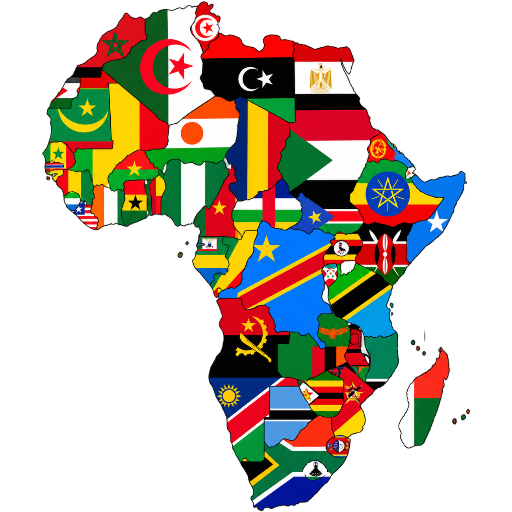


















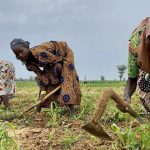









There is an Africa beyond the famous wildlife reserves, postcard beaches and established travel circuits. It lives in the ancient trading towns, creative neighbourhoods, mountain communities, fishing villages, regional food markets and lesser-known landscapes that rarely make the front page of international travel brochures. Discovering this Africa means travelling beyond the familiar—and meeting a continent on its own terms.
The Places We Have Yet to Discover
For many international travellers, Africa begins with a safari.
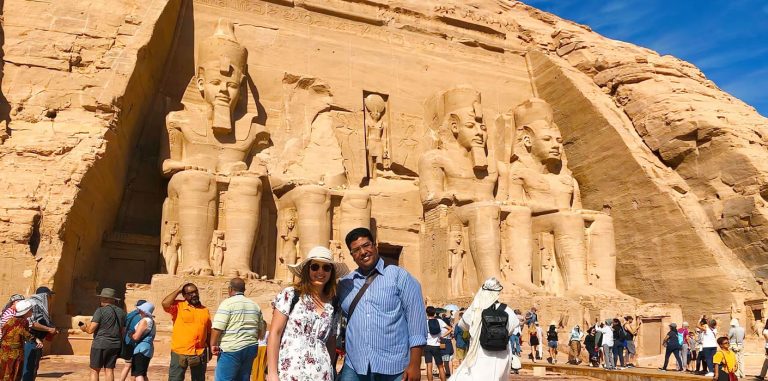
They imagine lions resting beneath acacia trees, elephants moving across open grasslands, luxury lodges overlooking waterholes and spectacular sunsets stretching across the savannah. Others picture tropical islands, desert dunes or the pyramids of Egypt.
These images have their place. Africa’s celebrated destinations are celebrated for good reason.
But when a continent of more than 50 countries is repeatedly presented through a narrow collection of experiences, much of its character remains unseen.
What about the cities where independent designers are transforming traditional fabrics into contemporary fashion? The inland communities whose craft traditions have survived generations? The historic ports that reveal the continent’s connections to global trade? The highland villages, mangrove forests, ancient pilgrimage routes and neighbourhood restaurants where local food tells stories of migration and identity?
These places may not always feature prominently in international travel advertising, but they are central to how people live, work, create and remember.
Beyond the safari is an Africa that invites travellers to slow down, ask better questions and discover experiences that cannot be reduced to a single photograph.
1. Badagry, Nigeria — A Town That Carries Difficult History
Along the Atlantic coast of Lagos State lies Badagry, a historic town whose past is closely connected to the transatlantic slave trade, coastal commerce and the development of early Christian missions in the region.
Its historical sites and museums offer opportunities to examine the experiences of enslaved Africans, the networks that supported the trade and the lasting consequences of forced migration.
A visit to Badagry is not simply a sightseeing excursion. It is an encounter with a difficult chapter of African and global history, one that calls for careful interpretation and respect for the people whose lives were affected.
The town also has a living cultural identity, with local communities, traditional institutions, markets and coastal environments that extend beyond its historical landmarks.
For domestic travellers, Badagry offers a reminder that meaningful heritage experiences can be found close to home. For international visitors, it can deepen understanding of the historical relationships between Africa, Europe and the Americas.
Why it deserves more attention: Badagry connects Nigerian history to a global story of displacement, resistance, memory and the continuing search for historical understanding.
The experience: Explore heritage sites with knowledgeable local guides, engage with museum interpretation and allow time to understand the town beyond the monuments.
2. Koutammakou, Togo and Benin — Architecture Rooted in Community
In parts of northern Togo and neighbouring Benin, the cultural landscape of Koutammakou is associated with the Batammariba people and their distinctive traditional settlements.
The region is known for its takienta, fortified earthen houses that combine domestic, practical and symbolic functions. Their design reflects generations of knowledge about materials, climate, family life and the organisation of space.
Rather than treating these buildings as unusual architectural objects, visitors should understand them within the wider cultural setting that gives them meaning.
The landscape is recognised by UNESCO for its cultural significance. Yet heritage protection must also consider the people who live there, the maintenance of traditional structures and the pressures created by changing economic and social conditions.
Koutammakou offers a powerful example of architecture as cultural knowledge: a way of building that reflects how a community understands its environment and organises its life.
Why it deserves more attention: It challenges the assumption that architectural innovation belongs only to modern cities or formal design institutions.
The experience: Visit with appropriate local guidance, respect household privacy and seek to understand the relationship between architecture, family and cultural identity.
3. Lamu Old Town, Kenya — Where the Indian Ocean Tells Its Story
On Kenya’s coast, Lamu Old Town preserves a distinctive Swahili urban heritage shaped by centuries of interaction across the Indian Ocean.
Its narrow streets, historic buildings, carved doors, courtyards and traditional construction techniques reflect the development of a coastal culture connected to African, Arabian, Persian and South Asian trading networks.
Lamu’s heritage is not confined to architecture. It includes language, religious life, craftsmanship, poetry, food and maritime traditions.
The town also challenges the idea that Africa’s history can be understood only through its inland kingdoms or European colonial encounters. The Indian Ocean connected African coastal communities to wider commercial and intellectual networks long before the modern tourism industry emerged.
Visitors should approach the town with cultural sensitivity. Lamu is a living community, not an open-air museum, and local customs and religious practices deserve respect.
Why it deserves more attention: Lamu reveals Africa’s longstanding maritime connections and the sophistication of its coastal urban cultures.
The experience: Explore the old town on foot with a knowledgeable guide, learn about Swahili architecture and cuisine, and discover the role of local artisans and maritime traditions.
4. The Ennedi Plateau, Chad — A Desert of Stone and Memory
In northeastern Chad, the Ennedi Plateau rises from the Sahara with extraordinary rock formations, natural arches, sandstone canyons and sheltered landscapes that contrast with the surrounding desert.
The region contains rock art that provides evidence of earlier human communities and environmental conditions. Some depictions reflect periods when parts of the Sahara were greener and supported different patterns of settlement and wildlife.
Ennedi is an important example of how landscapes can preserve records of human life across vast periods. Its natural formations and archaeological features offer opportunities to understand the relationship between people, climate and environmental change.
However, this is a remote destination requiring careful planning. Travel may depend on specialist operators, suitable vehicles, permits and current security conditions. Visitors should obtain reliable, up-to-date advice before considering a journey.
Why it deserves more attention: Ennedi shows that the Sahara is not an empty space but a landscape with a deep and changing human history.
The experience: For appropriately prepared travellers, a guided expedition can combine geological exploration, rock-art interpretation and an understanding of desert environments.
5. Ouidah, Benin — Memory, Spirituality and the Atlantic
Ouidah is one of Benin’s most significant historic coastal towns. Its history is connected to the Atlantic slave trade, the Kingdom of Dahomey, religious traditions and cultural exchanges that extend across the Atlantic world.
The town’s heritage sites invite visitors to examine the movement of enslaved people, the institutions and commercial networks involved, and the cultural legacies that continue to connect West Africa with the Americas and the Caribbean.
Ouidah is also important to Vodun traditions, which have their own histories, beliefs and practices. These should be understood through informed local perspectives rather than reduced to sensational images or tourist stereotypes.
The town’s cultural life demonstrates how memory, religion and identity can coexist with the difficult histories associated with a place.
Why it deserves more attention: Ouidah provides an opportunity to explore African history and spirituality with greater depth than conventional beach itineraries often allow.
The experience: Visit historical and cultural sites with reputable guides, distinguish historical evidence from simplified narratives and respect the boundaries of religious practice.
6. São Tomé and Príncipe — Islands Beyond the Familiar
In the Gulf of Guinea, the island nation of São Tomé and Príncipe offers volcanic landscapes, tropical forests, coastal communities and a distinct Lusophone African cultural identity.
The islands’ history is closely connected to Portuguese colonial rule and plantation agriculture, particularly the production of sugar and cocoa. That history includes forced labour and other forms of exploitation, which remain essential to understanding the islands’ development.
Today, the islands offer opportunities for nature-focused travel, from forest walks and birdwatching to coastal exploration and visits to historic plantation estates known as roças.
Their ecosystems are particularly important, with endemic species and habitats that require careful protection. Responsible tourism can support local livelihoods and conservation, but visitors should consider how accommodation, transport and tours benefit communities and affect the environment.
São Tomé and Príncipe also deserves recognition for its food, music and cultural life, which reflect both local creativity and historical connections across the Atlantic.
Why it deserves more attention: It combines island biodiversity, African cultural identity and a complex colonial history in a destination that remains less familiar to many international travellers.
The experience: Explore the islands through local guides, responsible nature excursions, food experiences and historically informed visits to plantation sites.
7. The Usambara Mountains, Tanzania — A Different View of East Africa
In northeastern Tanzania, the Usambara Mountains offer forested slopes, agricultural landscapes, small towns and walking routes that differ markedly from the open plains associated with the country’s famous safari circuits.
The mountains form part of the Eastern Arc range, known for its ecological significance and distinctive biodiversity. Forest habitats support a variety of plant and animal species, some of which are found only in limited areas.
The region also has a long history of settlement and farming. Local communities cultivate crops, maintain markets and navigate the challenges of land use, conservation and economic change.
Travelling through the Usambaras can provide a closer view of everyday rural life, provided visitors approach communities respectfully and avoid treating residents as attractions.
Hiking opportunities vary according to route, weather and local conditions. Travellers should use experienced guides and follow guidance on forest access and conservation.
Why it deserves more attention: The Usambaras reveal an East African landscape where biodiversity, agriculture and community life are deeply connected.
The experience: Walk with local guides, learn about forest conservation and farming, and spend time in towns and villages rather than treating the mountains merely as a scenic backdrop.
8. Kolda and Casamance, Senegal — A Region of Cultural Richness
Southern Senegal, particularly the Casamance region, offers a distinct cultural and ecological landscape shaped by rivers, forests, rice-growing communities, coastal environments and diverse local traditions.
The region is home to communities including Jola, Mandinka, Balanta and others, whose histories and cultural practices contribute to its rich social fabric.
Travellers may encounter traditional architecture, local food, craft production and landscapes that differ from the dry Sahelian environments often associated with Senegal. The region also has a history of political tensions and insecurity in some areas, making current travel guidance essential.
Responsible travel should begin with local advice and respect for community priorities. Visitors should avoid assuming that cultural practices are uniform across the region and should seek knowledgeable guides who can explain local histories and customs.
Why it deserves more attention: Casamance broadens the picture of Senegal beyond its best-known urban and coastal destinations, revealing the cultural and ecological diversity of the south.
The experience: Plan with reputable local operators, explore food and craft traditions, and verify security and access conditions before travelling.
9. The Matobo Hills, Zimbabwe — A Landscape of Stone and Spirit
Near Bulawayo in southwestern Zimbabwe, the Matobo Hills are known for their striking granite formations, balancing rocks, caves and archaeological sites.
The landscape contains rock art associated with earlier hunter-gatherer communities, offering insight into long histories of human settlement and artistic expression. It is also culturally and spiritually significant to communities who maintain connections with the hills and their sacred places.
Matobo is therefore more than a geological attraction. Its importance combines natural heritage, archaeology, living cultural relationships and complex historical associations.
The area supports wildlife and protected landscapes, while the surrounding region includes communities whose livelihoods and histories are connected to the land.
Visitors should follow local guidance around sacred sites, avoid damaging rock art and understand the difference between viewing a place and fully understanding its significance.
Why it deserves more attention: Matobo demonstrates how geology, archaeology and living spiritual traditions can come together in a single landscape.
The experience: Explore with knowledgeable guides, learn about the rock art and geological formations, and approach sacred places with respect.
10. Djenne, Mali — A City Built Around Earth, Faith and Trade
In central Mali, Djenné is celebrated for its historic urban fabric and monumental earthen architecture, particularly the Great Mosque of Djenné.
The city’s history is connected to regional commerce, Islamic scholarship and networks linking communities across the Sahel. Its buildings demonstrate sophisticated methods of construction and maintenance using earth-based materials suited to local conditions.
The annual replastering of the Great Mosque, where community participation has historically played an important role, illustrates how architectural heritage can depend on collective knowledge and shared responsibility.
Djenné also provides a window into the region’s intellectual and commercial history. Its significance extends beyond a single building to the wider social and cultural landscape that developed around it.
However, security conditions in Mali can change significantly and may make travel to the region unsafe or impractical. Travellers must consult current official advisories and should not assume that a destination is accessible simply because it appears in travel literature.
Why it deserves more attention: Djenné shows how community knowledge, religious life, trade and architecture can shape a historic city over generations.
The experience: When conditions safely permit, explore with local historical expertise and learn about earthen construction, urban heritage and the people who maintain it.
What These Destinations Have in Common
These ten places are different in geography, language, history and culture. Some are remote landscapes; others are historic towns or coastal communities. Some are well documented by heritage institutions but remain less prominent in mainstream tourism; others are still largely absent from international travel conversations.
What connects them is the opportunity to encounter Africa beyond familiar images.
They reveal that the continent’s appeal is not limited to wildlife viewing or luxury accommodation. It includes architecture, spiritual traditions, ecological knowledge, difficult histories, local food, craftsmanship and the everyday creativity of communities.
They also reveal that less-promoted destinations are not necessarily undiscovered by the people who live there. The phrase “off the beaten path” describes a tourist’s perspective, not the absence of history or human activity.
Responsible travel begins by recognising this distinction. Communities are not waiting to be discovered; they have their own stories, priorities and relationships with the places visitors wish to see.
The Opportunity for African Tourism
The growth of tourism within Africa depends partly on helping travellers discover a wider range of experiences.
Domestic and regional tourism can support this expansion. Africans travelling within their own countries and across neighbouring borders can create demand for local guides, guesthouses, restaurants, transport providers, cultural institutions and small businesses.
Governments and tourism organisations can help by improving access, visitor information, heritage interpretation, safety systems and transport connections. Local entrepreneurs can develop guided walks, food tours, craft workshops, community-led experiences and nature activities that reflect their own priorities.
Media organisations also have a role. Travel journalism can draw attention to places that are overlooked while providing context about history, culture, access and practical considerations.
But promotion must be accompanied by preparation. Increased visitor numbers can place pressure on fragile ecosystems, historic buildings, water supplies and local infrastructure. Cultural sites may require visitor limits, conservation funding or specific protocols.
Tourism is most valuable when it creates benefits that remain in the destination—through local employment, fair purchasing, community participation and protection of the resources that make the journey meaningful.
Travel with Open Eyes
To travel beyond the safari is not to reject Africa’s celebrated destinations. It is to recognise that the continent offers far more than any single travel narrative can capture.
It is to understand that a small coastal town may reveal a global historical story, that an earthen building may embody generations of engineering knowledge, and that a mountain forest may be as important to a community’s future as it is to a conservation map.
The most rewarding journeys often begin with curiosity rather than a checklist.
They ask travellers to listen before photographing, learn before judging and recognise the people whose knowledge gives a destination its meaning.
Africa’s lesser-promoted places are not lesser places. They are part of a continent whose stories become richer when more of them are told.
The map is only a starting point. The real journey begins when we look beyond it.

VOAM DESTINATION AFRICA | THE TAKEAWAY
Africa’s tourism story is much bigger than its best-known attractions. From Badagry and Ouidah to Lamu, Koutammakou, the Usambara Mountains and the islands of São Tomé and Príncipe, the continent offers journeys grounded in living cultures, history, architecture and remarkable natural environments.
The opportunity is to grow tourism that is locally beneficial, culturally respectful and environmentally responsible.
The VOAM question: Which lesser-promoted destination in your country deserves greater recognition—and how can tourism support the people who call it home?