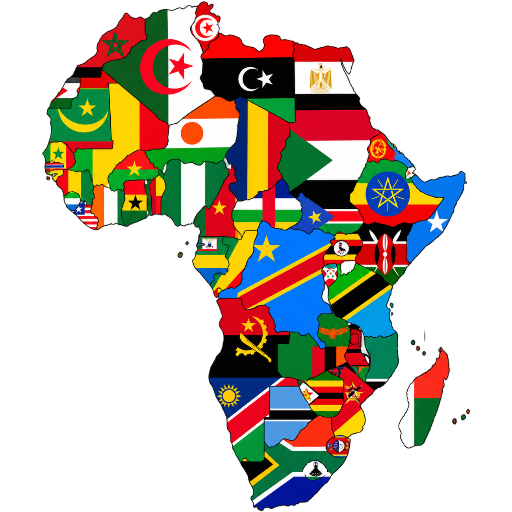






























From bustling informal markets and family-owned enterprises to technology start-ups, industrial giants and emerging investment hubs, Africa’s business story is being written by people turning local needs into commercial possibilities. The next chapter will depend on how effectively the continent converts its immense potential into productive, sustainable and inclusive growth.
THE BUSINESS STORY THE WORLD NEEDS TO UNDERSTAND
Africa is often discussed in the language of potential.
Potential markets. Potential investments. Potential growth. Potential opportunities.
But across the continent, millions of people are already doing business. They are producing food, moving goods, building homes, manufacturing products, developing software, providing financial services, entertaining audiences and solving everyday problems through enterprise.
The African business story is not waiting for the future to begin. It is happening now—in the commercial streets of Lagos, the technology ecosystem of Nairobi, the industrial corridors of South Africa, the trading centres of Accra, the financial institutions of Casablanca and the entrepreneurial communities of countless cities and towns.
What distinguishes this moment is the growing recognition that Africa’s economic future cannot depend exclusively on exporting raw materials, importing finished products or waiting for external investment to create opportunities.
The continent must strengthen its capacity to produce, process, finance, distribute, innovate and trade.
That means building businesses that do more than survive. It means creating enterprises capable of employing people, developing expertise, competing internationally and delivering value within African economies.
The opportunity is considerable. So are the obstacles.
High financing costs, unreliable infrastructure, fragmented markets, policy uncertainty, currency pressures and gaps in workforce development continue to constrain many enterprises. In several economies, businesses also face limited access to technology, complex regulatory environments and the difficulty of reaching customers beyond their immediate markets.
Africa’s business future will therefore be determined not by opportunity alone, but by how effectively its people, institutions and governments organise themselves to turn opportunity into lasting economic value.
THE ENTREPRENEURIAL CONTINENT
One of Africa’s greatest commercial strengths is its entrepreneurial energy.
Across cities, towns and rural communities, entrepreneurs identify needs and build businesses around them. Some begin with a roadside stall, a small workshop, a family farm, a catering service or a modest trading operation. Others start with a digital platform, a logistics application, a manufacturing idea or a professional service.
These businesses are often established under difficult conditions. Entrepreneurs may have to provide their own capital, navigate complicated licensing procedures, manage unstable input costs and build customer confidence without access to sophisticated marketing systems.
Yet their activities sustain a substantial share of everyday economic life.
Small and medium-sized enterprises can contribute to employment, local production, service delivery and innovation. They also create commercial networks that connect suppliers, transporters, retailers, financial institutions and consumers.
However, entrepreneurship should not be romanticised as a substitute for effective economic policy. People who establish businesses out of necessity do not always have the capital, training or market access required to grow. Many enterprises remain small because their operating environment makes expansion difficult.
The challenge is to move from a culture in which people are encouraged simply to start businesses to one in which viable businesses are equipped to become productive, resilient and competitive.
That requires practical business education, accessible finance, reliable infrastructure, digital tools, predictable regulation and stronger connections between small enterprises and larger commercial supply chains.
Africa does not merely need more entrepreneurs. It needs an environment in which entrepreneurs can build businesses that last.
NIGERIA: A MARKET OF SCALE AND COMPLEXITY
Nigeria illustrates both the possibilities and contradictions of African enterprise.
Its large population, extensive commercial networks, entrepreneurial culture and influential creative industries provide a significant market for goods and services. The country supports activity across agriculture, retail, entertainment, financial technology, telecommunications, manufacturing, hospitality, logistics and professional services.
Lagos, in particular, demonstrates how commercial activity can develop around dense networks of consumers, suppliers, talent and capital. But Nigeria’s business ecosystem extends well beyond Lagos, with agricultural production, industrial activity, mineral resources and service industries spread across multiple states.
The market also presents substantial operational challenges.
Businesses must often contend with electricity costs, transport constraints, foreign-exchange volatility, inflation, financing difficulties and changing regulatory requirements. For smaller enterprises, these pressures can consume resources that might otherwise be used for expansion, employee development or technology.
The companies most likely to succeed over time will be those that combine entrepreneurial ambition with sound operating systems.
That means reliable accounting, inventory control, workforce training, customer management, product quality, digital adoption and disciplined financial planning.
For Nigeria, the goal should not simply be to celebrate the number of businesses being created. It should be to strengthen the conditions under which they can grow, employ more people, develop local supply chains and compete beyond domestic borders.
KENYA: TECHNOLOGY AND THE REIMAGINING OF COMMERCE
Kenya has become an important reference point in discussions about African digital enterprise.
The country’s mobile-money ecosystem, particularly the development of M-PESA, demonstrated how technology could expand access to financial services and support new forms of commercial activity.
Mobile payments have helped reshape how individuals and businesses transfer money, collect payments and manage transactions. They have also contributed to an environment in which digital services can support retail, transport, agriculture and other economic activities.
Kenya’s wider technology ecosystem includes entrepreneurs working in software, financial services, logistics, agriculture and climate-related innovation.
But digital success depends on more than a compelling application. Businesses must build trust, protect user data, manage fraud risks, maintain reliable systems and develop sustainable revenue models.
Digital adoption also depends on affordable connectivity, relevant skills and the ability of customers and businesses to use technology effectively.
The lesson for the continent is not that every African country must reproduce Kenya’s model. It is that solutions designed around local realities can create significant commercial value when supported by infrastructure, regulation, investment and customer trust.
SOUTH AFRICA: INDUSTRIAL CAPACITY AND REGIONAL REACH
South Africa remains an important industrial and commercial centre on the continent, with established capabilities in finance, manufacturing, mining services, agriculture, retail, logistics and professional services.
Its industrial base and developed corporate sector offer opportunities for supplier development, technical training and regional expansion. South African businesses also operate across several African markets, illustrating how companies can grow beyond their home economies.
At the same time, the country faces challenges that include infrastructure pressures, unemployment, inequality and the need for more inclusive economic participation.
Its experience highlights a broader lesson: an advanced corporate sector does not automatically translate into widely shared prosperity.
For economic growth to create lasting social value, businesses must be able to operate productively while expanding opportunities for workers, smaller suppliers and underserved communities.
Industrial capability matters not only because it generates revenue, but because it can develop technical knowledge, support complex supply chains and create the foundation for higher-value production.
Across Africa, the next phase of enterprise growth will require more businesses to move beyond importing, assembling or distributing products towards developing deeper manufacturing, engineering and service capabilities.
GHANA, RWANDA, MOROCCO AND THE DIVERSITY OF OPPORTUNITY
Africa’s business landscape cannot be reduced to a few major economies.
Ghana offers opportunities across agriculture, services, trade, creative industries and food processing. Its commercial future is influenced by the relationship between domestic enterprise, regional markets, infrastructure and macroeconomic stability.
Rwanda has pursued a development strategy that places emphasis on services, investment facilitation, tourism and technology. Its experience illustrates how policy priorities and institutional coordination can influence the business environment, while the size of its domestic market makes regional connections especially relevant.
Morocco has developed significant industrial and export-oriented capabilities, including in automotive manufacturing, aerospace-related industries, renewable energy and logistics. Its geographic position and trade relationships help connect African production with international markets.
Elsewhere, Ethiopia’s agricultural and manufacturing potential, Côte d’Ivoire’s commercial and agricultural economy, Egypt’s industrial and consumer markets, and Tanzania’s logistics and natural-resource opportunities contribute to the continent’s diverse business landscape.
These examples are not identical success stories, nor do they eliminate the economic challenges faced in each country. They demonstrate something more important: there is no single African business model.
Different economies possess different combinations of market size, natural resources, infrastructure, skills, institutions and international connections.
The strongest strategies begin by understanding those differences and building on local advantages rather than applying a uniform solution across the continent.
FROM RAW MATERIALS TO AFRICAN VALUE
One of Africa’s most important economic questions concerns value addition.
The continent produces substantial quantities of agricultural commodities, minerals and other natural resources. Yet many African economies have historically exported raw or minimally processed materials while importing higher-value finished goods.
This structure can limit the jobs, technical expertise and industrial capabilities created within producing countries.
Consider agriculture. A farmer’s crop can support a much wider commercial ecosystem when it is connected to storage, processing, packaging, refrigeration, transport, branding and distribution. Instead of earning income only from selling a raw commodity, multiple businesses can participate in the value chain.
The same principle applies to minerals, textiles, timber, food products and other resources.
Local processing is not automatically profitable. It requires reliable energy, appropriate technology, sufficient market demand, skilled workers, competitive logistics and access to finance. In some circumstances, regional specialisation and cross-border supply chains may be more efficient than requiring every country to produce everything.
Nevertheless, the strategic opportunity is clear: Africa can capture more economic value when it develops the capabilities to transform resources into products and services that meet market needs.
This requires governments and businesses to work together on industrial infrastructure, technical education, standards, research and development, and investment in productive capacity.
The objective is not to eliminate international trade. It is to participate in that trade from a stronger position.
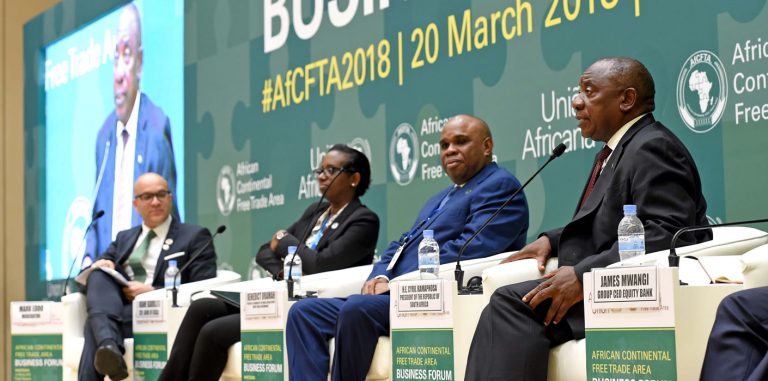
THE AFRICAN CONTINENTAL FREE TRADE AREA: A MARKET STILL BEING BUILT
The African Continental Free Trade Area, commonly known as AfCFTA, represents an ambitious effort to deepen trade among African economies.
Its long-term promise lies in reducing barriers to intra-African trade, supporting regional value chains and expanding the potential market available to businesses.
For an African manufacturer, food processor, technology company or logistics provider, access to customers across several countries could create opportunities for greater production volumes and improved economies of scale.
For smaller enterprises, regional trade could open doors to new customers and business partnerships that would be difficult to reach independently.
However, a continental agreement does not automatically create a frictionless market.
Businesses still need clear customs procedures, practical rules of origin, compatible standards, efficient border operations, dependable transport connections and accessible trade information. Tariffs are only one part of the cost of moving goods across borders.
Non-tariff barriers, inconsistent implementation, payment difficulties, transport delays and regulatory differences can still prevent companies from trading efficiently.
The AfCFTA’s commercial impact will therefore depend on implementation at national and regional levels, alongside private-sector readiness.
Entrepreneurs need to understand the rules, identify viable markets, assess demand, comply with product standards and calculate the real costs of exporting.
The continental market is an opportunity, but it must be approached with research and preparation rather than assumption.
FINANCING THE NEXT GENERATION OF AFRICAN BUSINESSES
Access to finance remains a critical issue for many African enterprises.
A business may have a viable product, committed customers and a capable management team yet struggle to expand because it cannot obtain affordable working capital or long-term investment.
Traditional lending often requires collateral, documented financial records and repayment capacity that younger businesses may not yet possess. Interest rates, currency risks and limited access to suitable financial products can make expansion especially difficult.
Equity investment, development finance, venture capital, cooperative finance, supplier credit and carefully structured partnerships can provide alternatives, although each comes with its own requirements and risks.
The appropriate financing model depends on the business.
A technology start-up with potential for rapid expansion may suit equity investment. A food-processing company may require equipment finance and working capital. A small retailer may need a modest, well-structured credit facility. An export business may require trade finance and support for foreign-currency transactions.
Financial discipline is essential in every case.
Businesses that maintain accurate records, separate personal and company finances, understand their costs and produce credible cash-flow forecasts are better positioned to evaluate investment opportunities and demonstrate their readiness for finance.
At the same time, financial institutions need products that reflect the realities of productive African enterprises, rather than relying exclusively on models designed for large, established corporations.
Closing the financing gap will require both better-prepared businesses and more effective financial systems.
DIGITAL BUSINESS: FROM VISIBILITY TO PRODUCTIVITY
Digital technology has lowered some barriers to reaching customers, promoting products and managing operations.
Social media enables businesses to showcase products. E-commerce platforms can expand access to buyers. Digital payments simplify some transactions. Cloud-based accounting and inventory tools can improve management, while data analytics can help enterprises understand customer behaviour.
But a digital presence is not the same as a viable business.
A company can attract online attention and still struggle with poor fulfilment, unreliable product quality, weak customer service or inadequate financial management.
The real opportunity comes when technology improves the entire business process—from marketing and sales to purchasing, stock control, delivery, customer support and financial reporting.
African enterprises must also take cybersecurity seriously. As businesses become more digitally connected, they face risks involving fraud, unauthorised access, data loss and misuse of customer information.
Digital transformation should therefore combine technology with employee training, appropriate security measures and clear operating procedures.
The most effective digital businesses will not necessarily be those using the most sophisticated technology. They will be those using appropriate tools to solve genuine problems, serve customers consistently and operate more efficiently.
PEOPLE, SKILLS AND THE FUTURE OF WORK
Every successful enterprise depends on people.
Yet businesses across the continent can struggle to find workers with the technical, managerial and practical skills required for their operations. Employers may need stronger capabilities in engineering, digital services, financial management, logistics, hospitality, advanced manufacturing and customer experience.
This gap cannot be solved by education institutions alone.
Businesses must articulate the skills they need, provide workplace learning opportunities and invest in continuous training. Universities, technical colleges and vocational institutions must maintain close connections with employers and update curricula as industries change.
Apprenticeships, internships, practical certification and industry-led training can help bridge the distance between classroom learning and workplace performance.
Young people also need opportunities to progress from entry-level roles into positions involving greater technical responsibility, supervision and management.
The objective should be to build a workforce capable of creating value, not merely filling vacancies.
When enterprises invest in people, they strengthen their own productivity while contributing to the development of the wider economy.
THE BUSINESS ENVIRONMENT MATTERS
Entrepreneurship is frequently presented as an individual achievement, but no business operates in isolation.
Reliable electricity affects production costs. Roads and ports affect delivery times. Internet access affects digital operations. Courts and commercial regulations influence confidence in contracts. Tax administration affects compliance costs. Public security affects employees, customers, goods and investment.
Government policy can either reduce these operating burdens or make them more difficult to manage.
A supportive business environment does not mean eliminating regulation. It means making regulation transparent, proportionate, consistent and practical to comply with.
Businesses benefit when they understand their obligations, can register and obtain permits efficiently, have access to fair dispute-resolution mechanisms and can plan around predictable policy frameworks.
Governments also have a role in supporting competition. Markets work better when new entrants can compete fairly, consumers are protected and public procurement processes are transparent.
For African enterprise to expand, the relationship between government and business must move beyond occasional investment summits and public announcements towards measurable improvements in the everyday conditions of production and trade.
WHAT AFRICAN BUSINESSES MUST DO NEXT
The continent’s business potential will not be realised by optimism alone. Enterprises must strengthen the fundamentals that allow them to survive uncertainty and compete over time.
First, businesses must understand their markets. Demand, customer behaviour, competitors, distribution costs and purchasing power should inform investment decisions.
Second, they must build reliable systems. Accounting, inventory management, staff supervision, quality control and customer service are not administrative luxuries. They are foundations for growth.
Third, they must invest in people and technology where these investments improve productivity and service delivery.
Fourth, they must build partnerships. Suppliers, distributors, financial institutions, educational establishments and other businesses can help companies access resources and markets that would be difficult to reach independently.
Finally, businesses must plan beyond immediate sales. Resilience requires adequate cash-flow management, responsible borrowing, contingency planning and an understanding of operational risks.
Governments and financial institutions have equally important responsibilities: improve infrastructure, make rules more predictable, expand appropriate finance, support skills development and remove unnecessary barriers to productive activity.
The future belongs neither to government acting alone nor to entrepreneurs being left to solve every structural problem themselves. It requires an ecosystem in which enterprise and public institutions reinforce one another.
A CONTINENT MOVING FROM POSSIBILITY TO CAPABILITY
Africa’s commercial future will not be shaped by a single company, country or industry.
It will emerge from millions of decisions made by farmers, manufacturers, traders, technology developers, service providers, investors, workers and policymakers.
Some businesses will remain local, serving the needs of their communities. Others will expand across borders. A smaller number may develop into major international companies. Each can contribute to economic development when it creates genuine value, operates responsibly and builds productive relationships with its market.
The critical shift is from celebrating potential to building capability.
Capability means the ability to manufacture consistently, process efficiently, deliver reliably, innovate continuously, finance growth and compete fairly. It means creating institutions and systems that allow productive businesses to thrive even when individual leaders change.
It also means broadening participation so that women, young people, rural entrepreneurs and smaller enterprises can access the tools and opportunities required to grow.
Africa’s next commercial chapter will be measured not simply by the number of billion-dollar businesses it produces, but by the depth of its productive capacity, the resilience of its enterprises, the quality of its jobs and the extent to which economic growth improves people’s lives.
The continent does not lack business ideas. It needs the conditions that allow more of those ideas to become enduring enterprises.
Africa means business. The challenge is to build an economy capable of matching that ambition.
VOAM ENTERPRISE AFRICA | THE TAKEAWAY
Africa’s greatest business opportunity lies in transforming entrepreneurial energy into productive capacity. That means supporting local enterprise, developing skills, expanding access to appropriate finance, strengthening infrastructure, adding value to resources and making regional trade work in practice.
The future will belong to businesses that solve real problems, build trust and operate with discipline—and to economies that make it possible for those businesses to grow.
VOAM QUESTION
What is the single most important change African governments, financial institutions or business leaders must make to help African enterprises grow from local ventures into competitive continental and global brands?