














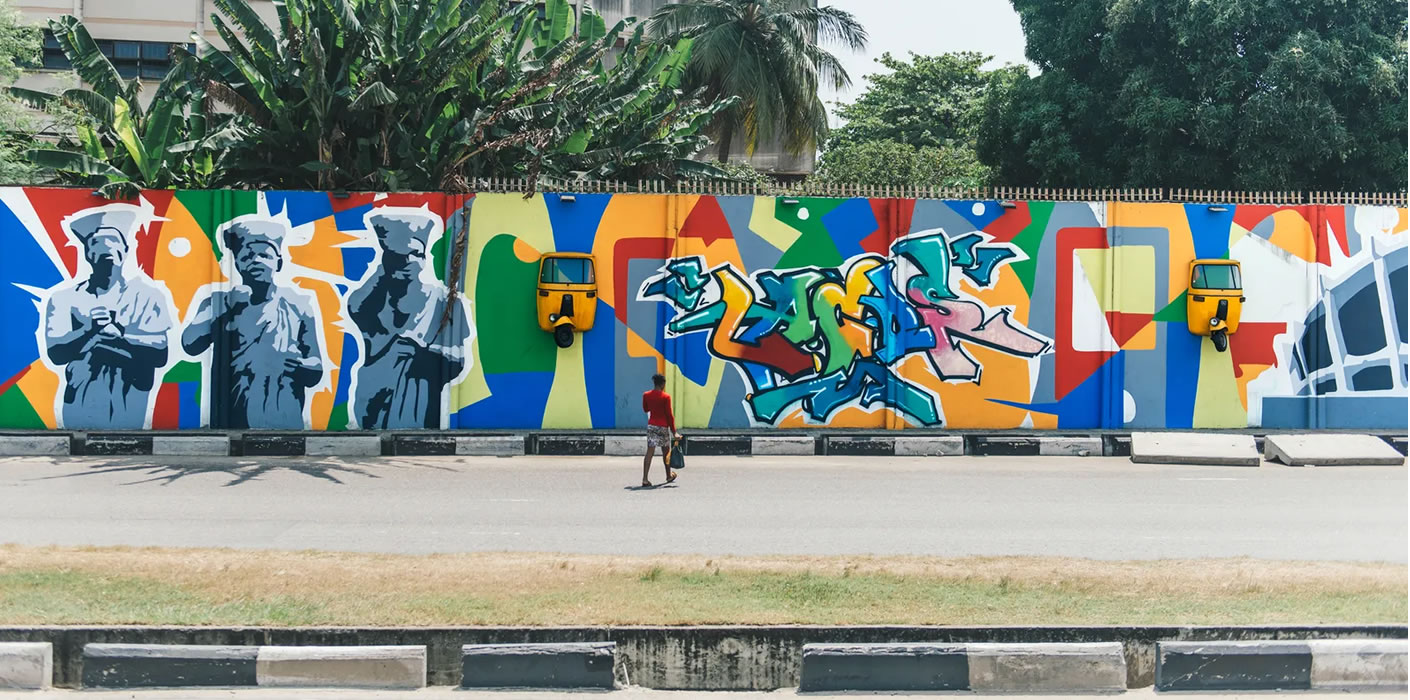

From Afrobeats and Nollywood to fashion, digital storytelling and contemporary art, Lagos has become one of the most influential centres of African creativity. Its artists and entrepreneurs are exporting more than entertainment: they are shaping global conversations about identity, ambition, culture and the future of African expression.
A CITY THAT CREATES AT FULL VOLUME
Lagos rarely does anything quietly.
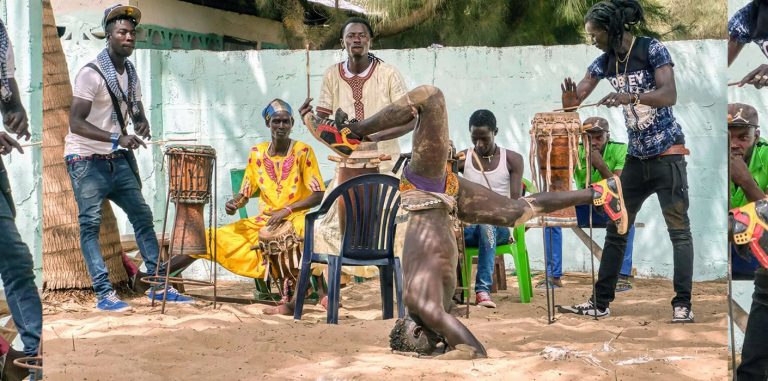
Its streets pulse with commerce. Its studios produce music long after midnight. Its film sets transform ordinary locations into imagined worlds. Its fashion designers reinterpret tradition for contemporary audiences. Its photographers, writers, dancers, comedians and digital creators turn everyday experiences into stories that travel far beyond Nigeria.
In this city, creativity is not confined to galleries, theatres or concert halls. It is woven into the rhythm of daily life.
A musician can build an audience through digital platforms. A filmmaker can reach viewers across continents. A fashion entrepreneur can transform a local design into an internationally recognised brand. A comedian can turn familiar social experiences into content shared by millions.
Lagos has become a compelling example of how a city’s population, commercial energy, cultural diversity and entrepreneurial ambition can combine to create a powerful creative ecosystem.
Its influence extends well beyond Nigeria. Afrobeats has found audiences around the world. Nollywood has built a substantial international following. Nigerian fashion, visual art, literature and digital entertainment continue to reach new markets.
Yet the story is larger than international recognition.
The central question is whether the energy of Lagos can be translated into a stronger, more sustainable creative economy—one that rewards talent, creates jobs, protects intellectual property and enables African creators to own more of the value their work generates.
The world is paying attention. The next challenge is to ensure that the people creating the culture can build lasting businesses from it.
LAGOS: WHERE CULTURE MEETS COMMERCE
Lagos is both a cultural centre and a major commercial city.
Its music studios, production companies, advertising agencies, event venues, fashion houses, media organisations and digital businesses operate within a dense network of talent and commercial activity.
This concentration creates advantages.
Artists can collaborate with producers, designers can connect with manufacturers, filmmakers can access technical crews, and brands can engage audiences through events and digital campaigns. Businesses from different sectors can work together to develop products, performances and experiences.
A single entertainment project may generate work for musicians, dancers, stylists, sound engineers, camera operators, graphic designers, publicists, transport providers, caterers and venue operators.
This is the multiplier effect of the creative economy: a cultural product can support a much wider chain of economic activity.
But the ecosystem also has weaknesses.
Creative professionals may struggle with inconsistent payments, limited access to finance, inadequate production infrastructure, unreliable power supply, piracy and weak contractual arrangements. Many talented people operate without the business systems needed to price their work properly, protect their rights or build predictable income.
Lagos demonstrates what is possible when creative talent meets commercial opportunity. It also reveals why talent alone is not enough.
For the creative economy to mature, the city needs stronger infrastructure, transparent business practices, accessible financing and systems that allow creators to earn from their work over time.
AFROBEATS: A SOUND THAT CROSSED BORDERS
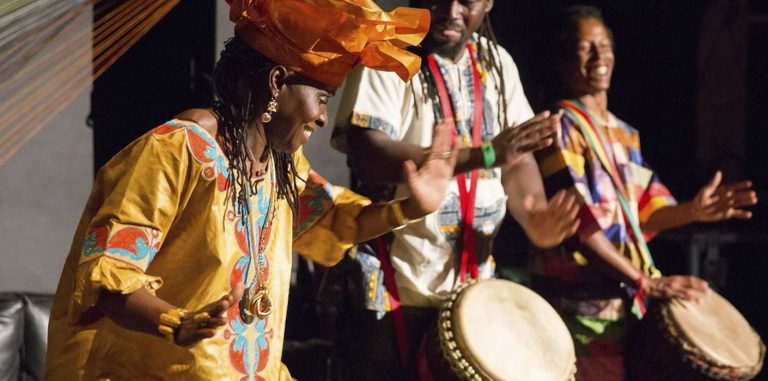
One of the most visible expressions of Nigeria’s cultural influence is Afrobeats, the broad contemporary popular-music movement that has reached audiences across Africa and internationally.
Drawing on diverse African rhythms and musical traditions while engaging with hip-hop, R&B, dancehall, electronic music and other influences, Afrobeats has developed a recognisable place in global popular culture.
Artists including Burna Boy, Wizkid, Davido, Tems and many others have helped bring Nigerian and African sounds to international stages, streaming platforms and major music markets.
Their individual journeys differ, but the wider movement reveals how local cultural expression can find global audiences without losing its distinctive character.
Music travels through more than sound. It carries language, fashion, dance, humour, social attitudes and ideas about identity. A song can introduce listeners to a city, a cultural reference or an unfamiliar expression. An artist’s success can create opportunities for producers, songwriters, dancers, stylists, managers and event professionals.
The international visibility of Afrobeats has also encouraged collaborations across borders, creating new relationships between African artists and musicians in other markets.
However, global visibility does not guarantee that all participants benefit equally.
Music production and distribution involve rights, royalties, licensing, contracts, marketing expenses and platform arrangements. Artists may achieve substantial popularity while facing difficulties in understanding revenue flows or securing fair compensation.
The next stage of Afrobeats’ development depends not only on producing international hits but also on strengthening the business systems that allow African music professionals to earn sustainably from their work.
NOLLYWOOD: TELLING AFRICAN STORIES AT SCALE
Nigeria’s film industry, widely known as Nollywood, has become a major force in African entertainment.
Its growth has been driven by filmmakers, actors, writers, editors, cinematographers, producers and other professionals who have developed ways to create stories for a large and diverse audience.
Nollywood’s significance lies partly in its scale and partly in its cultural reach. Its films portray family relationships, social expectations, ambition, faith, romance, conflict, humour and the changing realities of Nigerian life.
These stories can resonate with audiences who recognise their own experiences. They can also introduce international viewers to settings, languages, traditions and social questions that are often absent from mainstream global entertainment.
The industry has evolved from earlier distribution models towards more varied production methods, digital platforms, cinema releases and international partnerships.
This evolution creates opportunities for better production quality, broader distribution and more ambitious storytelling. It also raises questions about ownership, financing, creative control and the terms under which films reach international audiences.
Filmmakers need access to reliable equipment, skilled crews, post-production facilities, suitable locations and sustainable funding. They also need contracts that protect the rights of writers, performers, producers and other contributors.
A successful film industry cannot be measured by the number of titles produced alone. It must also be judged by the quality of its stories, the sustainability of its businesses, the working conditions of its professionals and the value retained by the people who create its content.
Nollywood has shown that African stories can find large audiences. Its continuing opportunity is to strengthen the institutions and commercial structures that support those stories from development to distribution.
FASHION: WEARING IDENTITY INTO THE FUTURE
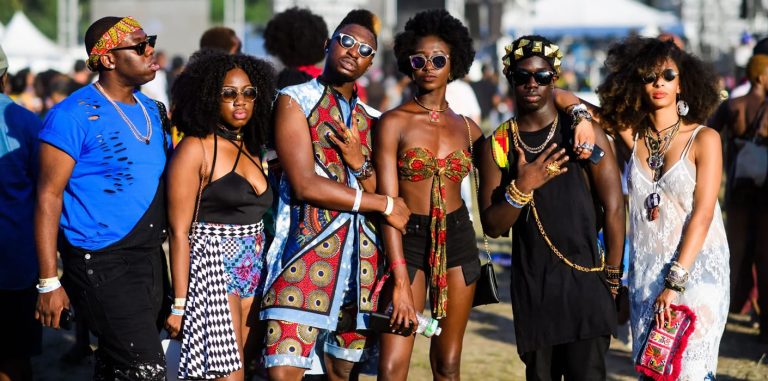
Lagos is also an influential centre of Nigerian fashion, where designers draw inspiration from local textiles, traditional clothing, street style, contemporary tailoring and global fashion movements.
The city’s fashion ecosystem extends beyond the designer whose name appears on a label. It includes textile suppliers, tailors, pattern makers, photographers, models, stylists, retailers, event organisers and digital marketers.
Fashion can create jobs at different skill levels while providing opportunities to develop local brands and connect traditional craftsmanship with contemporary markets.
Designers working with Nigerian textiles and cultural references can contribute to a wider conversation about how African aesthetics are interpreted and represented internationally.
But building a successful fashion business involves more than producing attractive garments.
Designers must understand production costs, sizing, quality control, inventory, pricing, distribution and customer demand. They need dependable suppliers and skilled workers. They also need to distinguish a commercially viable collection from one that attracts attention but cannot be produced or sold profitably.
For brands seeking international markets, consistency matters. Buyers expect reliable delivery, clear product specifications, professional communication and dependable quality.
The opportunity is to transform creative distinction into commercial strength—building brands that are recognisably African without being limited to a narrow idea of what African fashion should look like.
DIGITAL CREATORS: THE NEW MEDIA ENTREPRENEURS
A growing generation of Nigerian creators is building audiences through short-form video, podcasts, livestreams, newsletters, online education, comedy, commentary and other forms of digital publishing.
These creators are changing the relationship between content production and distribution.
In the past, reaching a large audience often required access to established broadcasters, publishers or major entertainment companies. Digital platforms have lowered some barriers, allowing individuals and small teams to publish directly and build communities around their work.
A creator with a clearly defined audience can develop several potential revenue streams: advertising, brand partnerships, subscriptions, merchandise, live events, consulting and educational products.
Yet the creator economy can be unpredictable.
Platform algorithms change. Advertising revenue varies. Audiences move between services. Content can be copied or misused. Creators may become dependent on one platform or one major sponsor.
A large following does not necessarily translate into a profitable business.
Creators need to understand audience behaviour, production costs, brand safety, contracts, intellectual-property rights and the difference between attention and revenue.
They must also consider their responsibilities when publishing information. Accuracy, transparency and respect for privacy matter even when content is designed primarily for entertainment.
The strongest digital creators will be those who combine distinctive voices with sustainable business models and a clear understanding of the communities they serve.
THE BUSINESS BEHIND THE SHOW
A major concert, film production, fashion presentation or cultural festival is a complex commercial operation.
Behind the public experience are budgets, contracts, logistics, technical requirements, marketing plans, safety procedures and multiple service providers.
A concert may involve artists, promoters, booking agents, venue operators, sound engineers, lighting technicians, security personnel, ticketing providers, transport companies, caterers, sponsors and media teams.
A film production may depend on location managers, costume departments, set designers, equipment rental companies, editors, sound specialists and distribution partners.
These activities illustrate why the creative economy should be treated as a productive industry rather than a collection of hobbies.
Its success depends on specialised skills, reliable systems and the coordination of many different participants.
For Lagos, this creates opportunities to strengthen professional services around the creative sector. Production facilities, rehearsal spaces, post-production studios, equipment rental businesses, event-management companies and rights-management services can help creators work more efficiently.
Training is equally important. Technical professionals need opportunities to develop expertise in sound, lighting, editing, cinematography, stage management, digital design and production logistics.
The commercial value of creativity increases when the supporting infrastructure becomes more reliable.
INTELLECTUAL PROPERTY: WHO OWNS THE VALUE?
Creative work can generate revenue long after its original production.
A song may be streamed for years. A film may be licensed to different territories. A photograph may be reproduced in advertising. A design may become the foundation of a commercial brand. A written work may be adapted for film, television or other media.
These opportunities depend on clear ownership and the effective management of intellectual-property rights.
When creators do not understand contracts or fail to document ownership, disputes can arise over royalties, licensing, attribution and the right to use a work.
Businesses that exploit creative content without appropriate permission can undermine the people whose labour gives the content its value.
At the same time, creators need to understand the rights they are granting when they sign agreements with labels, publishers, production companies, sponsors or digital platforms.
Professional advice, clear contracts, accurate recordkeeping and effective rights-management systems can help protect the interests of both creators and legitimate commercial partners.
Intellectual property is not simply a legal concern. It is an economic asset.
A stronger framework for protecting and licensing creative work can help African professionals negotiate better agreements, develop new revenue streams and retain greater value from their output.
TAKING LAGOS TO THE WORLD
Global expansion requires more than international publicity.
Creative businesses seeking to enter new markets must understand audiences, distribution channels, pricing, local regulations and cultural differences. They need professional marketing, dependable delivery and partnerships that support long-term growth.
For music, this may involve international touring, licensing, publishing and collaborations with promoters and distributors. For film, it may require festival participation, streaming agreements, cinema distribution or co-production arrangements. For fashion, it can involve export logistics, retail partnerships and clear production standards.
Digital creators may be able to reach international audiences directly, but they still need sustainable revenue arrangements and appropriate management of their intellectual property.
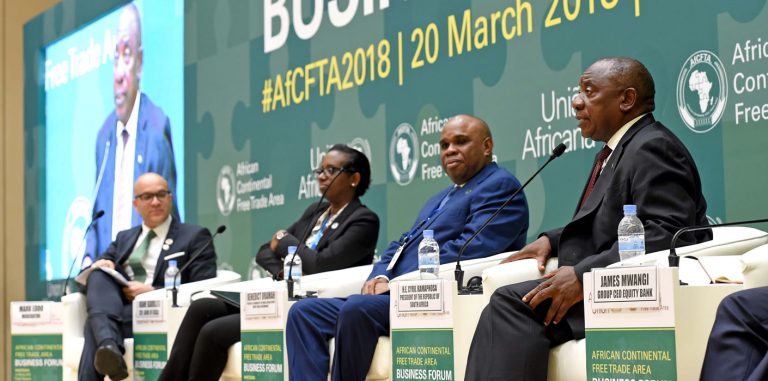
The African Continental Free Trade Area may also create opportunities for cultural and creative businesses to expand across African markets, although practical access depends on relevant trade rules, regulations and implementation.
A Lagos-based creative company does not necessarily need to target the entire world at once. It can begin by identifying a specific audience, testing a market and building partnerships before expanding further.
International growth is most sustainable when a business understands what makes its work distinctive and can deliver it consistently.
The objective is not simply to be seen globally. It is to build a business that can operate confidently in global markets.
THE CHALLENGE OF BUILDING A SUSTAINABLE CREATIVE ECONOMY
Lagos has the energy, talent and cultural influence to support an even stronger creative economy. Realising that opportunity requires action across several areas.
Infrastructure: Reliable electricity, broadband, studios, rehearsal spaces, production facilities and transport systems reduce operating costs and improve the quality of output.
Finance: Creative businesses need funding models that recognise the characteristics of their industries, including intellectual-property assets, project-based revenue and uncertain early-stage demand.
Skills: Training should extend beyond artistic ability to include business management, production technology, marketing, negotiation, financial literacy and rights management.
Policy: Clear and practical regulations, effective intellectual-property protection and transparent public support can strengthen investor confidence and commercial activity.
Market access: Creators need routes to audiences through digital distribution, international partnerships, festivals, retail channels and regional networks.
Professional standards: Fair contracts, accurate accounting, safe working conditions and reliable payment practices help build trust across the sector.
These priorities are connected. Better infrastructure can improve production quality. Stronger skills can increase productivity. Better contracts can protect revenue. More reliable finance can help businesses expand.
No single intervention will transform the creative economy, but coordinated improvements can make it easier for talent to become a sustainable source of employment and enterprise.
MORE THAN ENTERTAINMENT: A NEW AFRICAN NARRATIVE
The international success of Lagos-based and Nigerian creatives has consequences beyond the entertainment industry.
Music introduces audiences to new sounds and expressions. Films present African characters and experiences. Fashion brings cultural references into contemporary design. Digital creators offer perspectives on social life, ambition, humour and identity.
Together, these forms of expression influence how people understand Nigeria and Africa.
That influence should not be confused with the responsibility to present only positive images. Authentic storytelling includes achievement and failure, joy and difficulty, tradition and change.
The value of African creative expression lies in its diversity and its freedom to explore the full complexity of African life.
Creators should not be required to represent an entire continent every time they produce a song, film, design or online video. Their work can be personal, experimental, entertaining, critical or commercially driven.
The larger contribution emerges from the accumulation of many voices rather than a single approved image.
This is where Lagos’s creative energy becomes especially significant. It is not one story about Africa. It is a place where many different stories are being made, contested, sold, shared and reimagined.
THE NEXT CHAPTER: FROM CULTURAL INFLUENCE TO INDUSTRIAL STRENGTH
Lagos has already demonstrated that African creativity can attract international attention and shape global culture.
The next stage is to ensure that cultural influence produces stronger businesses, better working opportunities and more sustainable income for the people who make the work.
That means moving from isolated success stories towards a well-supported ecosystem.
It means developing companies that can finance projects, manage intellectual property, distribute products, train professionals and expand into new markets.
It means ensuring that the technicians, designers, writers, performers, producers and service providers behind creative success are recognised as essential participants in the economy.
It also means building partnerships among government, private enterprise, educational institutions, financial organisations and creative communities.
The creative economy cannot thrive on visibility alone. It needs infrastructure, investment, skills and fair commercial relationships.
Lagos has the cultural energy. Nigeria has a wealth of talent. African audiences are diverse and growing, while international markets continue to encounter new forms of African expression.
The opportunity is to connect these strengths to systems that help creative businesses survive and grow.
From Lagos to the world, the journey is no longer simply about exporting songs, films, fashion or digital content. It is about building the capacity to create, own, distribute and profit sustainably from African creativity.
The world may arrive for the music, the films, the fashion and the spectacle.
The enduring achievement will be the industry built behind them.

VOAM CREATIVE AFRICA | THE TAKEAWAY
Lagos demonstrates how cultural expression can become a powerful economic force. Music, film, fashion, digital media and live experiences support networks of creators, technicians, entrepreneurs and service providers.
The next challenge is to convert global visibility into sustainable creative businesses through stronger infrastructure, fair contracts, intellectual-property protection, professional training and access to international markets.
Africa’s creative future should not be measured by attention alone, but by the opportunities and value created for the people behind the work.
VOAM QUESTION
What is the biggest obstacle preventing African creatives from turning international recognition into long-term wealth, stronger businesses and a globally competitive creative industry?