











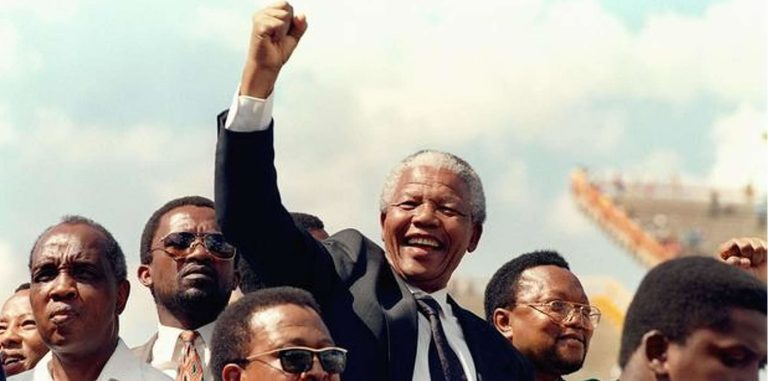

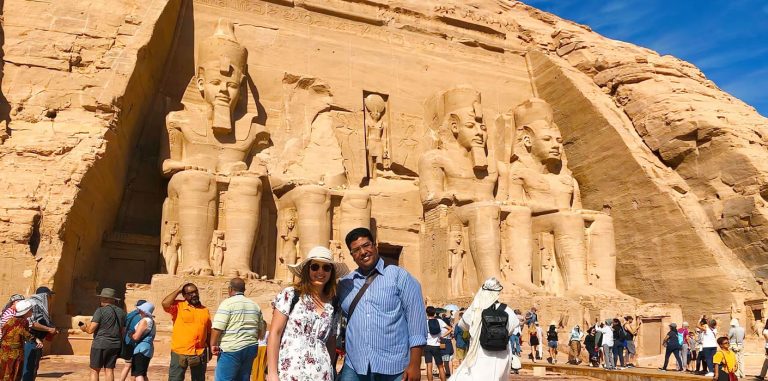


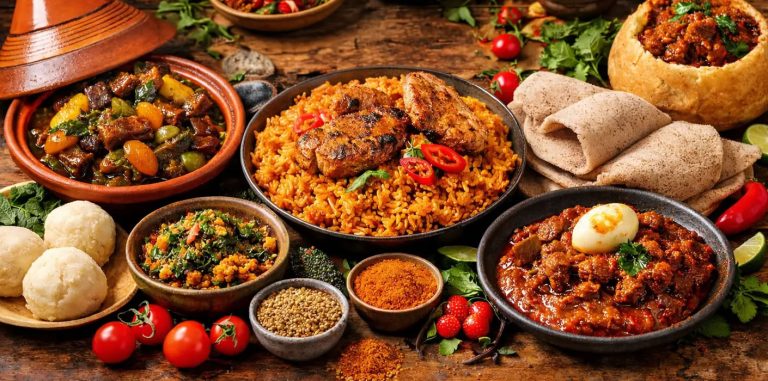







Long before Africa became a recurring subject of modern headlines, its peoples were building cities, organising kingdoms, developing systems of knowledge, cultivating trade networks and shaping the course of world history. Their legacy is not a footnote to civilisation. It is part of its foundation.
A History Larger Than the Headlines
Africa is often introduced to the world through the urgency of the present: political transitions, economic pressures, security challenges, migration, technological change and the search for development. These stories matter. But when they dominate the picture, something essential can disappear from view—the extraordinary depth of the continent’s historical experience.
Across thousands of years, African societies developed political institutions, agricultural systems, architectural traditions, commercial networks, artistic practices and intellectual cultures. They built settlements and cities, organised long-distance trade, managed complex environments and created forms of knowledge that sustained communities across generations.
Some of these civilisations flourished along major rivers. Others developed in savannahs, forests, deserts, highlands and coastal regions. Some are remembered through monumental architecture and written records; others are reconstructed through archaeology, oral history, linguistics and the material evidence of everyday life.
Their histories were neither identical nor isolated. African societies traded with one another and with communities beyond the continent, adopted and adapted ideas, experienced conflict and cooperation, and responded creatively to changing circumstances.
To understand Africa’s past, therefore, is not to search for one grand civilisation that explains everything. It is to recognise a continent of many societies, each with its own achievements, contradictions and historical trajectory.
And it is to understand that Africa was not simply a place where history happened. Africans were among the people making it.
THE NILE VALLEY: KINGDOMS THAT BUILT FOR ETERNITY
Among the world’s best-known ancient civilisations are those that developed along the Nile Valley in northeastern Africa.
Ancient Egypt emerged through a long process of political consolidation, with the unification of Upper and Lower Egypt conventionally associated with the early dynastic period around the late fourth millennium BCE. Over subsequent centuries, Egyptian rulers presided over changing kingdoms, administrative systems, monumental building projects and complex religious traditions.
The pyramids of Giza remain among the most recognisable structures in human history. Their construction required sophisticated organisation, skilled labour, logistical planning and a substantial capacity to mobilise resources. Egyptian achievements also included developments in architecture, mathematics, medicine, writing, artistic production and administration.
Yet the story of ancient Egypt extends far beyond monuments. Agricultural communities along the Nile developed systems of cultivation and resource management shaped by the river’s seasonal patterns. Scribes maintained records, craftspeople produced objects of remarkable technical quality, and traders connected Egypt with neighbouring regions.
South of Egypt, the ancient kingdom of Kush developed in what is now Sudan, with important centres including Kerma, Napata and Meroë at different periods.
Kush was not merely an extension of Egypt. It developed its own political traditions, material culture and religious practices, while also interacting closely with its northern neighbour. Kushite rulers controlled Egypt during the Twenty-Fifth Dynasty, demonstrating the political influence of a kingdom based further south along the Nile.
At Meroë, ironworking and the use of the Meroitic script formed part of a distinctive cultural landscape. The script remains only partly understood, a reminder that significant parts of Africa’s ancient intellectual history still require further research.
The Nile Valley shows how interconnected societies could develop distinct identities while participating in a wider regional world.
AKSUM: AN AFRICAN KINGDOM CONNECTED TO THE WORLD
In the Horn of Africa, the kingdom of Aksum rose to prominence during the first millennium CE, centred in the region of present-day northern Ethiopia and extending its influence into what is now Eritrea and surrounding areas.
Aksum occupied an important position in trade networks linking the African interior with the Red Sea and the wider Indian Ocean world. Its commercial connections involved goods and people moving between Africa, Arabia and other distant markets.
The kingdom is remembered for its monumental stone stelae, distinctive coinage, inscriptions and political organisation. Its rulers issued coins that circulated within commercial networks, while inscriptions provide evidence of official language, royal authority and changing religious affiliations.
Aksum also became a major centre in the history of Christianity in Africa. Christianity gained royal support in the fourth century CE, although the process by which religious practices changed across the wider population was gradual and complex.
The kingdom’s historical significance challenges any suggestion that premodern African societies existed outside major international networks.
Aksum’s position connected African political life with wider currents of commerce, religion and diplomacy. Its history demonstrates that global connections are not a recent addition to Africa’s story; they have deep historical roots.
WEST AFRICA: GOLD, CITIES AND INTELLECTUAL LIFE
Across West Africa, powerful societies developed around agriculture, trade, political authority and the control of important commercial routes.
The Ghana Empire, which flourished during the early medieval period in parts of the western Sahel, became known through historical accounts for its political power and its role in trans-Saharan trade. Its territory was not the same as that of the modern Republic of Ghana, whose name was adopted in reference to an earlier West African historical legacy.
The later Mali Empire expanded into a major political and commercial power. Under rulers including Mansa Musa, who reigned in the fourteenth century, Mali became widely associated with gold, trans-Saharan commerce and the prominence of cities such as Timbuktu.
Mansa Musa’s pilgrimage to Mecca in 1324–1325 is among the best-known episodes in the empire’s history. Accounts of the journey circulated beyond Africa and helped establish his reputation in distant regions. Yet Mali’s significance was not limited to royal wealth. Its power depended on agricultural production, commercial relationships, political institutions and the many communities that sustained the empire.
Further east, the Songhai Empire rose to prominence, particularly during the fifteenth and sixteenth centuries. Under rulers such as Sunni Ali and Askia Muhammad, it controlled extensive territories and important trade routes. Gao, Timbuktu and Djenné formed part of a broader urban and commercial landscape.
Timbuktu became associated with scholarship, manuscript culture and Islamic learning. Scholars studied and copied texts, while families and institutions preserved written materials covering subjects such as law, theology, literature, mathematics and astronomy.
The city’s intellectual history reminds us that African knowledge traditions were not limited to oral transmission. Written scholarship flourished in multiple African settings, using different languages and scripts.
These centres were also shaped by trade, migration, political change and religious exchange. Their achievements should be understood in their own historical contexts rather than measured against a single model of civilisation.
DJENNÉ AND THE ARCHITECTURE OF COMMUNITY
In present-day Mali, Djenné illustrates the relationship between architecture, trade, religion and community life in the inland Niger Delta region.
The city developed as part of a wider network of settlements and commercial routes. Its earthen architecture reflects the skilled use of locally available materials and construction knowledge adapted to environmental conditions.
The Great Mosque of Djenné, in its present major form dating to the early twentieth century, is among the most celebrated examples of Sudano-Sahelian architecture. Its significance extends beyond its visual appearance: it is a place of worship and a landmark within a living community.
Traditional maintenance practices associated with earthen buildings demonstrate how architecture can depend on collective labour, specialised knowledge and repeated care rather than on construction alone.
Such places also reveal the importance of preservation. Climate pressures, changing building materials, conflict and limited resources can threaten historic structures and the communities that maintain them.
Protecting heritage requires more than preserving a photograph or a façade. It involves supporting the people, skills and institutions that keep historic places meaningful and functional.
GREAT ZIMBABWE: STONE, POWER AND REGIONAL COMMERCE
In southern Africa, Great Zimbabwe stands as one of the continent’s most important archaeological sites.
The settlement flourished particularly between the eleventh and fifteenth centuries CE and is associated with ancestors of Shona-speaking communities. Its monumental dry-stone walls were constructed without mortar, displaying sophisticated knowledge of stone selection, structural arrangement and architectural design.
Great Zimbabwe was more than a collection of impressive walls. It formed part of a political and economic landscape connected to cattle keeping, agriculture, craft production and regional trade.
Trade networks linked the interior with the Swahili coast and Indian Ocean commerce. Archaeological evidence, including imported goods found at the site, provides insight into these connections, although the details and scale of particular exchanges must be interpreted carefully.
The site has also played an important role in modern debates about African history. During the colonial era, some commentators promoted unfounded claims that its monumental architecture must have been created by outsiders. Archaeological research has established the site’s African origins and the achievements of the societies that built and inhabited it.
This history demonstrates why evidence-based scholarship matters. Historical interpretation is not neutral when political interests seek to deny people their achievements or disconnect communities from their past.
Great Zimbabwe stands as evidence of African architectural ingenuity, political organisation and participation in regional commerce.
THE KINGDOMS AND CITIES THAT SHAPED CENTRAL AFRICA
Central Africa’s history includes complex political systems, long-distance exchanges, artistic traditions and influential kingdoms.
The Kingdom of Kongo, which developed in parts of present-day Angola, the Democratic Republic of the Congo and neighbouring areas, became a significant regional power before and during the early period of European contact.
Its rulers maintained political institutions, negotiated diplomatic relationships and engaged in commerce. Contact with Portugal, beginning in the late fifteenth century, brought new religious and diplomatic connections but also contributed to profound changes and, over time, devastating involvement in Atlantic slave-trading systems.
The Kongo experience illustrates the importance of viewing African societies as historical actors. African rulers and communities made decisions within changing circumstances, but those circumstances included unequal power relationships, external intervention, conflict and coercion.
Further east and south, the Luba and Lunda political systems influenced wide areas through networks of authority, migration, trade and cultural exchange. Their histories demonstrate that political organisation in Africa took many forms, ranging from centralised kingdoms to more distributed systems of power.
Central Africa’s artistic traditions also deserve attention. Metalwork, sculpture, textiles, musical instruments and ceremonial objects served social, political and spiritual purposes. These works were not simply decorative; they could communicate authority, lineage, belief and community identity.
Many objects are now held in collections far from the communities in which they were created, raising continuing questions about ownership, restitution, interpretation and access.
AFRICAN KNOWLEDGE: MORE THAN MONUMENTS
Civilisation is sometimes measured through visible structures: palaces, walls, pyramids, temples and urban centres. Yet the knowledge that sustains societies is often found in less monumental forms.
Across Africa, generations developed detailed knowledge of farming, soil management, animal husbandry, medicinal plants, weather patterns, water systems, navigation, metalworking, textiles and food preservation.
These traditions emerged through observation, experimentation and accumulated experience. Knowledge was transmitted through families, specialist practitioners, apprenticeships, oral teaching, written records and community institutions.
In some regions, scholars worked with manuscripts and formal educational traditions. Elsewhere, oral historians, craftspeople, healers, farmers and community elders maintained bodies of knowledge that were adapted as circumstances changed.
These systems should neither be romanticised as unchanging nor dismissed because they differ from modern institutional models. They were diverse, practical and historically situated, with their own methods of validation, specialisation and transmission.
The study of African knowledge traditions also creates contemporary opportunities. Agricultural knowledge can inform research into local crops and environmental adaptation. Historical building methods can contribute to discussions about sustainable construction. Manuscript collections can expand understanding of African intellectual history, while traditional artistic techniques can inspire new creative industries.
Such engagement must involve knowledgeable communities and rigorous research. Preserving a tradition means understanding its context, not extracting it from the people who sustain it.
TRADE ROUTES THAT CONNECTED WORLDS
Africa’s historical economies were shaped by networks that connected inland settlements, rivers, deserts, ports and coastal cities.
Trans-Saharan routes carried goods, people and ideas between North Africa and the Sahel. Gold, salt and other commodities formed part of these exchanges, alongside textiles, books and numerous everyday goods. Trade also facilitated religious, linguistic and intellectual interactions.
Along the East African coast, Swahili trading cities connected African communities with the wider Indian Ocean world. Maritime exchange linked coastal settlements with Arabia, Persia, India and other regions, creating distinctive urban cultures shaped by African foundations and international connections.
Across parts of West and Central Africa, rivers and inland waterways supported transport, fishing, agriculture and commerce. Markets linked producers with consumers, while specialised crafts and local manufacturing sustained urban and rural economies.
These networks did not operate without conflict or exploitation. Trade could generate wealth and innovation, but it could also be shaped by unequal power, warfare, enslavement and political competition.
A complete account of African economic history must acknowledge both the opportunities created by exchange and the human costs of particular systems.
It must also recognise that African societies were not merely passive suppliers of raw materials. They produced goods, developed commercial institutions, negotiated relationships and helped shape the movement of commodities and ideas.
WHEN HISTORY MEETS THE MODERN WORLD
Africa’s historical legacy is not confined to the past. It continues to influence contemporary identity, architecture, language, religion, food, music, political institutions and debates about development.
Historic cities attract visitors and researchers. Traditional building techniques inform contemporary design. Manuscript collections contribute to scholarship. Cultural festivals keep memories alive, while artists reinterpret historical symbols in modern forms.
Heritage tourism can create income for guides, craftspeople, accommodation providers and local businesses. Museums and archives can support education and research. Community-led interpretation can give younger generations opportunities to understand the histories of their own regions.
However, the economic use of heritage requires care.
Historic places may be sacred, politically sensitive or closely tied to community identity. Their significance should not be reduced to commercial branding. Communities must have meaningful roles in decisions about how their heritage is presented, protected and used.
Digital tools also offer new possibilities. High-resolution imaging, digital catalogues, oral-history projects and carefully developed virtual exhibitions can help preserve materials and make them more accessible to researchers and the public.
Technology cannot replace physical conservation, community knowledge or responsible scholarship, but it can support these efforts when appropriately funded and managed.
THE WORK OF REMEMBERING
Many African historical records have survived in challenging circumstances. Manuscripts have been dispersed, archaeological sites have faced damage, oral traditions have weakened where transmission between generations has been disrupted, and some historical collections remain difficult to access.
Conflict and environmental pressures can create further risks. Limited funding for museums, archives, research and conservation can make long-term preservation difficult.
Addressing these challenges requires investment in education, professional training, cultural institutions and community-led research.
It also requires collaboration among African universities, museums, libraries, historians, archaeologists, linguists, archivists and traditional knowledge holders.
International partnerships can contribute expertise and resources, but they should support African research priorities and respect the rights of communities connected to the heritage being studied.
School curricula and public media have equally important roles. Young Africans should encounter the histories of their regions and the wider continent through evidence-based teaching, accessible books, documentaries, exhibitions and digital storytelling.
The objective is not to replace one simplified story with another. It is to make African history more complete, better researched and more widely understood.
A CONTINENT WITH MANY HISTORIES
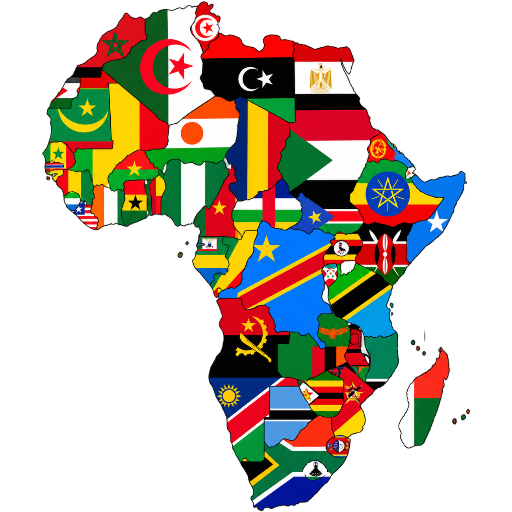
There is no single African civilisation that explains the continent. The Nile Valley, Aksum, the Sahelian empires, Great Zimbabwe, Kongo and many other societies emerged in different environments and periods, developing distinct institutions and responding to different historical pressures.
Some created monumental architecture. Others became influential through trade, scholarship, agriculture, craftsmanship, religious institutions or political networks. Many left legacies that continue to shape communities today.
Their histories include achievement and creativity, but also warfare, inequality, political transformation and difficult encounters with other powers. Taking African history seriously means acknowledging its complexity rather than turning the past into either a celebration without criticism or a story of perpetual crisis.
It means asking better questions, examining the evidence and allowing African scholars and communities to contribute to the interpretation of their own histories.
Most importantly, it means recognising that Africa’s past is not an isolated chapter in world history. It is woven into the wider human story through migration, commerce, intellectual exchange, artistic achievement and political change.
BEFORE THE HEADLINES, THERE WAS HISTORY
The modern world often encounters Africa through urgent developments unfolding today. But every present has a past, and every society carries histories that help explain its institutions, identities, achievements and challenges.
Across the continent, ancient settlements, historic cities, manuscripts, archaeological sites, oral traditions and living cultural practices offer evidence of societies that built, traded, studied, governed and created.
Their stories deserve more than occasional mention. They belong in classrooms, museums, public debate, tourism programmes and the global conversation about human civilisation.
For Africa, remembering is not an exercise in nostalgia. It is a foundation for knowledge, cultural confidence and informed choices about the future.
The continent did not begin when modern headlines noticed it. Its histories reach back thousands of years, and those histories continue to matter.

VOAM LEGACY AFRICA | THE TAKEAWAY
Africa’s civilisations were diverse, interconnected and historically significant. From the Nile Valley and Aksum to the Sahelian empires, Great Zimbabwe and the Kingdom of Kongo, African societies shaped political life, commerce, architecture, scholarship and culture across different eras.
Understanding these histories requires evidence, research and respect for the communities that carry their legacies. It also requires telling the stories fully—recognising achievement without ignoring complexity.
VOAM QUESTION
Which African civilisation, historic city or knowledge tradition do you believe deserves greater attention in schools, museums and global media?