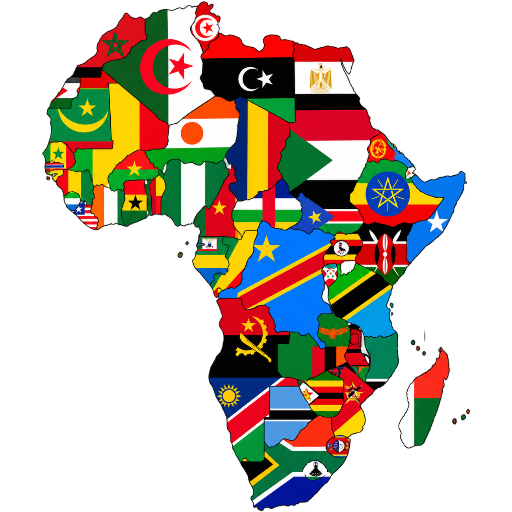







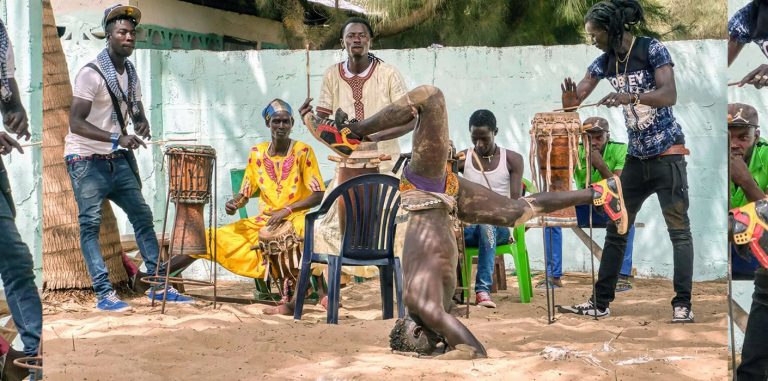




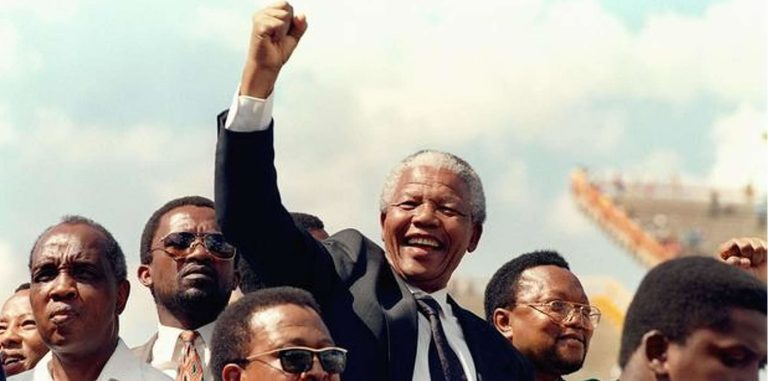

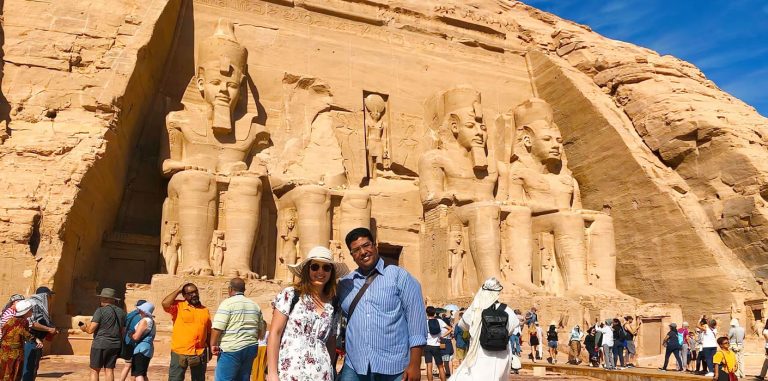



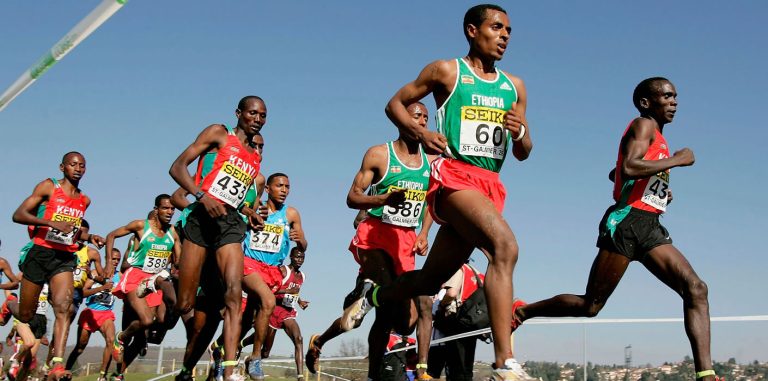



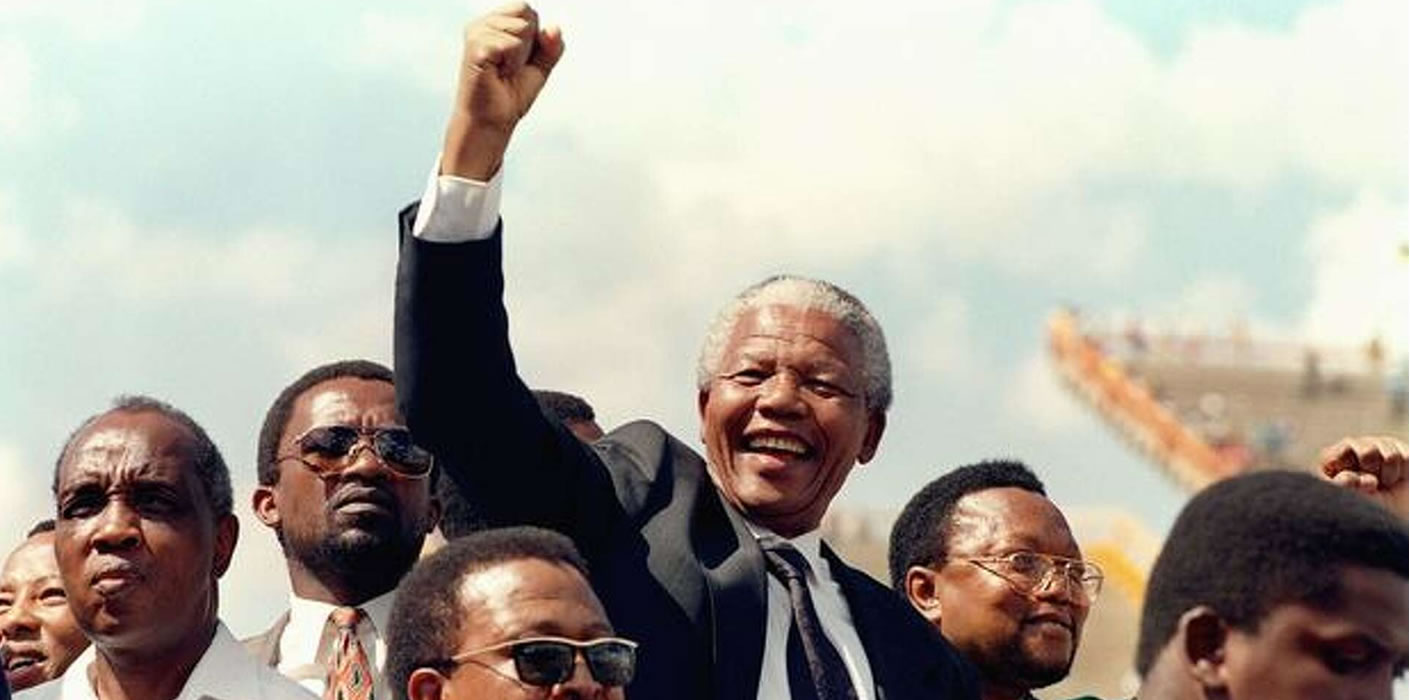
From freedom fighters and visionary leaders to scholars, educators, artists and nation-builders, Africa’s history is shaped by people who dared to challenge their circumstances and imagine a different future. Their legacies remind us that the strength of a continent is measured not only by its resources, but by the courage, ideas and contributions of its people.
The People Behind the History
Every generation inherits a world it did not create. Some accept its limitations. Others challenge them, opening paths that later generations can follow.
Across Africa, individuals have confronted colonial rule, resisted oppression, expanded education, advanced scientific knowledge, built political institutions, defended human dignity and transformed culture. Some led national movements. Others worked quietly in classrooms, laboratories, farms, hospitals, studios and communities, changing lives without seeking international recognition.
Their stories are not identical. Some were celebrated during their lifetimes; others were misunderstood, marginalised or recognised only after their deaths. Some left complicated political legacies that continue to generate debate. Yet each offers an opportunity to examine the relationship between personal conviction and historical change.
Africa’s heroes should not be remembered simply as statues, portraits on currency or names attached to public buildings. They should be understood as people who made choices under particular historical conditions, faced difficult decisions and influenced the possibilities available to others.
This is not a catalogue of perfect individuals. It is a celebration of contribution, courage and the responsibility to examine history honestly.
KWAME NKRUMAH: THE DREAM OF AFRICAN UNITY
Few political figures are as closely associated with the twentieth-century Pan-African movement as Ghana’s Kwame Nkrumah.
Born in 1909 in what was then the British-controlled Gold Coast, Nkrumah became a leading figure in the struggle for independence. Ghana achieved independence on 6 March 1957, becoming the first sub-Saharan African country under colonial rule to gain independence in the post-Second World War era.
Nkrumah’s ambitions extended beyond national sovereignty. He believed that political independence would remain incomplete without greater African unity and economic cooperation. His government supported continental solidarity, and Ghana became an important centre for anti-colonial and Pan-African activity.
The creation of the Organisation of African Unity in 1963, with Ghana among its founding members, reflected a wider continental commitment to cooperation, although African leaders disagreed over how quickly and deeply political integration should proceed.
Nkrumah’s legacy is also contested. His government pursued ambitious development projects, but political centralisation, restrictions on opposition and economic difficulties raised serious questions about governance. He was overthrown in a military coup in 1966.
His historical importance lies in both the ambitions he advanced and the debates his rule continues to inspire. He left a powerful question for later generations: what does independence mean if African countries remain economically fragmented and politically unable to act together?
NELSON MANDELA: THE COURAGE TO IMAGINE RECONCILIATION
Nelson Mandela’s life became one of the most internationally recognised symbols of resistance to racial oppression.
Born in 1918 in South Africa, Mandela became involved in the struggle against apartheid, the system of institutionalised racial discrimination enforced by the South African state. His political activities led to imprisonment, and he spent 27 years in custody before his release in February 1990.
Mandela’s release helped open a decisive period of negotiations that led to South Africa’s first democratic national election based on universal adult suffrage in 1994. He became the country’s first Black president under the new democratic order.
His presidency emphasised reconciliation and the creation of democratic institutions after decades of racial domination. However, the transition did not erase the economic inequalities, spatial divisions and social challenges created by apartheid.
Mandela’s legacy should therefore be understood in two dimensions: the historic achievement of dismantling apartheid’s political system and the continuing struggle to build a society in which freedom is accompanied by material opportunity and equal dignity.
His life demonstrates that political transformation often requires persistence, negotiation and the willingness to consider a future beyond the divisions of the present.
THOMAS SANKARA: A VISION OF SELF-RELIANCE
Thomas Sankara, who led Burkina Faso from 1983 until his assassination in 1987, became a powerful symbol of political self-reliance and social reform.
During his presidency, the country was renamed Burkina Faso, commonly translated as the “Land of Upright People.” Sankara promoted campaigns involving public health, vaccination, education, environmental protection, women’s rights and domestic production.
His government also pursued austerity measures and challenged established political and economic relationships. These policies attracted admiration among supporters of African sovereignty, while his revolutionary government was also associated with coercive measures and restrictions on political opposition.
Sankara’s short period in power limited the time available to assess the long-term sustainability of his programmes. His assassination in October 1987 brought his presidency to an end, but his image continued to resonate across Africa and beyond.
For many younger Africans, Sankara represents a challenge to dependency and a demand that leadership be judged by public purpose rather than personal enrichment.
His story also raises an important question: how can a society pursue radical reform while protecting democratic participation, human rights and institutional accountability?
JULIUS NYERERE: EDUCATION, NATIONHOOD AND PUBLIC SERVICE
Julius Nyerere, the founding president of Tanzania, played a central role in the country’s independence from British rule in 1961 and its subsequent political development.
Known widely as Mwalimu, meaning teacher in Swahili, Nyerere placed considerable emphasis on education, national identity and the development of a shared civic culture in a country with many languages and communities.
His political philosophy of ujamaa, often associated with African socialism and community-based development, influenced Tanzania’s economic and social policies. The approach sought to promote collective responsibility and reduce dependence on external economic structures.
Its implementation, particularly through villagisation programmes, also generated serious controversy, including coercion and economic disruption. Tanzania’s experience demonstrates that policies inspired by ideals of equality can produce difficult outcomes when implementation, individual choice and economic realities are not adequately addressed.
Nyerere stepped down from the presidency in 1985, although he remained influential in public life. He was also active in regional diplomacy and efforts to address political conflicts.
His legacy invites reflection on education as a foundation for citizenship, the role of language in national cohesion and the challenge of translating social ideals into policies that improve people’s lives.
WANGARI MAATHAI: THE WOMAN WHO PLANTED A DIFFERENT FUTURE
Wangari Maathai’s contribution to African history demonstrates how environmental action can become a movement for social change.
Born in Kenya in 1940, Maathai became a biologist, academic and environmental campaigner. In 1977, she founded the Green Belt Movement, which supported tree planting, environmental conservation and community participation, particularly among women.
The movement connected environmental degradation with livelihoods, access to resources and the wellbeing of rural communities. Tree planting became both a practical response to deforestation and a way to encourage public participation in environmental stewardship.
Maathai also became an outspoken advocate for democracy, human rights and accountable governance. Her activism brought her into conflict with authorities, but she continued to campaign for environmental protection and civic participation.
In 2004, she became the first African woman to receive the Nobel Peace Prize. The award recognised her contribution to sustainable development, democracy and peace.
Her story expands the definition of leadership. It shows that the defence of forests, soils and water systems is inseparable from questions about livelihoods, justice and the rights of communities to participate in decisions affecting their future.
In an era of climate pressures, Maathai’s work remains an important reference point for African environmental leadership.
FUNMILAYO RANSOME-KUTI: A VOICE AGAINST INJUSTICE
Nigeria’s Funmilayo Ransome-Kuti was a teacher, organiser and women’s rights activist whose work challenged political and social inequalities during the colonial period.
Born in 1900, she became involved in campaigns for women’s participation in public life and the reform of colonial-era systems of taxation and administration. She helped organise the Abeokuta Women’s Union, which mobilised market women and other women against policies they considered unjust.
Her activism contributed to significant political pressure in Abeokuta during the 1940s and challenged assumptions that women should remain outside formal political processes.
Ransome-Kuti also supported educational and civic initiatives, believing that women should have the knowledge and organisational power to participate in decisions affecting their communities.
Her political activity came at considerable personal cost. She was attacked during unrest in 1977 and died in 1978 from injuries sustained during the period surrounding the military raid on the family compound.
Her legacy remains significant not only for Nigerian women’s history but also for wider discussions about grassroots organising, civic participation and the relationship between gender and political power.
She reminds us that the struggle for freedom does not end with national independence. It also involves confronting injustice within society and ensuring that public institutions respond to the people they serve.
CHINUA ACHEBE: RECLAIMING THE POWER OF THE STORY
Chinua Achebe transformed the international conversation about African literature.
Born in Nigeria in 1930, Achebe became widely known for Things Fall Apart, published in 1958. The novel portrays Igbo society during a period of profound change and examines the effects of colonial intervention on individuals, families and communities.
The book became one of the most influential African novels of the twentieth century. It challenged portrayals of Africa that denied African societies complexity, history and intellectual life before European colonialism.
Achebe’s achievement was not to present precolonial society as flawless. Instead, he created characters and communities with competing ambitions, moral tensions, social institutions and internal conflicts. Colonialism enters this world as a historical force that changes relationships and political possibilities.
Through fiction, essays and public commentary, Achebe argued for the importance of African perspectives in literature and historical interpretation.
His work also illustrates the importance of language. Writing in English enabled his stories to reach international readers, while his narrative methods drew on Igbo cultural knowledge, oral traditions and proverbs.
For contemporary African writers, filmmakers, journalists and publishers, Achebe’s legacy is a reminder that storytelling can challenge stereotypes, restore complexity and give audiences new ways to understand the world.
STEPHEN BIKO: THE POLITICS OF HUMAN DIGNITY
South African activist Stephen Biko became an important figure in the Black Consciousness Movement, which encouraged Black South Africans to reject internalised racial inferiority and assert their dignity and political agency.
Born in 1946, Biko helped develop a movement that emphasised psychological liberation, community organisation and the importance of people defining their own identities rather than accepting the assumptions of an oppressive system.
Black Consciousness developed within the broader struggle against apartheid, particularly at a time when the state restricted political organisations and imprisoned or exiled prominent opponents.
Biko was detained by South African security police in 1977 and died in police custody after sustaining severe injuries. His death became an international symbol of the brutality of apartheid.
His contribution was not simply a set of political slogans. He challenged the relationship between power and identity, arguing that freedom required people to recognise their own capacity to act.
Biko’s legacy continues to influence discussions about racial justice, self-definition, education and the psychological effects of oppression.
His story also reminds us that the struggle for human dignity often involves both public institutions and the beliefs people are encouraged to hold about themselves.
PATRIcK VAN RENSBURG AND AFRICA’S EDUCATIONAL EXPERIMENTS
African nation-building has also been shaped by educators and social innovators whose work does not always receive the same recognition as political leadership.
One example is Patrick van Rensburg, a South African anti-apartheid activist and educator who established the Swaneng Hill School in Botswana in 1963. The school became associated with practical education and efforts to connect learning with productive work and community development.
Van Rensburg later helped develop the Brigades movement, which promoted vocational training and practical skills for young people.
This model reflected a broader challenge facing many African societies: how to build educational systems that prepare learners not only for examinations, but also for employment, entrepreneurship and community problem-solving.
The relevance of such initiatives continues today. Technical and vocational education, apprenticeships and industry partnerships can help connect classroom learning with the practical skills needed in construction, manufacturing, hospitality, digital services, agriculture and other sectors.
The lesson is that nation-building does not depend only on presidents and political movements. It also depends on people who design institutions, train others and create opportunities for future generations.
THE HEROES WHOSE NAMES WE MAY NEVER KNOW
Historical memory often concentrates on individuals whose names appear in textbooks, official records and public monuments. But every major movement has depended on people whose contributions were less visible.
Across Africa, teachers educated children under difficult conditions. Nurses and doctors served communities with limited resources. Farmers sustained households and local economies. Trade unionists organised workers. Women maintained networks of resistance and mutual support. Journalists documented injustice. Religious leaders provided shelter and moral leadership. Artists preserved memories through music, performance and storytelling.
Many participated in independence movements without entering the highest levels of government. Others supported social change through local associations, professional bodies, cooperatives, educational institutions and community initiatives.
Their contributions can be difficult to document because historical records often reflect the priorities of those who controlled institutions and publication. Women, rural communities, informal workers and marginalised groups have frequently been underrepresented in official accounts.
Recovering these stories requires oral-history projects, local archives, family records, community research and careful attention to evidence.
It also requires broadening our definition of heroism. Courage may involve confronting an oppressive state, but it may also involve defending a vulnerable neighbour, educating a child, exposing corruption, protecting a community resource or creating an institution that outlives its founder.
Africa’s history belongs to all the people who helped shape it, whether or not their names became famous.
FROM HISTORICAL HEROES TO CONTEMPORARY LEADERSHIP
Remembering great figures is important, but remembrance alone cannot build the future.
Each generation must decide what to do with the inheritance it receives. Political independence, educational progress, scientific achievement, cultural confidence and the expansion of democratic rights all require continued work.
The examples explored here offer different lessons.
Nkrumah’s Pan-African vision raises questions about continental cooperation. Mandela’s life points to the difficulty of democratic transition and reconciliation. Sankara’s programme invites debate about self-reliance, social reform and political accountability. Nyerere’s experience highlights the relationship between education, national identity and economic policy. Maathai demonstrates how environmental action can connect with civic rights. Ransome-Kuti and Biko show the importance of challenging systems that deny people dignity. Achebe illustrates the power of literature to reshape historical understanding, while educational innovators remind us that lasting change depends on institutions and skills.
None provides a complete blueprint for today’s Africa. Their circumstances differed, and their decisions deserve examination rather than unquestioning imitation.
The task is to study their achievements and failures, understand the conditions in which they worked and identify the principles that remain useful.
A continent honours its heroes most meaningfully when it invests in the people who are doing the difficult work of building its future.
A LEGACY THAT MUST BE LIVED
The names of Africa’s historical figures appear on streets, schools, public buildings, monuments and institutions. These symbols matter because they help societies remember.
But a monument cannot teach a child by itself. A portrait cannot maintain a public institution. A commemorative speech cannot replace responsible leadership.
Legacy becomes meaningful when the values associated with historical figures are translated into practice: education that expands opportunity, public service that places people first, institutions that protect rights, environmental stewardship that safeguards livelihoods, literature that deepens understanding and political systems that permit citizens to participate.
Africa’s heroes were not all alike, and they did not agree on every question. Their differences are part of what makes their histories worth studying.
What connects many of their stories is the willingness to act in circumstances where change was difficult, uncertain or dangerous.
They inherited limitations, but they did not always accept them. They challenged systems, built organisations, created ideas and opened possibilities that others could develop.
The responsibility now belongs to a new generation of Africans: to remember critically, learn honestly and build with purpose.
The giants who walked before us should not become figures trapped in the past. Their stories should remain part of the living conversation about what Africa can become.
VOAM LEGACY AFRICA | THE TAKEAWAY
Africa’s heroes include political leaders, freedom fighters, environmental advocates, writers, educators and community organisers. Their legacies reveal different paths towards dignity, self-determination, education, justice and social progress.
Remembering them requires more than celebration. It requires examining their achievements and shortcomings, recovering overlooked contributions and applying the lessons of history to the challenges of the present.
VOAM QUESTION
Which African hero has influenced your understanding of leadership, freedom or service—and what lesson should the next generation carry forward?